The Rise of Japanese Kei Trucks in America: A Comprehensive Guide to the Craze, the Costs, and the Regulatory Maze

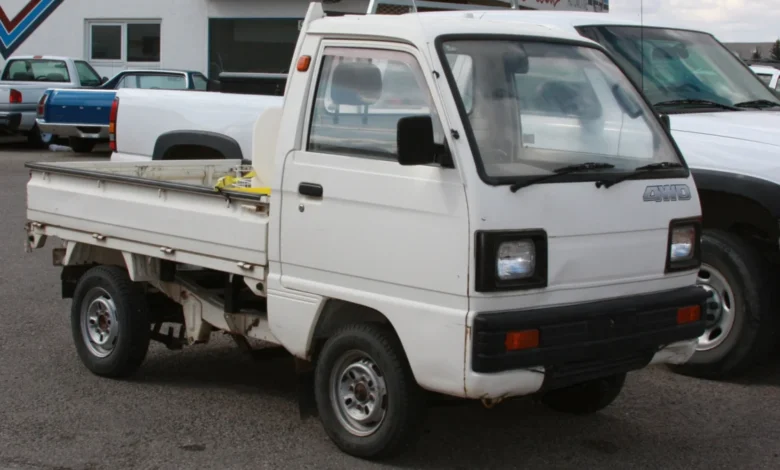
The American automotive landscape has witnessed a peculiar and rapid diversification over recent years, moving away exclusively from colossal full-size pickup trucks to embrace a segment on the opposite end of the dimensional spectrum: Japan’s miniature kei trucks. With more than 7,500 of these pint-sized utility vehicles imported into the United States in 2023 alone, vehicles like the Honda Acty, Suzuki Carry, Daihatsu Hijet, Subaru Sambar, and Mitsubishi Minicab have transitioned from anonymous agricultural tools on Japanese farms to sought-after novelties on American soil. Enthusiasts are utilizing them for everything from quirky road-trip experiments to practical estate management. However, beneath the viral social media videos and the undeniable charm of a truck that can fit inside the bed of a modern Ford F-150 lies a complex web of federal import laws, a fragmented state-by-state regulatory patchwork, and logistical hurdles that every prospective buyer must carefully evaluate.
Understanding the Kei Truck Phenomenon and Its Appeal
To comprehend the current U.S. obsession with kei trucks, one must first understand their origins. Established by the Japanese government in 1949 and subsequently modified in dimensions and engine displacement over the decades, the kei jidosha (light automobile) category was designed to provide an affordable, highly efficient mode of transportation for post-war Japan’s narrow streets and rebuilding economy. By legal definition, a traditional kei truck must adhere to strict size limitations: historically restricted to a maximum length of 3.4 meters (11.2 feet), a width of 1.48 meters (4.9 feet), and an engine displacement capped at 660cc in modern iterations.
Despite their diminutive size, these vehicles punch far above their weight class regarding utility. Equipped with four-wheel drive, remarkably low gearing, and drop-down side and rear bed gates that transform the bed into a flat platform, they offer an astonishing level of versatility. For small-scale farmers, landscapers, warehouse operators, and university campuses, a kei truck provides the cargo-hauling capacity of a conventional pickup truck without the massive footprint, poor visibility, or exorbitant fuel consumption.
In the United States, the primary driver of the kei truck boom is economic accessibility. Because these vehicles are heavily depreciated in their home market and can be purchased cheaply at Japanese used car auctions, buyers can acquire a mechanically sound, durable utility vehicle for remarkably low entry prices. Depending on the condition, mileage, and specific model year, used kei trucks generally command between $4,500 and $10,000 before factoring in overseas shipping, customs duties, and domestic registration fees. For budget-conscious enthusiasts locked out of an increasingly expensive domestic truck market—where the average new full-size pickup easily eclipses $50,000—the kei truck represents an attainable entry point into automotive hobbyism and practical utility.
The 25-Year Federal Import Rule: A Chronological Timeline
Navigating the acquisition of a Japanese domestic market (JDM) vehicle requires strict adherence to federal legislation, most notably the Imported Vehicle Safety Compliance Act of 1988. Often referred to simply as the 25-year import rule, this federal statute prohibits the importation of motor vehicles that were not originally manufactured to comply with U.S. Federal Motor Vehicle Safety Standards (FMVSS), unless the vehicle is at least 25 years old.
The chronology of compliance is strict and unforgiving. The 25-year countdown begins precisely from the month and year of manufacture stamped on the vehicle’s Japanese export certificate, rather than the broader calendar model year. For example, a Suzuki Carry manufactured in November 1999 cannot legally clear U.S. customs until December 2024. Attempting to import a vehicle even a single month shy of this threshold can result in the vehicle being impounded, quarantined, or forcibly exported or destroyed by U.S. Customs and Border Protection (CBP) at the owner’s expense.
Once a kei truck crosses the quarter-century threshold, it is officially exempt from EPA emissions standards and Department of Transportation (DOT) safety regulations at the federal level. Importers must still complete standard customs clearance procedures, file Environmental Protection Agency (EPA) form 3520-1, and submit DOT form HS-7, declaring the vehicle’s age exemption. While federal clearance permits the physical entry of the truck into the country, it does not, crucially, grant permission to drive it on public roads.
The Regulatory Maze: State-by-State Road Legality
While federal law governs importation, vehicle registration and licensing fall entirely under the jurisdiction of individual state Departments of Motor Vehicles (DMVs). This division has created a fragmented and unpredictable landscape for kei truck owners, where a vehicle completely legal to drive in one state may be barred from registration or operation just across the border.
California maintains the most stringent regulatory environment in the nation regarding imported vehicles. Despite achieving federal exemption at 25 years of age, the vast majority of kei trucks cannot be registered for street use in California because they do not possess the necessary emissions certification equipment required by the California Air Resources Board (CARB) and fail to meet modern crash-test safety standards.
Other states have implemented targeted restrictions rather than outright bans. Jurisdictions such as Wyoming and Arkansas permit kei trucks to be registered and driven on secondary and rural roads, but legally bar them from operating on interstate highways or high-speed thoroughfares. Conversely, states like Georgia and Rhode Island have periodically cracked down on mini truck registrations entirely, issuing policy directives that suspend the issuance of titles and license plates to off-highway vehicles, a classification under which authorities frequently categorize kei trucks.
These regulatory crackdowns are largely driven by safety concerns raised by traffic safety advocates and state highway patrols. Kei trucks possess minimal crash structures, lack modern airbags, feature rudimentary seatbelt systems, and sit at a significant height and weight disadvantage when colliding with modern American SUVs and full-size trucks. Consequently, prospective buyers must perform rigorous due diligence with their local DMV before committing capital to an import.
Hidden Costs, Logistics, and Maintenance Realities
The sticker price listed on an overseas auction site represents only a fraction of the total investment required to put a kei truck on the road. The true cost of ownership involves a series of logistical steps and recurring financial obligations:
- Overseas Shipping and Port Fees: Transporting a vehicle via roll-on/roll-off (RoRo) or container shipping from ports in Yokohama or Nagoya to the United States typically adds $1,500 to $3,500, depending on the destination port and current maritime freight rates.
- Customs Brokerage and Duties: Hiring a licensed customs broker to file the necessary paperwork ensures smooth port clearance, but adds brokerage fees on top of standard U.S. import tariffs (typically 2.5% for trucks).
- Domestic Transport: Once the vehicle clears customs, getting it from the port of entry to a residential driveway often requires hiring an enclosed or flatbed auto-transport service if the truck cannot yet be legally driven or registered.
- Insurance Hurdles: Securing liability and comprehensive coverage can be remarkably difficult. Many mainstream insurance algorithms and customer service representatives do not have foreign mini trucks in their databases, requiring owners to seek out specialized classic or JDM vehicle insurance providers.
- Parts Availability and Maintenance: Although these trucks are mechanically straightforward—typically featuring carbureted or fuel-injected three-cylinder engines paired with manual or automatic transmissions—finding replacement parts can be challenging. Local auto parts stores like AutoZone or O’Reilly do not stock brake pads, water pumps, or ignition components for a 1998 Daihatsu Hijet. Owners must rely on specialized online importers or direct-from-Japan suppliers, which can lead to prolonged downtime while waiting for components to ship across the Pacific. Furthermore, while kei trucks excel on farm lanes and urban side streets, sustained operation at American highway speeds (65 to 75 mph) places immense strain on small engines running at high RPMs, accelerating wear and tear on vital mechanical assemblies.
Broader Market Implications and Alternatives
The surging interest in Japanese kei trucks highlights a broader consumer frustration with the ballooning size, complexity, and cost of modern American consumer vehicles. Over the past three decades, light trucks in the U.S. have grown significantly heavier, taller, and more expensive, often pricing out buyers who simply need a basic, utilitarian tool to haul landscaping supplies, lumber, or gardening equipment.
Industry analysts note that while kei trucks fill a unique niche for hobbyists, collectors, and rural property owners, their limitations as daily drivers on modern American infrastructure remain profound. For consumers seeking a small, highly efficient, and affordable light-duty pickup truck backed by full domestic dealership support, factory warranties, and modern safety features, contemporary compact offerings—such as the Ford Maverick or Hyundai Santa Cruz—present a far more practical, legal, and stress-free alternative.
Ultimately, for those who reside in states with accommodating registration policies, possess a willingness to source parts internationally, and understand the inherent safety and speed limitations of these micro-vehicles, a kei truck can be an immensely rewarding and endlessly charming automotive possession. For others, the administrative hurdles and legal uncertainty may turn what starts as a budget-friendly impulse buy into an exhausting bureaucratic endurance test.