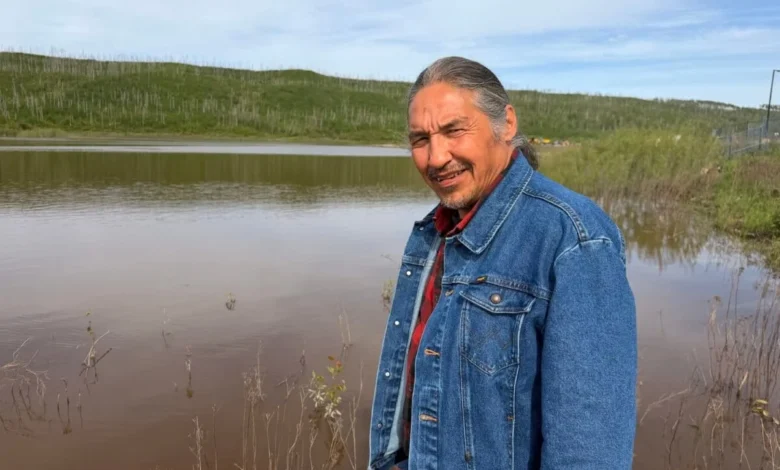
The community of Fort Chipewyan, a remote Indigenous settlement in Northern Alberta, stands at a precarious intersection of environmental policy, industrial expansion, and public health. For decades, the residents of the Athabasca Chipewyan First Nation (ACFN) have lived downstream from the sprawling infrastructure of the oil sands—the world’s fourth-largest proven oil reserve. Now, a proposal by Suncor Energy to treat and release millions of liters of toxic mining wastewater into the Athabasca River has sparked a fierce confrontation between industry interests, government regulators, and the local communities that rely on the river for their survival.
The Scale of the Tailings Problem
The Alberta oil sands cover a geographic area larger than England, characterized by a bitumen extraction process that is among the most carbon-intensive and water-heavy in the world. To separate raw bitumen from the earth, companies utilize vast quantities of water, energy, and chemical solvents. The byproduct of this process is stored in "tailings ponds"—massive, unlined impoundments that now hold approximately 1.5 trillion liters of liquid waste.
These ponds contain a complex cocktail of pollutants, most notably naphthenic acids—a group of persistent organic compounds that are notoriously difficult to treat and known to cause endocrine disruption in aquatic life. Because these pits have been filling for over six decades, Suncor and other industry players argue they are running out of storage capacity. Their proposed solution: a "treat and release" strategy that would eventually introduce treated wastewater directly into the Athabasca River, the primary water source for the community of Fort Chipewyan.
A History of Health Concerns and Medical Controversy
The fear surrounding the proposed release is not rooted in abstraction but in the lived experience of the residents of Fort Chipewyan. The community, home to approximately 650 people, has long reported clusters of rare cancers, including cholangiocarcinoma (bile duct cancer), a diagnosis that is statistically anomalous for a population of this size.
The tension between the community and industry dates back to at least 2005, when local physician Dr. John O’Connor began documenting elevated rates of endocrine issues and thyroid conditions among his patients. His decision to speak publicly in 2006 regarding these health trends triggered a significant backlash, including a formal investigation into his professional conduct by the Alberta medical authorities. It was not until 2009 that the Alberta Cancer Board released a study confirming a 30% higher incidence of cancer in the region than would be expected by provincial averages. A follow-up study in 2014 further identified higher rates of cervical cancer. Despite these findings, both the provincial government and industry representatives have historically maintained that there is no definitive, scientifically proven link between the specific pollutants from oil extraction and the health outcomes observed in the community.
Chronology of the Current Conflict
The current regulatory push has evolved rapidly over the past two years:
- 2023: Initial discussions between industry and regulators regarding the "treat and release" model move from internal strategy to active planning.
- August 2026: Following reports that the provincial government of Alberta may bypass standard environmental impact assessments for these releases, Chief Allan Adam of the ACFN formally writes to the federal government, urging immediate intervention under the Fisheries Act.
- September 2026: The federal government announces a 10-year, C$12 million study to investigate the nexus between environmental degradation and public health in Fort Chipewyan, marking a potential shift in federal engagement.
- Late 2026: Suncor Energy continues to face scrutiny as local leadership reveals that the wastewater intended for release is deemed too corrosive for the company’s own refinery machinery, raising fundamental questions about the efficacy of current treatment technology.
Industry and Regulatory Stance
The Alberta provincial government has adopted a position of flexibility, advocating for "fit-for-purpose" treatment technologies that allow for industrial growth. In official correspondence, provincial authorities emphasize that they are working in partnership with industry and academia to advance water treatment standards. However, critics, including investigative journalists from Watershed Investigations, point to a lack of transparency. Data regarding the specific treatment methods, pilot study results, and independent peer reviews of these filtration processes remain largely inaccessible to the public.
For its part, Suncor Energy has not provided specific details regarding their filtration protocols, citing proprietary technology. An industry representative from the Oil Sands Alliance stated that water treatment and release are standard practices in other industries and that the proposal is currently moving through an engagement process overseen by the government-appointed Oil Sands Mine Water Steering Committee.
Legal and Ethical Implications
The central legal challenge rests on the Canadian Fisheries Act, which prohibits the discharge of "deleterious substances" into waters frequented by fish. By seeking to discharge tailings water, Suncor is essentially asking for a regulatory reclassification of that water after it passes through a treatment facility.
Chief Allan Adam has argued that the community is being forced into a impossible position. Many residents rely on the oil industry for employment, yet the long-term environmental consequences threaten the treaty-protected rights of the First Nation to hunt, fish, and gather on their traditional lands. The use of non-disclosure agreements (NDAs) in negotiations between oil companies and First Nations has further obscured the debate, with many leaders claiming they are unable to share the data they have seen due to these legal constraints.
Broader Context: The "Trump Effect" and Political Instability
The environmental policy landscape in Alberta is heavily influenced by the province’s reliance on oil revenues, which account for roughly 7% of Canada’s GDP. Recent political rhetoric, influenced by shifts in North American trade dynamics, has led to a renewed push for "light-touch" regulations. While a recent referendum on secession from Canada was defeated, the sentiment behind the movement—a desire for greater autonomy to expand the oil sector—remains a dominant force in regional politics.
Prime Minister Mark Carney’s federal government has found itself walking a narrow line. While the federal administration has authorized funding for long-term health studies, it has also fast-tracked infrastructure projects, including new pipelines, to appease the energy sector. This has left communities like Fort Chipewyan feeling that their health is being weighed against national economic interests, with little confidence that the balance will fall in their favor.
The Role of Environmental Monitoring and Enforcement
The effectiveness of current environmental oversight has been widely questioned. Recent fines issued to oil companies for environmental incidents—such as the leakage of tailings waste at Imperial Oil sites and the death of hundreds of migratory birds on tailings ponds—are viewed by critics as mere "costs of doing business." For instance, fines totaling in the hundreds of thousands of dollars represent a fraction of a percent of annual corporate net incomes, leading to calls for more robust, deterrent-based enforcement.
As the 10-year federally funded study begins, the people of Fort Chipewyan are left in a state of suspended animation. While they await the scientific results, the physical reality of the landscape continues to change. Observers note that the presence of sound cannons, intended to keep wildlife away from toxic ponds, serves as a constant, auditory reminder of the hazards present in the local ecosystem.
Ultimately, the case of Fort Chipewyan is not simply a debate over oil versus the environment; it is a fundamental test of the Canadian government’s commitment to Indigenous rights and the Precautionary Principle. As the federal government deliberates on the final authorization for the release of treated tailings, the eyes of environmental scientists, human rights advocates, and policymakers remain fixed on the Athabasca River, waiting to see whether public health or industrial expediency will prevail.
Related posts: