Crisis
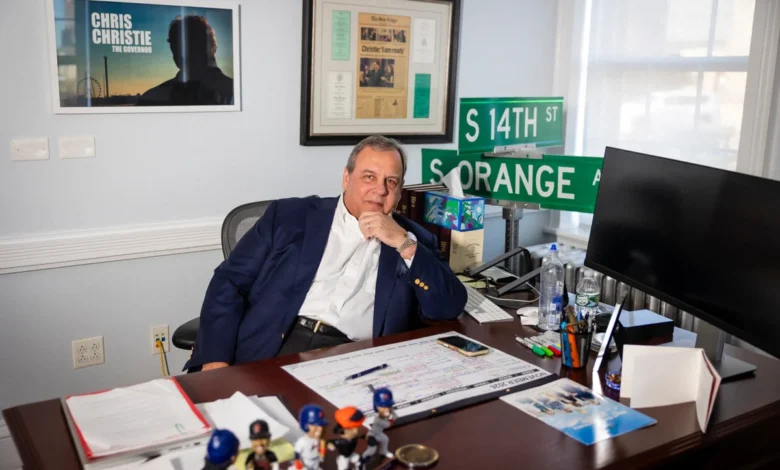
Former New Jersey Governor Chris Christie is once again contemplating a national political campaign, signaling a potential third bid for the presidency as his party navigates the turbulent aftermath of the Donald Trump era. Sitting inside his Morristown, New Jersey, consulting office—surrounded by bipartisan mementos and a framed photograph of a newly mended relationship with rock icon Bruce Springsteen—Christie cuts a figure distinct from the typical party loyalist. Known for his prosecutorial background and blunt rhetoric, the former governor remains one of the most vocal internal critics of the contemporary Republican establishment.
The timing of Christie’s reemergence follows a bruising midterm election cycle that many political analysts view as a referendum on the nativist and populist factions dominating the GOP. As the party attempts to chart a path forward, Christie’s critique centers on what he defines as a systemic failure of character among congressional leadership and a dangerous drift away from traditional fiscal and institutional norms.
The Roots of a Complex Political Odyssey
Christie’s relationship with national politics spans over two decades, characterized by sharp rises, significant controversies, and public fallout with Donald Trump. First rising to prominence during his 2009 gubernatorial campaign in New Jersey, Christie earned a reputation as a fiscal conservative willing to tackle deeply entrenched structural deficits through aggressive town hall engagements. His prosecutorial style, defined by a courtroom-esque confidence in his arguments, propelled him to the national stage as a leading voice of the GOP establishment.

However, his trajectory shifted dramatically following his unsuccessful 2016 presidential primary bid. After endorsing Trump, Christie led the initial presidential transition team, assembling extensive policy initiatives and vetting frameworks before being sidelined by internal West Wing conflicts, notably involving Jared Kushner. Though he later advised Trump during the 2020 presidential debates—an experience that resulted in a severe bout of COVID-19 contracted during preparation sessions—Christie formally broke ties with the administration following the events of January 6, 2021.
A Post-Midterm Assessment and Party Complicity
Reflecting on the geopolitical and domestic landscape following recent midterm losses, Christie offers an unsparing critique of his former Republican colleagues. He argues that the electoral setbacks suffered by the party were entirely predictable outcomes of prolonged capitulation to a leader devoid of a consistent moral core.
According to Christie, the willingness of high-profile Republicans—including former rivals such as Ron DeSantis, Nikki Haley, and Marco Rubio—to downplay or excuse controversial behavior in pursuit of short-term political survival has severely compromised the GOP’s institutional integrity. He contends that lawmakers who privately expressed dismay over administrative actions chose titles and proximity to power over constitutional duty, only finding their voices after losing their seats or stepping down from office.
This culture of compliance, Christie asserts, has left the party vulnerable to corruption narratives that are now resonating with independent voters. Citing rising exit-poll concerns regarding government integrity and personal enrichment, he points to the stark contrast between working-class economic struggles—such as high fuel and grocery prices—and the perceived self-enrichment of figures within Trump’s inner circle.
Economic Realities and Policy Priorities
Looking ahead, Christie maintains that any viable rehabilitation of the Republican Party must move past retrospective grievances and address substantive domestic challenges. He highlights critical long-term structural issues facing the United States, including:

- A national debt approaching $40 trillion.
- Projected funding shortfalls in the Social Security trust funds that threaten significant benefit cuts within the next presidential term.
- Escalating healthcare costs and systemic inefficiencies.
- Disparities and declining performance metrics within the K-12 educational landscape alongside the escalating costs of higher education.
Christie argues that addressing these challenges requires leadership rooted in fiscal discipline, institutional respect, and a willingness to engage in bipartisan compromise—qualities he believes have been systematically marginalized in recent election cycles.
Evaluating Potential Successors and the Road Ahead
When evaluating potential standard-bearers for the post-Trump conservative movement, Christie remains skeptical of figures like Vice President JD Vance and Senator Marco Rubio, questioning their readiness and consistency. He points instead to executives like Georgia Governor Brian Kemp, who demonstrated a willingness to push back against electoral pressure while maintaining electoral viability in a competitive state.
Despite the hurdles that faced his previous campaigns—including the lingering, unavoidable historical weight of the 2013 Bridgegate scandal, for which he acknowledges ultimate accountability as governor—Christie is actively weighing whether to launch another presidential bid. He views the current political climate as a moment of necessary reckoning for a party that chose disruption over governance.
Whether the electorate is prepared to embrace a return to traditional conservatism remains an open question. However, as the Republican Party grapples with its identity, internal divisions, and future leadership, Christie insists that the debate over character, governance, and institutional preservation is one the party cannot afford to ignore.