Attorney General Todd Blanche Faces Scrutiny Over Conflicting Statements Regarding Nvidia and CEO Jensen Huang

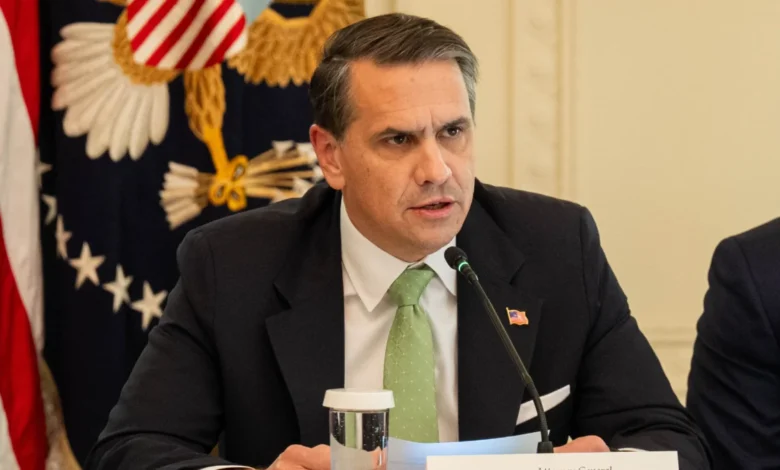
The intersection of national security, corporate governance, and executive influence reached a fever pitch this week as Attorney General Todd Blanche navigated a series of pointed inquiries regarding the reinstatement of Nvidia CEO Jensen Huang. During a press conference held on Tuesday, November 24, 2026, Blanche faced persistent questioning from the press corps concerning President Donald Trump’s public claims that the administration had cleared Huang of any wrongdoing related to national security concerns. The Attorney General’s responses—often characterized by redirection and a refusal to confirm the status of specific investigations—have sparked a broader debate about the boundaries of executive interference in federal law enforcement operations.
The controversy centers on the rapid-fire sequence of events that saw Huang resign, face intense scrutiny over alleged ties to foreign intelligence, and ultimately return to his position at the helm of one of the world’s most critical technology firms, all within the span of less than two weeks.
A Chronology of the Nvidia Leadership Crisis
The situation began in mid-November 2026, when reports surfaced regarding multiple personal affairs involving Jensen Huang. Most significantly, allegations linked Huang to Alice Huang, a former executive at Megaspeed, an AI computing firm known to be a significant recipient of Nvidia’s high-end semiconductor chips. These allegations were compounded by claims that Alice Huang maintained ties to Chinese intelligence agencies, raising immediate red flags regarding the potential compromise of sensitive AI technology—a sector currently subject to stringent U.S. export controls.
Following these revelations, pressure mounted on the Nvidia board of directors, leading to Huang’s resignation. However, the hiatus was brief. By Monday, November 23, 2026, the company announced Huang’s return. The reinstatement was preceded by direct intervention from the White House. President Trump, speaking to media outlets including CNBC, asserted that he had personally communicated with the Nvidia board to advocate for Huang, claiming the administration’s own "very thorough investigation" had exonerated the CEO of any national security threat.
The Attorney General’s Press Conference
The tension between the White House’s narrative and the Justice Department’s traditional stance on ongoing investigations was on full display Tuesday. When asked to clarify the President’s assertion that the Department of Justice had found no evidence of unlawful conduct by Huang, Attorney General Blanche adopted a strategy of tactical ambiguity.
"I don’t know what folks are asking about specifically," Blanche stated when pressed on the existence of a formal DOJ probe. "What does that mean? ‘Had Huang been investigated?’ For what? I don’t understand the question. I don’t know what you’re talking about."
Blanche’s refusal to confirm or deny the existence of a probe into Nvidia’s potential role in the unauthorized diversion of chips to China drew sharp rebukes from legal analysts who noted the inconsistency between the President’s public "clearance" and the DOJ’s standard refusal to comment on active investigations. When specifically asked about Nvidia’s cooperation with federal authorities, Blanche offered a pivot: "Yes, Nvidia is a good corporate citizen. That statement shouldn’t be groundbreaking."
This remark, while intended to stabilize market confidence in the tech giant, effectively created a new layer of ambiguity. By labeling the company a "good corporate citizen" while declining to address the underlying allegations of technology diversion, Blanche left observers questioning whether the Department of Justice is indeed conducting a thorough investigation or if the matter has been effectively shelved due to external political pressure.
The Broader Implications for Export Controls and National Security
The core of the issue lies in the strategic importance of Nvidia’s hardware. As the primary provider of the advanced processing units (GPUs) required to train large-scale AI models, Nvidia occupies a central position in the U.S. government’s geopolitical strategy. Since 2022, the U.S. Department of Commerce has implemented increasingly strict export controls designed to prevent the Chinese military and intelligence apparatus from accessing the computational power necessary to achieve breakthroughs in artificial intelligence.
If it were proven that Nvidia, through its supply chain or executive oversight, knowingly allowed its chips to be diverted to sanctioned entities in China, the legal consequences could be severe, involving potential violations of the Export Administration Regulations (EAR).
The involvement of a foreign national allegedly tied to Chinese intelligence in the personal life of the CEO adds a layer of counterintelligence complexity. Analysts argue that even if the diversion of chips was not authorized by the company, the vulnerability of the CEO creates a "key man" risk that threatens national security.
Fact-Based Analysis of Executive Influence
The situation highlights a recurring theme in modern American politics: the tension between the Department of Justice’s mandate for independence and the President’s desire to direct the outcomes of high-profile cases. Legal experts point out that while the President has the constitutional authority to oversee the executive branch, his public statements about an ongoing, or potentially ongoing, investigation can have a "chilling effect" on the career prosecutors and agents tasked with pursuing the truth.
"The Attorney General is in a nearly impossible position," noted a former federal prosecutor who requested anonymity to speak on the ongoing political dynamics. "He has to maintain the integrity of the Department of Justice while working for an administration that is clearly signaling its desired outcome. By saying the President is ‘free to talk about whatever he wants,’ Blanche is trying to create a firewall, but the perception of political interference is already established."
Corporate Governance and Market Stability
Nvidia’s board of directors, for its part, has remained largely silent on the specific details of the investigation, focusing instead on the company’s stability and technological leadership. In an all-hands meeting held on Tuesday, Jensen Huang addressed the staff, remarking that "no story has been more tortured than this one in human history." While Huang may view the narrative as an overblown media spectacle, investors and regulators remain focused on the company’s compliance track record.
Nvidia’s stock performance has fluctuated wildly over the last two weeks, reflecting the uncertainty of the situation. Institutional investors are reportedly waiting for more definitive guidance from the Department of Commerce and the DOJ before fully discounting the risk of fines or further export restrictions.
Conclusion and Future Outlook
As the investigation—or the debate over its existence—continues, the role of the Attorney General remains under a microscope. Blanche has pledged transparency, yet his performance at the Tuesday press conference has suggested a strategy of obfuscation that satisfies neither the critics of the current administration nor those seeking a clear answer on the integrity of U.S. export controls.
Moving forward, the House and Senate oversight committees are expected to seek briefings from the Department of Justice regarding the scope of the inquiry into Nvidia. Whether those sessions will be held in classified settings or open to the public remains to be seen. For now, the administration’s narrative of a "thorough investigation" resulting in a "good corporate citizen" designation remains the only official word on the matter, a stance that continues to generate significant skepticism among legal and national security experts.
The case of Jensen Huang and Nvidia is no longer just a corporate crisis; it is a litmus test for the independence of the American legal system in the age of global AI competition and shifting political norms. The coming weeks will likely determine whether this incident serves as a turning point for stricter enforcement of export controls or as a precedent for the increasing integration of political objectives into the administration of federal justice.