Pentagon Chief Demands $1.5 Trillion for Iran War Amidst Fierce Congressional Opposition and Public Outcry

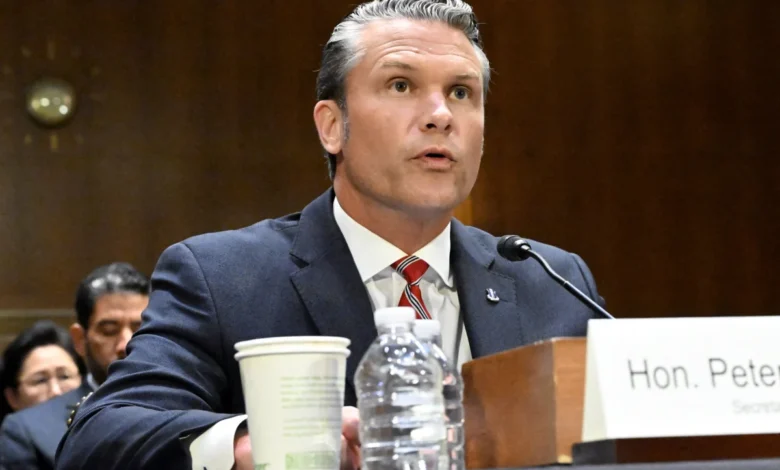
Defense Secretary Pete Hegseth appeared before the Senate Appropriations Committee on Tuesday, advocating for an unprecedented $1.5 trillion in funding for the Department of Defense, a request met with immediate and sharp skepticism from lawmakers. The colossal sum is sought to sustain President Donald Trump’s five-month-old military campaign in Iran, a conflict that has drawn widespread condemnation for its devastating human toll, economic disruption, and perceived lack of authorization. Hegseth, a staunch defender of the administration’s actions, provocatively suggested that President Trump deserved praise for initiating the "forever war," framing it as a courageous effort to prevent "crazy Islamists" from acquiring nuclear weapons.
The Contentious Funding Request and Its Justification
The focal point of Tuesday’s contentious hearing was Secretary Hegseth’s robust defense of the administration’s military strategy in Iran and his demand for an astronomical $1.5 trillion budget. This figure represents a significant increase over previous defense appropriations, prompting immediate questions about its necessity and allocation. Hegseth argued that "Not funding this department at $1.5 trillion, I believe, is the greatest threat our nation faces," implying that any reduction would jeopardize national security.
His justification centered on President Trump’s purported efforts to prevent Iran from developing nuclear capabilities. "President Trump deserves the kind of praise he should get for undertaking this effort," Hegseth asserted to the committee. "Having the courage to ensure that crazy Islamists can’t have a nuclear weapon to hold us at issue." This statement, however, failed to sway many on the committee, who viewed the ongoing conflict as a dangerous and unauthorized escalation.
The sheer scale of the $1.5 trillion request itself sparked alarm. To put this in perspective, the proposed budget far exceeds the combined annual budgets of numerous critical federal agencies, including education, transportation, and environmental protection. Analysts noted that such a sum would likely encompass not only ongoing operational costs in Iran—including troop deployments, aerial bombardments, and intelligence gathering—but also significant investments in new weapons systems, advanced research and development, and a substantial increase in personnel and logistics. Critics argue that this represents a continued shift of national resources away from domestic needs and towards an expansive military footprint abroad, raising concerns about fiscal responsibility and national priorities.
Congressional Scrutiny and Public Dissent
The Senate Appropriations Committee, tasked with overseeing federal spending, was far from convinced by Hegseth’s arguments. Senator Jack Reed, a Democrat from Rhode Island, interjected with palpable incredulity. "Excuse me, so he should be praised for starting a war without authority? For creating a situation in which the world economy is suffering tremendously?" Reed’s sharp questioning underscored the legislative branch’s concern over the executive’s unilateral actions and the broader ramifications of the conflict. The Senator’s remarks highlighted the constitutional prerogative of Congress to declare war, a process widely perceived to have been sidestepped in the current Iran engagement.
The hearing was further punctuated by a series of dramatic interruptions from anti-war protesters, who voiced the growing public opposition to the conflict. One protester, displaying a banner emblazoned with "NO WAR ON IRAN," shouted, "Your hands are bloody with 17 Americans," before being forcibly removed by law enforcement. Moments later, another demonstrator cried out, "Stop bombing our children in Iran and Palestine, this is illegal." These outbursts, which occurred multiple times throughout Hegseth’s testimony, served as a stark reminder of the human cost of the conflict and the deep moral objections held by a segment of the American populace. The protesters’ specific mention of "Palestine" also hinted at the broader regional implications of the conflict, suggesting fears of a wider destabilization beyond Iran’s borders.
Further challenging the Secretary’s appeal, Senator Dick Durbin questioned the immediate need for such extensive supplemental funding. Durbin noted, "It’s my understanding that this whole supplemental funding request is $87.6 billion. We are told the department of defense still has 75 billion in unobligated funding from last year’s reconciliation package. Is that true?" Hegseth’s terse reply, "Roughly," only amplified concerns about financial accountability and the prudent use of taxpayer dollars. The existence of substantial unobligated funds from previous budgets raised suspicions that the administration was requesting new money without fully expending existing allocations, potentially leading to wasteful spending or a lack of transparency.
The Iran Conflict: A Five-Month Escalation
The conflict in Iran, now in its fifth month, represents a dramatic escalation of long-standing tensions between the United States and the Islamic Republic. While the immediate trigger for President Trump’s decision to initiate overt military action remains a subject of debate, the war followed a period of heightened rhetoric, economic sanctions, and proxy skirmishes that characterized the earlier years of his administration. The "devastating, never-ending war" narrative, as described by critics, suggests a conflict without clear strategic objectives or an exit strategy, echoing historical parallels to prolonged engagements in Afghanistan and Iraq.
Timeline of Escalation (Generalized):
- Pre-Conflict Phase (Years prior to overt war): Characterized by increasing U.S. sanctions against Iran, withdrawal from international agreements (such as the Joint Comprehensive Plan of Action, or JCPOA), and a series of tit-for-tat actions in the Persian Gulf, including attacks on shipping and drone incidents. The Trump administration consistently cited Iran’s alleged pursuit of nuclear weapons, its ballistic missile program, and its support for regional proxy groups as justifications for its aggressive stance.
- Initial Offensive (Approximately five months prior to Hegseth’s testimony): The conflict reportedly began with a series of targeted U.S. strikes against Iranian military installations and assets, which the administration framed as pre-emptive measures against imminent threats or retaliations for earlier provocations. These actions were reportedly taken without explicit congressional authorization, leading to immediate outcry from opposition lawmakers.
- Iranian Retaliation: Iran responded with its own retaliatory measures, including missile strikes against U.S. bases in the region and increased support for proxy groups, leading to the first American casualties. This phase marked a significant shift from a shadow war to direct, open confrontation.
- Sustained Bombardment and Ground Engagements: Over the subsequent months, the conflict devolved into a continuous cycle of U.S. aerial bombardments targeting Iranian military infrastructure, command centers, and alleged nuclear facilities, coupled with smaller-scale ground engagements and skirmishes. Iran, in turn, continued its asymmetric warfare tactics, utilizing missile and drone attacks against U.S. forces and its allies in the region.
- Humanitarian Crisis Deepens: As the conflict progressed, reports of Iranian civilian casualties mounted, and the economic infrastructure of the country suffered severe damage. Displaced populations and a worsening humanitarian situation became increasingly evident, though comprehensive data remained difficult to obtain due to wartime conditions.
- Recent Casualties (Days prior to hearing): The immediate lead-up to Hegseth’s testimony saw a spike in U.S. casualties, including the deaths of three servicemembers due to Iranian strikes, bringing the total reported U.S. military fatalities to 17.
Casualties and Allegations of Concealed Information
The human cost of the war has been a central point of contention. In the past few days alone, at least three more U.S. servicemembers were tragically killed by Iranian strikes, bringing the total documented American fatalities to 17 since the conflict began. These losses, though lower than in some past U.S. conflicts, are significant given the relatively short duration of the war and have intensified calls for an end to the hostilities.
Beyond American casualties, the civilian toll in Iran is reported to be extensive, though precise figures are difficult to verify amidst the fog of war. International aid organizations and human rights groups have expressed grave concerns over the impact of sustained military operations on Iranian urban centers and infrastructure, leading to widespread displacement, destruction of property, and an escalating humanitarian crisis. The protesters’ cry of "Stop bombing our children in Iran and Palestine" underscores the perceived severity of civilian suffering.
Adding to the controversy, The New York Times reported that the Pentagon has "repeatedly withheld information on U.S. casualties from the public throughout the duration of the war." This alleged lack of transparency has fueled accusations of a deliberate attempt to manage public perception and downplay the severity of the conflict, drawing parallels to past military engagements where casualty figures were initially obscured. Such practices erode public trust and hinder comprehensive congressional oversight, making it difficult for citizens and lawmakers alike to accurately assess the progress and cost of the war.
Defense Policy, Economic Undercurrents, and the "Woke" Military
Secretary Hegseth also utilized his platform to reiterate the administration’s broader vision for the military, boasting that the American military is "no longer run by bureaucrats," but is "instead led by combat tested veterans and world class business leaders who are running the department like a business." This statement directly aligns with President Trump’s often-stated desire to streamline government operations and apply private-sector principles to federal agencies.
However, critics quickly pointed out the inherent contradiction in running a military like a "profitable business." If the Pentagon operates as a corporation, it is certainly not a profitable one for the American taxpayer. Instead, it functions more as a "taxpayer subsidized feast for defense contractors and Silicon Valley." This critique highlights the deeply intertwined relationship between the military-industrial complex and the federal budget. Large defense contracts awarded to private corporations like Lockheed Martin, Raytheon, Boeing, and various tech firms generate substantial profits for these entities, often with limited public accountability for cost overruns or project delays. This cycle perpetuates a demand for higher defense spending, diverting funds that could otherwise be allocated to crucial domestic programs such as healthcare, education, infrastructure development, or social services.
Hegseth’s vague allusions to overturning former President Biden’s "woke" military policy also raised eyebrows. While not explicitly detailed, this often implies a pushback against initiatives related to diversity, equity, and inclusion within the armed forces, climate change mitigation efforts, or perceived "social engineering." The current administration appears to favor a singular focus on traditional combat readiness and technological superiority, framing these other initiatives as distractions or detrimental to military effectiveness. This ideological stance influences budget allocations, potentially prioritizing specific types of weaponry and training programs over those aimed at broader social reforms or environmental considerations within the military.
The economic implications extend beyond the defense budget. Senator Reed’s observation that the war is "creating a situation in which the world economy is suffering tremendously" points to the broader geopolitical fallout. The conflict in Iran, a major oil-producing region, has undoubtedly led to volatility in global energy markets, driving up oil prices and impacting supply chains. Regional instability also deters foreign investment, disrupts trade routes, and creates economic uncertainty that ripples through international markets, affecting everything from manufacturing costs to consumer prices worldwide.
Presidential Defiance and the Uncertain Future
Despite the mounting criticism and casualties, President Trump remains defiant. On Tuesday afternoon, he took to Truth Social, his social media platform, to post a short list comparing the Iran conflict to past U.S. wars. "Iran Military Conflict: 4 months, 18 DEAD," Trump wrote, attempting to downplay the scale of the current engagement by implicitly comparing its relatively lower casualty count (at least at that moment, prior to the updated figure of 17) to the tens of thousands of lives lost in longer, larger conflicts like Iraq, Afghanistan, Korea, and Vietnam.
This post, however, drew immediate counter-arguments. As critics swiftly noted, the other wars on Trump’s list have, for the most part, officially concluded or significantly scaled down, whereas the conflict in Iran is actively ongoing and shows no signs of abatement. The phrasing "4 months, 18 DEAD" (later updated to 17) attempts to frame the war as a contained and manageable operation, yet the "forever war" narrative persists precisely because there appears to be no clear end in sight. Without a defined political or military objective that could lead to a swift resolution, the conflict risks becoming another protracted engagement, draining American resources and lives for years to come.
The future of the Iran conflict remains highly uncertain. The administration’s determination to continue military operations, coupled with the unprecedented funding request, suggests a deepening commitment to the current strategy. However, the growing opposition from Congress, the vocal public protests, and the increasing human and economic costs could eventually force a reassessment. The ongoing tensions between the executive and legislative branches over war powers, the significant financial implications for American taxpayers, and the escalating humanitarian crisis in Iran all point to a complex and volatile situation with profound domestic and international consequences. The debate on Capitol Hill on Tuesday served as a crucial flashpoint in this unfolding narrative, highlighting the deep divisions within American leadership regarding the nation’s role and responsibilities on the global stage.