President Trump Eyes Overhaul of National Monuments as Criticism Mounts Over D.C. Restructuring Plans

Amid escalating foreign policy challenges in the Middle East, ongoing domestic economic pressures, and critical midterm elections looming on the horizon, the Trump administration has intensified its focus on the physical infrastructure and architectural landscape of the nation’s capital. Recent statements and digital posts from the White House indicate a persistent desire to modify and rebrand several of Washington, D.C.’s most prominent cultural and historical landmarks, drawing sharp rebukes from preservationists, veterans, and political opponents alike.
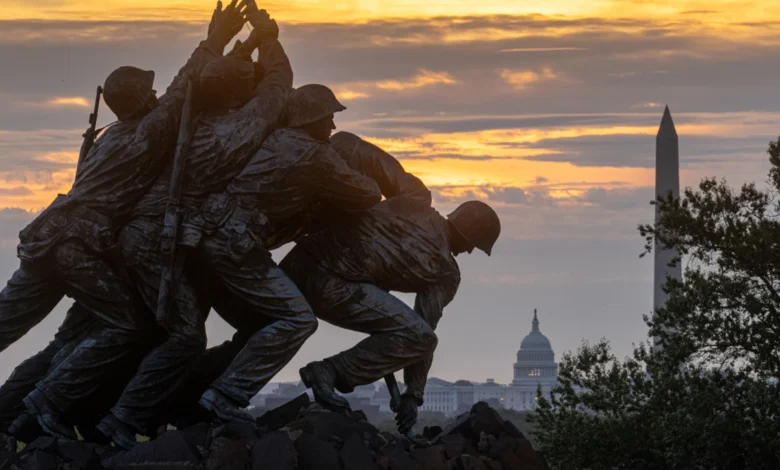
The debate over the administration’s urban redesign efforts reached a new inflection point following a series of weekend announcements and social media disclosures. President Donald Trump suggested potential structural overhauls to the John F. Kennedy Center for the Performing Arts, expressing frustration over judicial hurdles regarding branding rights. Shortly thereafter, digital communications from the executive branch featured conceptual imagery of the U.S. Marine Corps War Memorial altered with a gilded finish, sparking immediate public controversy regarding the treatment of national memorials dedicated to military sacrifice.
Background and Context of Capital Redesign Initiatives
The ongoing architectural transformations in Washington, D.C., represent a continuation of design philosophies previously advanced during the administration’s earlier tenure, combined with aggressive new municipal proposals. The federal district, governed by a unique division of local and federal authority, has frequently become a battleground for disputes over aesthetics, historical preservation, and executive overreach.
Critics and urban historians point to a series of recent changes to federal properties as evidence of an accelerating trend toward ornamental modifications. These include the interior redecoration of the Oval Office, the application of metallic finishes to historical statuary near the National Mall, and structural alterations to the White House complex, including the controversial demolition of portions of the East Wing to facilitate the construction of a modern executive ballroom.
Furthermore, recent administrative proposals have targeted foundational elements of the National Mall ecosystem. Controversy erupted last week following admissions by a private contractor regarding technical setbacks encountered during the resurfacing of the Lincoln Memorial Reflecting Pool. Concurrently, plans for a newly proposed "Triumphal Arch" have drawn formal warnings from federal planning agencies, which noted that the planned structure could impose adverse visual and structural impacts on surrounding historic sites, including the boundaries of Arlington National Cemetery.
Chronology of Recent Developments
The timeline of recent announcements regarding Washington’s monuments highlights a rapid acceleration of executive interest in municipal aesthetics:
- September 11, 2026: Federal contractors involved in the National Mall infrastructure projects publicly acknowledge difficulties and delays in completing the restoration of the Lincoln Memorial Reflecting Pool.
- September 16, 2026 (Evening): Administration officials release preliminary assessments regarding the proposed Triumphal Arch, acknowledging potential negative implications for adjacent historic landmarks such as Arlington National Cemetery.
- September 16–17, 2026 (Late Night): President Trump shares remarks regarding potential punitive restructuring of the Kennedy Center if naming conventions are restricted by ongoing judicial reviews.
- September 17, 2026: Digital media channels affiliated with the administration circulate a conceptual rendering depicting the U.S. Marine Corps War Memorial enveloped in construction scaffolding and coated in a reflective gold finish.
Reactions and Public Response
The dissemination of conceptual imagery concerning the Marine Corps War Memorial—commonly known as the Iwo Jima Memorial—prompted swift pushback from military veterans, advocacy organizations, and civic leaders. The monument, which immortalizes the iconic Joe Rosenthal photograph of U.S. Marines raising the American flag atop Mount Suribachi during World War II, holds profound symbolic importance as a tribute to those who lost their lives in service to the country.
The formal inscription on the memorial reads: "In honor and in memory of the men of the United States Marine Corps who have given their lives to their country since November 10, 1775." Critics argue that altering the somber, bronze aesthetic of the memorial with high-gloss metallic finishes undermines its solemn commemorative purpose.
Public figures, including former military personnel, expressed acute dismay at the suggestion of aesthetic modifications. Prominent veterans’ advocates utilized digital platforms to voice strong opposition, warning that any physical intervention on the memorial would provoke widespread civil pushback and institutional resistance from veterans’ groups nationwide.
Similarly, historical preservation societies have mobilized legal and legislative resources to challenge proposed structural additions on the National Mall. Organizations dedicated to maintaining the integrity of Pierre L’Enfant’s original city plan argue that the introduction of monumental arches and non-traditional finishes disrupts the architectural harmony intended for the federal core.
Fact-Based Analysis of Broader Implications
The intersection of executive aesthetic initiatives and broader governance challenges carries significant implications for the administration’s political standing and legislative agenda.
From a political standpoint, dedicating executive attention and federal resources to monument renovation during periods of heightened economic anxiety and complex foreign engagements risks alienating key voter segments. Congressional races, scheduled for November, depend heavily on public perception of government competency and economic management. Observers note that protracted public battles over architectural styling in the capital can overshadow broader policy successes and feed narratives of administrative distraction.
Legally and administratively, proposals to modify federal memorials face substantial institutional barriers. The National Capital Planning Commission (NCPC), the Commission of Fine Arts (CFA), and the National Park Service (NPS) exercise regulatory oversight over design changes within the District of Columbia. Altering federal monuments or constructing new arches requires rigorous environmental and historical impact assessments under the National Environmental Policy Act (NEPA) and the National Historic Preservation Act (NHPA). Consequently, any unilateral attempt to gild or structurally alter memorials such as the Iwo Jima monument or to demolish established cultural institutions like the Kennedy Center is expected to encounter immediate legal injunctions and prolonged courtroom challenges.
As the administration continues to weigh its options for municipal restructuring, the debate underscores deep ideological divides regarding the stewardship of American history, the appropriate boundaries of executive authority in urban planning, and the enduring respect owed to national sites of remembrance.
Related posts: