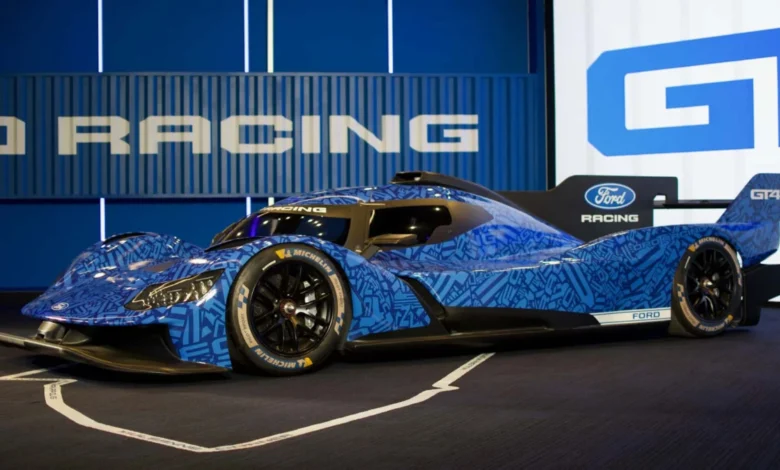
The automotive world is bracing for a seismic shift in endurance racing as the Ford Motor Company formally announces its return to the premier class of the 24 Hours of Le Mans. The manufacturer has unveiled its latest technological masterpiece, the GT41, a hypercar engineered specifically to reclaim the glory of the Blue Oval’s historic triumphs. Taking its namesake from its precise 41.0-inch height—a direct homage to the legendary GT40 that famously broke Ferrari’s dominance in the 1960s—the GT41 is more than a race car; it is a declaration of Ford’s renewed commitment to in-house engineering excellence.
The heart of the GT41 is a naturally aspirated 5.4-liter hybrid V8, a powertrain that represents a significant departure from the outsourcing trends currently dominating the hypercar category. While many manufacturers in the World Endurance Championship (WEC) lean heavily on third-party suppliers for complex hybrid components and powertrain software, Ford Racing has taken the unconventional path of absolute autonomy. By designing, building, and calibrating the engine, as well as developing the low-voltage systems and vehicle software in-house in Dearborn, Michigan, Ford is betting that total control will lead to a more cohesive and competitive racing platform.
A New Era of In-House Engineering
For Christian Hertrich, Ford Racing’s Powertrain Chief Engineer, the GT41 program is defined by the company’s "only us" philosophy. In an era where motorsport success is often bought through massive partnerships and global outsourcing, Ford’s approach is notably insular. "We can’t say that for a lot of programs," Hertrich remarked, acknowledging that while Ford continues to collaborate with external partners for its GT3 and NASCAR efforts, the hypercar program is a singular, internal endeavor.
This strategy carries inherent risks. By eschewing established external expertise, Ford accepts full ownership of its development cycle, including the inevitable technical setbacks that accompany pioneering research. "We will succeed, but in the process to succeed, we will fail, and those failures are ours," Hertrich stated. This transparency highlights a shift in corporate culture at Ford Racing, prioritizing long-term learning and vertical integration over short-term "plug-and-play" racing solutions.
From Production Line to Pit Lane
The genesis of the GT41’s engine is as grounded as its racing pedigree. Every engine begins its life as a standard Coyote block, sourced directly from the same assembly line that feeds Ford’s production vehicles. Once selected, these blocks are transported to a specialized, high-security facility located in close proximity to Ford’s new global headquarters. This facility is the nerve center of the operation, a labyrinthine building constructed in 1949 that now houses over 100 sophisticated test cells.
The testing environment is rigorous, designed to simulate the brutal, relentless conditions of a 24-hour race. Inside the dyno cells, the 5.4-liter V8 is pushed to its absolute limits, recreating the sustained high-RPM stress of the Mulsanne Straight. Recently, the team utilized these cells to validate the 795-horsepower, supercharged 5.2-liter V8 of the Mustang Dark Horse SC—the first production engine to undergo such validation in the facility in over two decades. The fact that the same infrastructure is now being used to refine the GT41’s naturally aspirated heart speaks to the cross-pollination between Ford’s high-performance consumer cars and its top-tier racing machines.
The Anatomy of the Workshop
Perhaps the most striking detail of the GT41 project is the modest scale of the production facility. Tucked away in a 800-square-foot room—a space that did not even exist 15 months ago—two dedicated Ford Racing technicians oversee the engine build. The room is tight, functional, and devoid of the sterile, high-tech aesthetics often associated with modern Formula 1-style operations.
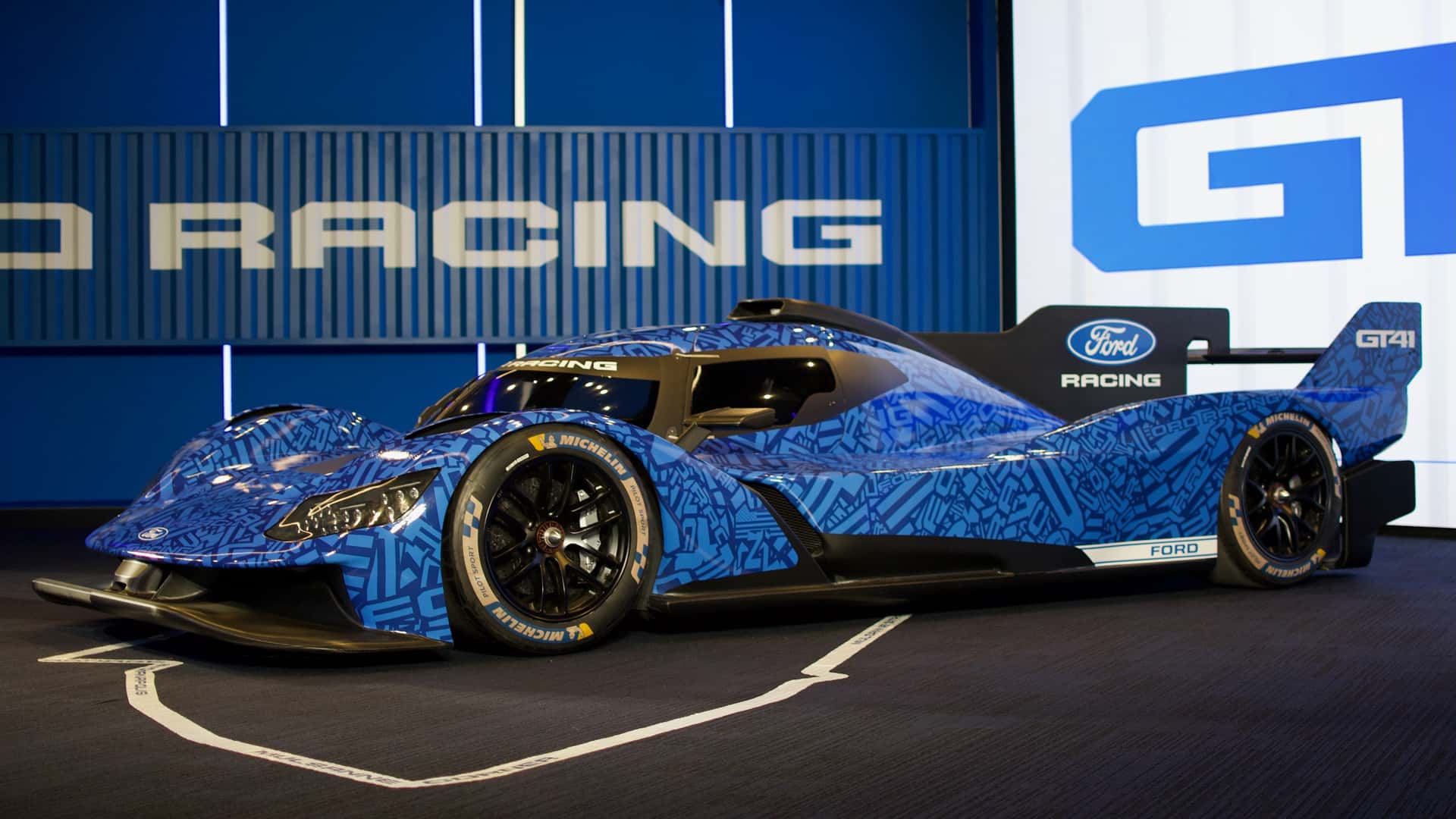
This compact footprint is a strategic choice. By housing the engine builders, software engineers, and test technicians in the same building, Ford has drastically reduced the latency between data acquisition and mechanical adjustment. If a test cell detects an anomaly, the solution is often only a few dozen feet away. This geographical and operational intimacy is a hallmark of the GT41’s development, aimed at maximizing efficiency in a compressed, high-stakes development timeline.
A Historic Timeline and Future Ambitions
The development of the GT41 has been a whirlwind of activity, following a deliberate, fast-tracked schedule to ensure readiness for the 2027 season. Key milestones have included:
- Late 2025: Conceptualization and initial design of the in-house hybrid powertrain.
- February 2026: First prototype engine moved to the dynamometer lab for initial stress testing.
- December 2026 – January 2027: Intensive track testing program to finalize chassis dynamics and aerodynamics.
- March 2027: Official racing debut at the opening round of the WEC in Qatar.
- June 12, 2027: The ultimate test at the 24 Hours of Le Mans.
- November 2027: Final season wrap-up in Bahrain.
This timeline leaves little margin for error. The official public unveiling, scheduled to take place at Ford Field during a high-profile Detroit Lions Thanksgiving game, will include a promotional campaign featuring actor Matt Damon—a nod to the company’s cinematic history with the Ford v Ferrari narrative—directed by the visionary Zack Snyder.
Implications for the Hypercar Category
The introduction of the GT41 is likely to force a reassessment of the current WEC landscape. The hypercar class is currently dominated by manufacturers that utilize a mix of internal development and strategic supplier partnerships. By proving that a massive OEM can maintain total control over a hybrid-powered prototype, Ford is challenging the industry standard.
Should the GT41 prove successful, it could signal a trend toward "full-stack" automotive racing, where the value of a manufacturer’s brand is tied directly to the proprietary nature of its technology. If Ford struggles, critics will point to the necessity of specialized, outside expertise in the modern era of hybrid endurance racing. Either way, the implications for Ford’s brand identity are significant. The GT41 is not merely a tool for winning trophies; it is a rolling advertisement for the engineering capability of the Ford Motor Company in the electrification era.
A Legacy Renewed
The name "GT41" is laden with heavy expectations. When the GT40 arrived in the 1960s, it changed the trajectory of the company, proving that Ford could compete with, and ultimately defeat, the most prestigious names in European sports car racing. The GT41 does not seek to replicate the 1960s; it seeks to modernize the philosophy that birthed them.
As the team prepares for the grueling nine-round WEC calendar, the focus remains on the synthesis of legacy and future. The exhaust headers glowing red in a windowless test cell in Dearborn are a visual metaphor for the intensity of the project. While the world will focus on the aesthetic beauty of the hypercar when it hits the track in Qatar, the true story of the GT41 lies in the small, cramped room where technicians are hand-assembling the future of the Ford brand.
For the racing community, the return of Ford to the top class of the 24 Hours of Le Mans is the most anticipated narrative in endurance sports. With a dedicated, in-house team and a powertrain born from a synthesis of production-line reliability and racing-grade performance, Ford is positioning itself as a disruptor once again. Whether the GT41 will find its place in the pantheon of racing legends alongside the GT40 remains to be seen, but the company’s intent is clear: they are back, they are building it themselves, and they are prepared to face the consequences of their own innovation in pursuit of the ultimate podium.