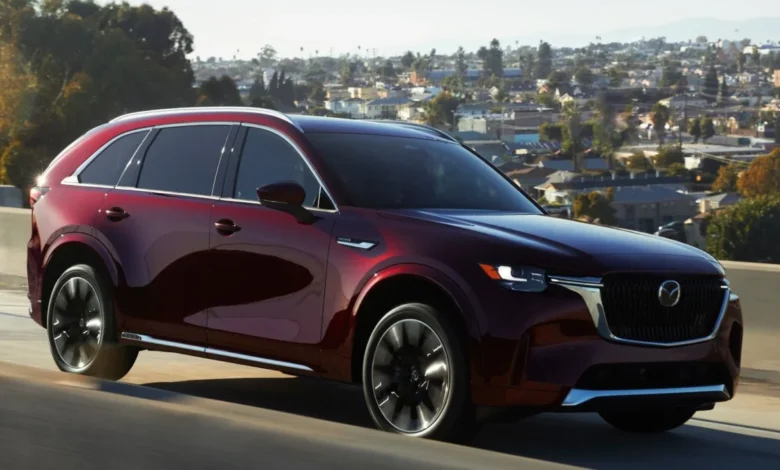
Shopping for a family vehicle in the contemporary automotive marketplace often exposes consumers to a severe affordability crisis. According to data compiled by Kelley Blue Book (KBB), the average transaction price for a mid-size SUV hovers near the $50,000 threshold. Furthermore, purchasing a pre-owned vehicle from traditionally high-value mainstream Japanese brands like Honda and Toyota rarely yields the substantial financial relief buyers historically expect. However, an alternative option exists within the pre-owned market that has largely evaded mainstream attention, offering luxury-adjacent features, innovative engineering, and steep depreciation discounts: the Mazda CX-70 and CX-90 Plug-In Hybrids (PHEVs).
As automotive manufacturers navigate shifting powertrain regulations and fluctuating consumer demand, Mazda has attempted to carve out a distinct market niche. By positioning its latest generation of mid- and full-size sport utility vehicles as sportier, more upscale alternatives to segment staples like the Honda Pilot and Toyota Highlander, the brand has successfully elevated its market perception. Despite these premium aspirations, early-adopter depreciation curves have created a unique window of opportunity for budget-conscious families seeking modern, well-equipped transport without absorbing the initial retail sting.
Evolution of Mazda’s Flagship SUV Architecture
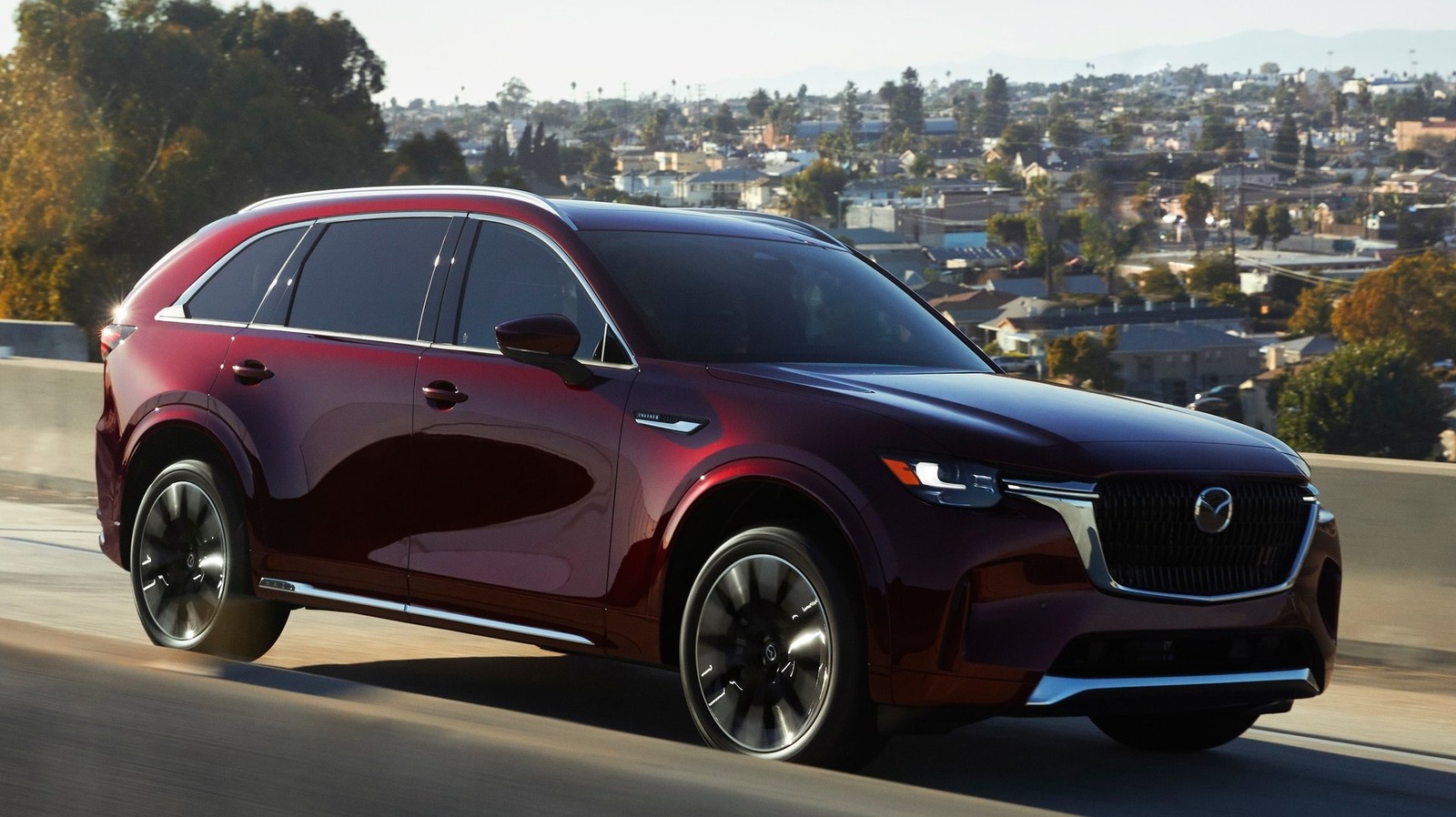
The contemporary era of Mazda’s large-platform vehicles began with the debut of the three-row CX-90 for the 2024 model year, followed closely by the introduction of the two-row CX-70 variant for the 2025 model year. Mechanically and structurally, the two vehicles are nearly identical, utilizing the same underlying platform, powertrain options, and exterior styling cues from the front doors forward.
The primary divergence between the models lies in interior packaging. The CX-90 accommodates up to eight passengers across three rows of seating, making it a direct competitor to traditional family haulers. Conversely, the CX-70 eliminates the third-row bench entirely, repurposing that space to maximize cargo capacity for buyers who prioritize luggage space over passenger volume. This minor configuration difference typically translates to a slight price reduction of approximately $1,000 for comparably equipped trims.
Both architectures were engineered to support a diverse array of powertrains, including a rare turbocharged straight-six engine and a plug-in hybrid system. When purchased brand new, fully loaded variants of either the CX-70 or CX-90 can easily climb toward the $60,000 mark. The plug-in hybrid variants specifically—starting around $44,450 for the CX-70 and $50,695 for the CX-90 (before destination charges)—sit at a higher tier of the pricing structure. Yet, it is precisely these PHEV models that have experienced some of the steepest value retention drops in the current pre-owned ecosystem.
The Phenomenon of PHEV Depreciation
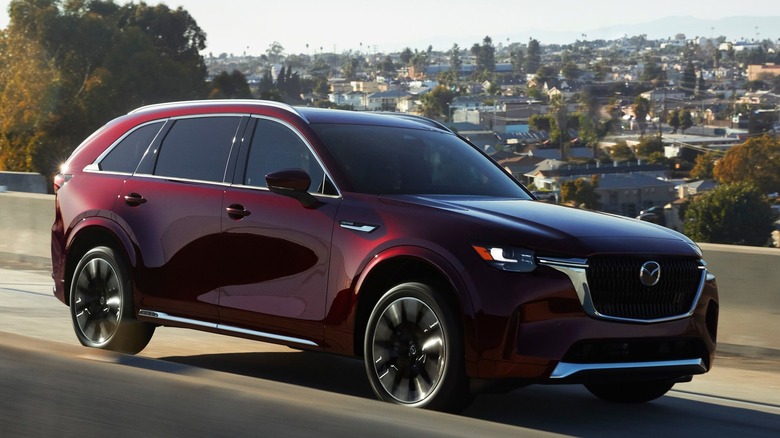
In the secondary automotive market, plug-in hybrid electric vehicles frequently suffer from a unique psychological depreciation penalty. Industry analysts note that mainstream consumers often group PHEVs into the broader category of purely battery-electric vehicles (EVs). Consequently, the pool of potential buyers narrows to individuals whose daily routines and residential infrastructure can seamlessly accommodate plug-in charging logistics.
This market hesitation overlooks a fundamental mechanical reality: plug-in hybrids do not strictly require external charging to function. Once a PHEV exhausts its dedicated all-electric operating range—which measures approximately 26 miles for the Mazda CX-70 and CX-90 PHEV systems, contributing to a total combined range of roughly 490 miles—the vehicle transitions seamlessly into a conventional hybrid mode. While traditional hybrids may achieve superior fuel economy figures once the battery is depleted, a discharged PHEV still offers enhanced efficiency compared to a standard, non-hybrid internal combustion engine.
Because many used-car shoppers harbor reservations about battery longevity, charging infrastructure, and resale values for electrified powertrains, late-model used CX-70 and CX-90 PHEVs are experiencing disproportionate price corrections. This market dynamic has transformed these upscale crossovers from expensive dealership investments into heavily discounted pre-owned bargains.
Pre-Owned Market Realities and Valuation Samples
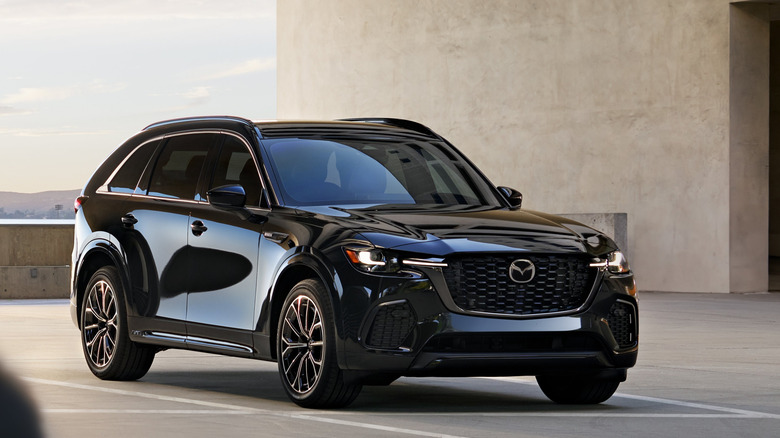
Market aggregators such as Cars.com currently list an inventory of well over 1,000 pre-owned Mazda CX-70 and CX-90 models nationwide. The vast majority of these units trade in the mid-$30,000 range, while approximately 20 percent of available inventory can be acquired for under $30,000.
A closer examination of certified pre-owned (CPO) market samples illustrates the scale of this value proposition:
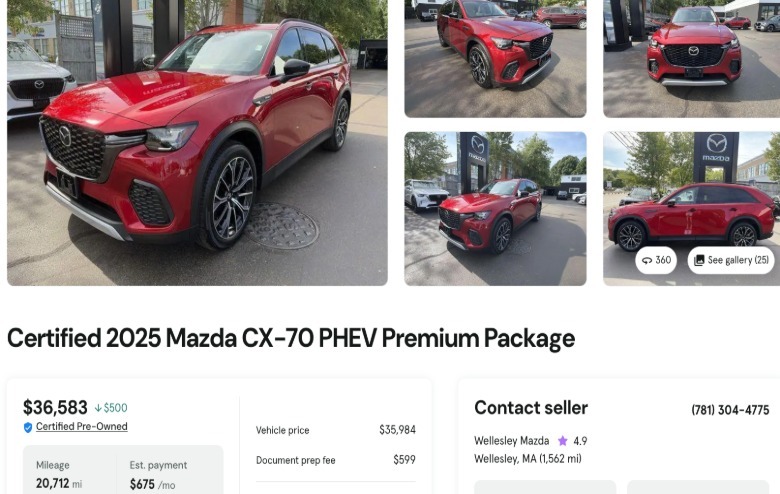
- 2025 Mazda CX-70 PHEV Premium: A dealership-certified model featuring fewer than 21,000 miles is currently listed at $36,583. Given that the original manufacturer’s suggested retail price (MSRP), inclusive of destination charges, approached $56,000, the second owner realizes a practical savings of nearly $20,000.
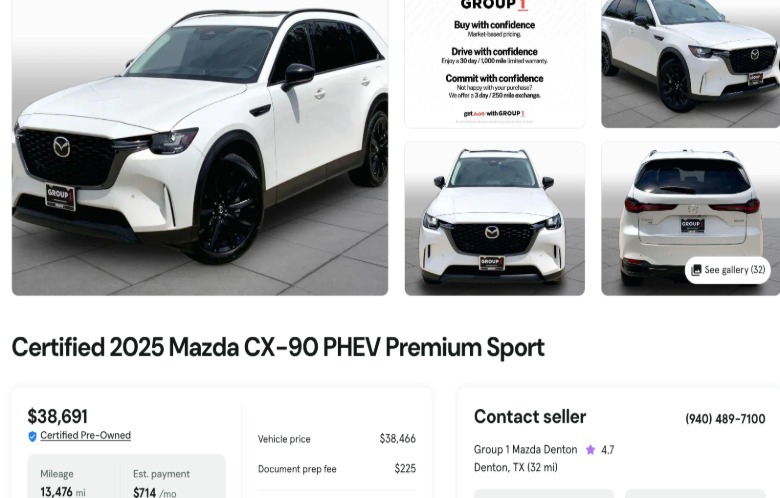
- 2025 Mazda CX-90 PHEV Premium Sport: Another manufacturer-certified unit with under 14,000 miles is priced at $38,691. The original sticker price for this specific build was $57,725, offering a discount of nearly $19,000 for a lightly driven, nearly new three-row family vehicle.
- 2024 Mazda CX-90 PHEV Preferred: An early-production model bearing less than 25,000 miles commands an asking price of $27,941. With an original MSRP of $51,320, the vehicle has depreciated by over $23,000, allowing a buyer to secure a well-appointed, multi-passenger hybrid for roughly half its original retail cost.
Context, Reliability Considerations, and Caveats
While the financial incentives associated with pre-owned Mazda PHEVs are compelling, automotive consultants and industry experts advise prospective buyers to approach the market with a measured strategy.
First-year production vehicles, specifically certain 2024 models, encountered initial software and mechanical teething issues common to newly launched platform architectures and complex electrified powertrains. To mitigate the risk of post-purchase repair expenses, automotive professionals strongly recommend targeting manufacturer-certified pre-owned (CPO) vehicles. CPO programs typically extend factory warranty protections, providing a safety net against unforeseen mechanical complications.
Furthermore, interior packaging nuances warrant physical inspection before purchase. While the Mazda CX-90 provides adequate accommodation in its first and second rows, its third-row seating arrangement is notably tighter and less accommodating for adults compared to boxier competitors in the mid-size segment. Families who regularly utilize all seating positions may find the cargo-to-passenger compromise less ideal than what is offered by traditional domestic or Korean three-row rivals.
Broader Industry Implications
The rapid depreciation of late-model plug-in hybrid SUVs highlights a broader trend within the North American automotive sector. As manufacturers rush to meet regulatory emissions standards by introducing electrified variants of core internal combustion models, the secondary market is forced to absorb inventory that consumers may not fully understand or trust.
For savvy automotive consumers unaffected by the psychological barrier of plug-in technology, this friction represents a distinct financial advantage. Vehicles like the Mazda CX-70 and CX-90 PHEV—which deliver athletic handling, upscale interior appointments, and versatile powertrain options—can be acquired on the used market at a fraction of their original cost. As these models continue to mature in the pre-owned ecosystem, they serve as a practical antidote to widespread consumer sticker shock, proving that luxury-level transportation does not necessarily require a new-car price tag.