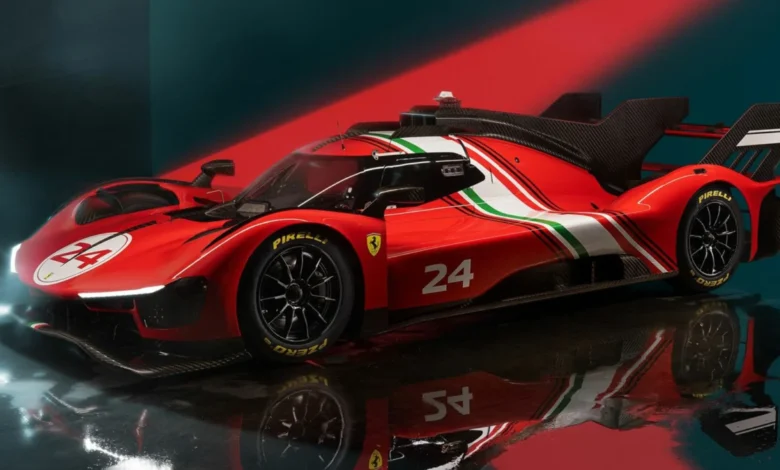
The high-end world of exclusive automotive track days reached a sobering financial peak at the recent Ferrari Finali Mondiali event in Barcelona, where a catastrophic collision occurred between two of the most valuable, track-only machines ever produced by the manufacturer from Maranello. A privately owned Ferrari 499P Modificata—a hypercar derived directly from Le Mans-winning prototype architecture—collided with a legendary Ferrari Formula 1 car, generating repair estimates likely to run well into the millions of dollars. Despite the immense financial scale of the incident, which unfolded before stunned spectators and captured on video, both drivers walked away from the wreckage unharmed and exchanged handshakes in the pit lane.
The Anatomy of an Exclusive Paddock: Understanding Corse Clienti
To understand the magnitude of this incident, one must examine the ultra-exclusive ecosystem that facilitated it. Owning a standard production Ferrari road car is an aspiration for millions of enthusiasts worldwide, but for the automotive world’s elite collectors, standard ownership represents merely a starting point. Ferrari’s proprietary Corse Clienti program is an invitation-only initiative designed for the marque’s most prolific and deep-pocketed patrons.
Through Corse Clienti, wealthy enthusiasts acquire and maintain retired Formula 1 grand prix cars, experimental XX-program development vehicles, and, most recently, the customer-version endurance racers derived from the World Endurance Championship (WEC). These clients do not merely purchase garage queens; they pay for factory-supported track events around the globe. Ferrari dispatches teams of Maranello engineers, technicians, and spare parts trucks to international circuits, ensuring that these owners can experience authentic racing machinery without managing the complex logistics independently. However, driving multi-million-dollar, carbon-fiber racing prototypes at high speeds always carries a catastrophic margin of error.
Chronology of the Crash at Finali Mondiali
The annual Ferrari Finali Mondiali serves as the grand finale of the racing season, celebrating the culmination of the Ferrari Challenge championships alongside demonstrations of historic F1 machinery and Corse Clienti prototypes. The atmosphere is generally festive, combining competitive racing with sensory-heavy exhibitions of iconic exhaust notes and advanced aerodynamics.
During a recent track session at the Circuit de Barcelona-Catalunya in Spain, the relaxed exhibition atmosphere dissolved into tension. According to footage shared widely on digital platforms, a privately owned Ferrari F2004 Formula 1 car was navigating the circuit during a designated track slot. The driver of the historic grand prix machine began to brake significantly ahead of a left-hand corner, shedding velocity rapidly to negotiate the turn.
Moments later, the low-slung, aerodynamically complex nose of a Ferrari 499P Modificata surged into the frame from behind. Failing to anticipate the immense stopping power and deceleration rate of the lighter, wing-heavy Formula 1 chassis, the 499P driver was unable to halt the prototype in time. The endurance hypercar slammed directly into the rear transmission casing and crash structure of the F2004.
The kinetic impact was severe enough to momentarily lift the rear wheels of the Formula 1 car off the asphalt before the grand prix machine slammed back down onto the track surface. Carbon fiber bodywork exploded into the air, scattering fragments across the racing line. Both vehicles sustained immediate visible damage, prompting track marshals to deploy local yellow flags and halt the session.
Deciphering the Mechanics of the Collision
From a technical perspective, high-performance track incidents of this nature highlight inherent design differences between various tiers of motorsport engineering. Unlike standard road vehicles and touring cars, open-wheel Formula 1 cars are not equipped with traditional, highly visible rear brake lights. Under maximum deceleration, an F1 car sheds speed at a rate that often startles drivers unaccustomed to open-wheel physics.
Furthermore, modern endurance prototypes like the 499P Modificata feature enclosed cockpits with significantly restricted rear visibility, heavily reliant on digital rearview camera systems rather than expansive glass or traditional mirrors. Combined with the closing speeds inherent in a multi-class or multi-model track day—where modern hybrid endurance prototypes share space with naturally aspirated V10-era grand prix cars—the potential for misjudging braking markers increases exponentially. The 499P driver likely suffered a combination of obscured visibility, a lack of visual braking cues on the F2004, and an underestimation of the F1 car’s stopping distance.
Immediate Aftermath and Sportsmanship in the Paddock
In stark contrast to professional motorsport championships where high-profile clashes routinely spawn fierce team rivalries, driver protests, and public blame-shifting, the aftermath of this Barcelona collision was remarkably civil.
Shortly after the vehicles were brought to a halt and guided off the racing surface, the two drivers met in the pit lane. Video footage from the paddock revealed both men approaching one another calmly, removing their helmets, and exchanging a cordial handshake. The gesture underscored the gentlemanly code often prevalent within elite track-day communities, where participants acknowledge the inherent risks of playing with automotive history.
Track marshals and Ferrari’s specialized Corse Clienti technical crew swiftly secured both machines, loading them onto flatbed transport trucks to be transferred into the secure confines of the team garages. Engineers immediately set to work evaluating the structural integrity of the carbon-fiber monocoques, suspension mounting points, and expensive aerodynamic assemblies.
A Multi-Million-Dollar Financial Impact
While neither driver was physically injured, the financial toll of the incident is staggering. The vehicles involved are not merely expensive; they are irreplaceable monuments of automotive engineering and motorsport heritage.
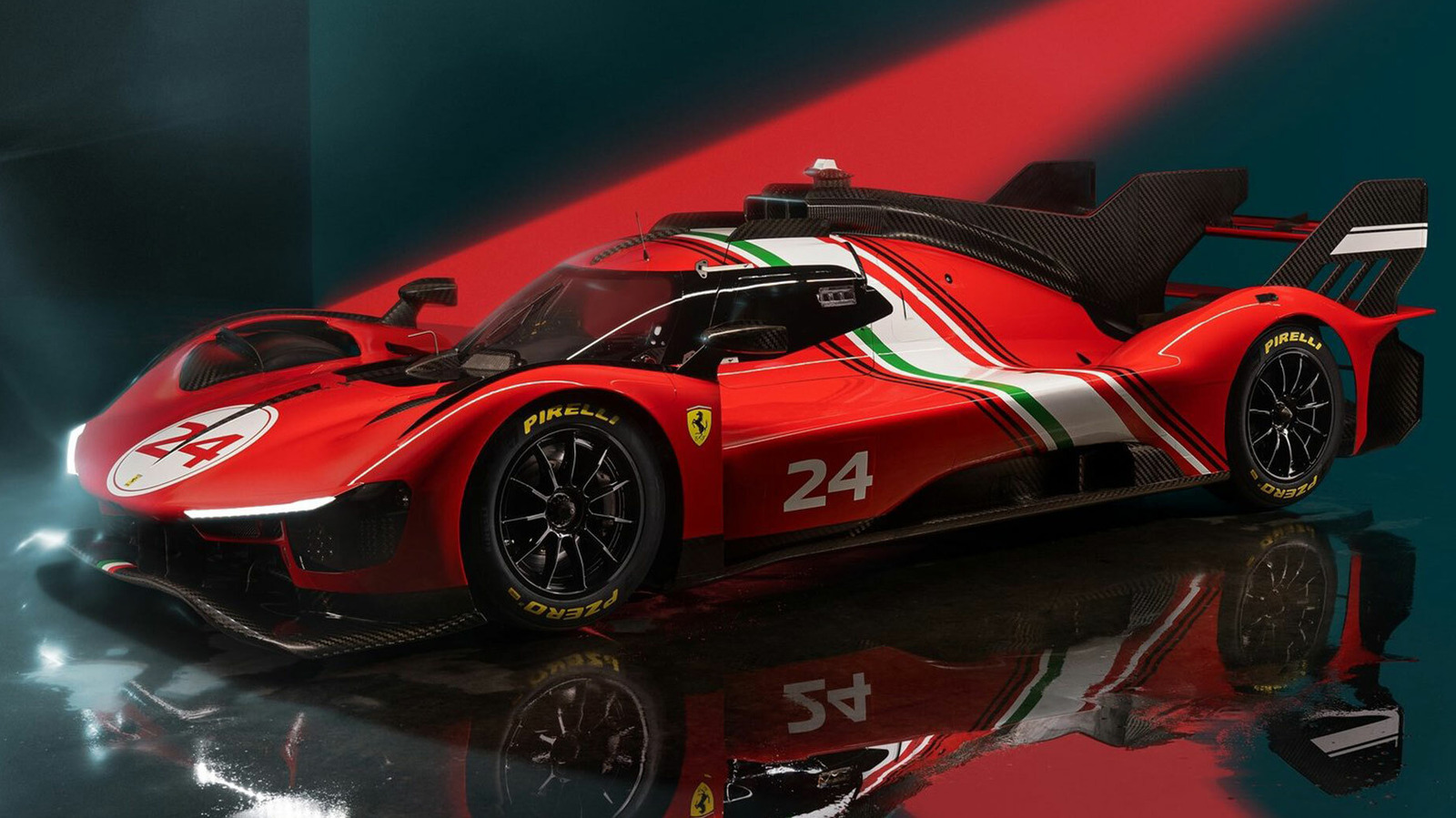
The Ferrari 499P Modificata is a non-competition, track-only variant of the 499P that conquered the 24 Hours of Le Mans. Powered by a hybrid powertrain combining a twin-turbocharged V6 engine with an electric front-axle motor, the Modificata represents the cutting edge of contemporary endurance technology. Earlier this month, a rare example of the 499P Modificata changed hands at a Swiss auction house for the equivalent of $9.7 million. Repairing the front crash structure, active aerodynamics, and carbon-fiber body panels of the wrecked prototype will easily demand a six-figure invoice from the factory.
Even more formidable is the provenance of the F2004. The Ferrari F2004 is widely regarded as one of the most dominant and successful Formula 1 cars in history, having carried Michael Schumacher to his seventh and final World Drivers’ Championship during a season where the Scuderia claimed 15 victories out of 18 races. While the exact chassis designation and specific race history of the car involved in the Barcelona crash have not been publicly disclosed by collectors, historical valuations for Schumacher-era championship machinery are astronomical.
In 2005, an F2004 sold at a public auction for a then-record $3.3 million. In the decades since, the market for vintage Ferrari F1 cars driven by Schumacher has skyrocketed. In late 2022, a sister championship-winning car from the preceding era—a Ferrari F2003-GA—fetched an astonishing $14.9 million at a Sotheby’s auction. The rear carbon transmission housing, rear wing assembly, and potential gearbox damage sustained by the F2004 in the collision will require specialist craftsmanship directly from Maranello’s historic racing division to restore.
Insurance, Liability, and the Broader Implications
Incidents of this magnitude raise complex questions regarding insurance and liability within exclusive track clubs. While standard automotive insurance policies universally exclude damage sustained during timed or untimed track driving events, high-net-worth collectors participating in manufacturer-run programs often utilize specialized high-value asset and motorsport underwriting firms. These policies frequently cover static display, transit, and sometimes closed-circuit track use, albeit subject to exorbitant deductibles and strict underwriting conditions.
Regardless of insurance coverage, individuals who participate in the Corse Clienti program possess the financial liquidity necessary to absorb catastrophic repair costs. For Ferrari, the incident serves as an inadvertent reminder of the raw, untamed nature of the machinery it builds for its clientele.
As modern hypercars grow increasingly complex and historic F1 cars continue to appreciate into undisputed fine-art territory, track days organized by manufacturers will face escalating scrutiny regarding safety briefings, driver classification, and spacing on circuit. Nevertheless, as long as billionaires seek the visceral thrill of driving Le Mans winners and championship Grand Prix cars at full tilt, the risk of high-value on-track contact will remain an accepted, albeit heart-stopping, cost of admission.