The vanishing harvest: How erratic rainfall and climate shifts are crippling Nigeria’s waterleaf supply

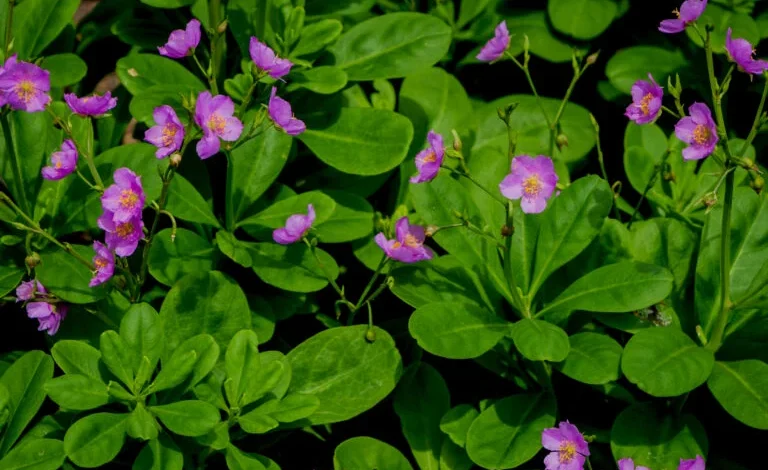
The lush, succulent leaves of waterleaf (Talinum fruticosum) have long served as a dietary staple across southern Nigeria, forming the backbone of iconic cultural soups like edikang ikong and afang. However, this resilient vegetable, prized for its medicinal properties and rapid growth, is currently facing an unprecedented production crisis. From the smallholdings of Calabar to the bustling urban markets of Lagos, farmers and consumers alike are grappling with a supply shortfall driven by increasingly volatile weather patterns, persistent flooding, and the mounting economic pressures of a changing climate.
As the wet season in Nigeria has become characterized by unpredictable and extreme precipitation events, the foundational agricultural cycles that sustain smallholder farmers are buckling under the strain. The result is a dual crisis: fields that are either too saturated to allow for root development or too scorched by heat to support growth, creating a market environment defined by scarcity, price volatility, and uncertainty.

The anatomy of a cultivation crisis
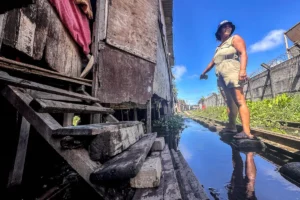
For farmers like Enono Koka, a 33-year-old grower in downtown Calabar, the agricultural calendar has become a gamble. Walking through her farm in early October, she pointed to a patch of stunted, spindly waterleaf plants—a meager remainder of a season marked by relentless rainfall between August and September. Most of her crop had succumbed to rot, a common fate for waterleaf when soil moisture levels exceed the plant’s threshold for extended periods.
This narrative is echoed by Joy David Okon, a sexagenarian farmer whose nearby plot tells a similar story of frustration. After investing in manure and careful cultivation, she returned from a brief hiatus to find her farm transformed into a waterlogged marshland. The beds of once-thriving vegetables were shriveled and sparse, a testament to the fact that while waterleaf is a tropical plant, it is not immune to the suffocating effects of prolonged water saturation.
Scientific inquiry into this phenomenon confirms what farmers have observed on the ground. A controlled greenhouse experiment conducted between September 2024 and July 2025 by an international team of researchers—including experts from Ghana, Canada, and the United States—sought to measure the physiological limits of waterleaf. Their findings, published in the journal Crops, indicate that while waterleaf is remarkably adaptive, it possesses clear breaking points. The study revealed that leaf area declined significantly under both extreme drought and severe waterlogging, with photosynthesis rates plummeting under both conditions. Crucially, the researchers noted that the damage caused by water deficiency was even more severe than that caused by saturation, illustrating the narrow window of "ideal" conditions required for the crop to flourish.

Chronology of a climate-impacted sector
The decline in waterleaf production cannot be viewed in isolation; it is a symptom of broader shifts in Nigeria’s meteorological landscape. Historically, Nigeria’s agricultural output was anchored by two distinct seasons: the wet season (April to October) and the dry season. For the 80% of Nigerians who rely on small-scale subsistence farming, this rhythm provided a reliable cadence for planting and harvesting.
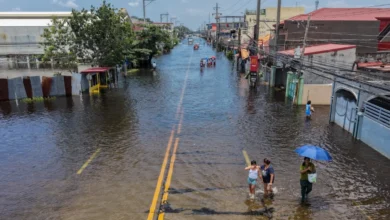
However, data from the past four decades paints a picture of systemic disruption. A 2026 study examining rainfall trends from 1981 to 2022 highlighted a stark dichotomy: while northern and central regions, including Abuja, have seen a decline in total annual rainfall, southern coastal cities have experienced an intensification of downpours. This spatial shift has resulted in frequent, catastrophic flooding.
The trajectory of these disasters has been steep:

- 2022: A combination of heavy rains and the discharge of the Lagdo Dam in Cameroon resulted in the destruction of approximately 569,251 hectares of farmland.
- 2024: The situation deteriorated further, with the U.N. Food and Agriculture Organization (FAO) reporting that nearly 1 million hectares of agricultural land across 29 states were lost to floodwaters.
- Late 2024–2025: Current reports from growers indicate that even when official forecasts predict "normal" rainfall, the local reality is one of daily, heavy, and destructive downpours, leading to the premature death of tender vegetable stems.
Economic ripples and market stress
The impact of this agricultural failure is not confined to the farm gate; it has created a ripple effect that has reached the tables of millions of Nigerians. In local markets, the cost of a single bunch of waterleaf has skyrocketed, leading to what some vendors describe as "vegetable inflation."
Restaurateurs who specialize in traditional soups, which require specific, non-substitutable greens, are finding their profit margins evaporated. For vendors like Margaret Ibok, the cost of raw ingredients for a single pot of soup has surged from 3,000 naira ($2.30) to 8,000 naira ($6) or more. This price surge has forced a shift in consumer behavior, with many households abandoning traditional soup recipes in favor of cheaper, non-leafy alternatives.
This inflationary pressure is compounded by the ongoing energy crisis. Since early 2024, fuel prices in Nigeria have risen by approximately 65%, driven by global supply chain tensions. Because waterleaf is highly perishable and must be transported quickly to market to prevent rot, the increased cost of logistics is passed directly to the consumer. The National Bureau of Statistics has tracked this trend, noting that annual food inflation has surged significantly, leaving low-income families in a state of food insecurity.

Technological barriers to adaptation
Agricultural scientists suggest that the path forward lies in better water management and infrastructure, but the implementation remains a challenge. Techniques such as "controlled environment agriculture"—using high-tech, soil-less greenhouses—could theoretically insulate crops from the vagaries of the weather. However, the high capital expenditure required for such systems makes them inaccessible to the average smallholder farmer.
"There is considerable potential to improve year-round availability," noted Efoo Bawa Nutsukpo, an agricultural scientist involved in recent research, suggesting that more modest interventions like raised beds and improved drainage systems could mitigate some of the damage caused by saturation. Yet, even these "simple" solutions require a level of investment and technical support that is currently lacking in many rural and peri-urban farming communities.
The road ahead
The Nigerian Meteorological Agency (NiMet) has attempted to bolster early-warning systems to help farmers prepare for seasonal anomalies. However, the gap between meteorological prediction and on-the-ground reality remains wide. For growers like Enono Koka, the strategy for now is one of survival: waiting for the rain to cease entirely before committing resources to a new planting cycle.

The crisis facing the waterleaf industry serves as a microcosm of the challenges facing tropical agriculture in the era of climate change. It highlights a precarious dependency on natural cycles that are no longer predictable. As the country grapples with food inflation and the loss of critical harvests, the resilience of traditional farming systems is being pushed to its limit.
Without targeted investment in climate-resilient infrastructure—such as improved irrigation, drainage, and subsidized agricultural inputs—the "slimy but valuable" weed that has nourished generations of Nigerians may become an increasingly rare luxury. For now, farmers and consumers alike remain in a state of suspended animation, watching the skies and waiting for a stability that the climate has, for the time being, withdrawn. As the country navigates these shifts, the ability to adapt to a "new normal" of weather extremes will be the deciding factor in whether the humble waterleaf remains a staple or becomes a casualty of a changing world.
Related posts: