The hospitality industry stands at a critical environmental crossroads, challenged by rising consumer expectations for green travel and the pressing global mandate to reduce carbon emissions from commercial infrastructure. Addressing this challenge requires visionary engineering, substantial capital investments, and a fundamental reimagining of how buildings interact with their
surrounding ecosystems. In the heart of Vermont’s Burlington metropolitan area, developer Doug Nedde and his project team have introduced a potential paradigm shift for the sector: the Sugar House Hotel. Operating as part of Marriott International’s curated Tribute Portfolio, the property merges luxury lodging, regional craftsmanship, and aggressive net-zero energy design. By demonstrating that high-end hospitality can function entirely without fossil fuels while enhancing local biodiversity, the Sugar House Hotel offers a compelling case study for the future of sustainable commercial real estate.
Main Facts and Architectural Engineering
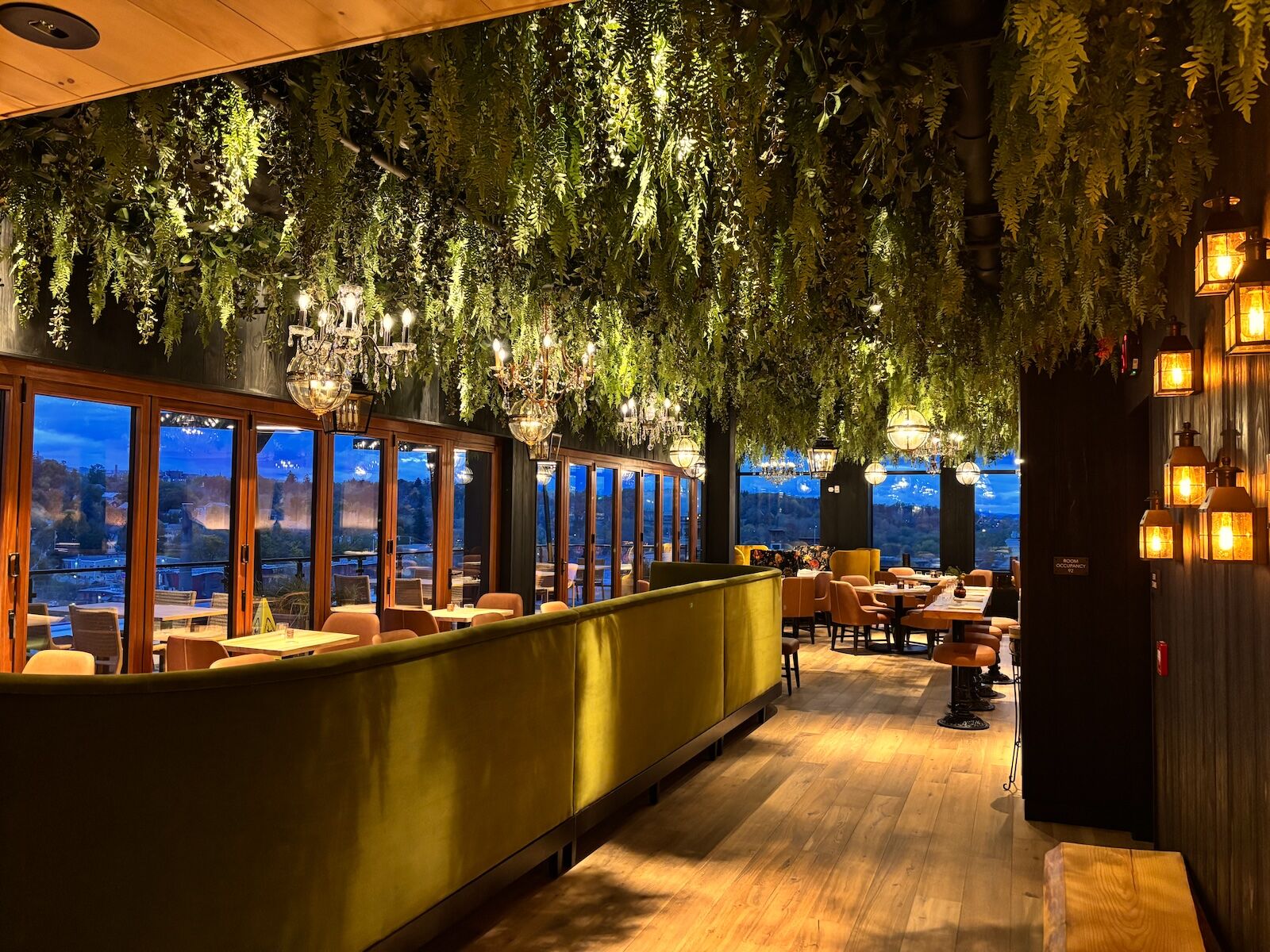
The foundational achievement of the Sugar House Hotel lies in its pursuit of LEED Zero Energy certification and its comprehensive suite of low-impact operational systems. Unlike standard commercial developments that rely on carbon offsets to balance their operational footprint, the Burlington-area hotel was engineered to be entirely all-electric. Natural gas has been eliminated from the property entirely, including within the commercial kitchen facilities of its top-floor restaurant, Treetops.
To achieve high energy efficiency, architectural and mechanical modeling projects that the building will consume 54 percent less energy than a standard code-compliant hotel of equivalent size. The thermal management of the facility is anchored by an advanced geothermal well system situated behind the hotel adjacent to the Casavant Nature Park, which handles heating and cooling demands. This geothermal integration is projected to yield an 82 percent reduction in heating energy and a 69 percent reduction in overall HVAC energy consumption compared to traditional hospitality builds.
Electricity demands are partially supplemented by an onsite rooftop solar array. Additional resource conservation measures include low-flow plumbing fixtures designed to minimize water consumption, alongside advanced water reclamation systems utilized to help restore and sustain the adjacent wetlands in the Casavant Nature Park. Furthermore, the property incorporates a pedestrian bridge spanning a local creek, directing foot traffic away from sensitive watershed areas to protect the local ecosystem.
Chronology and Project Development
The conceptualization and execution of the Sugar House Hotel reflect years of meticulous planning focused on regional integration and environmental stewardship. Doug Nedde, a prominent regional developer and former owner of the Bolton Valley ski resort, spearheaded the venture with a philosophy prioritizing long-term structural viability over short-term financial shortcuts.
Recognizing that building codes and market expectations must evolve to meet climate realities, Nedde elected to absorb the unquantified financial risks associated with cutting-edge green technologies. While initial economic modeling for strict LEED Zero integration lacks standardized ROI case studies in the hospitality sector, the developer views the upfront capital expenditure as an essential investment in future regulatory norms.
Parallel to the construction of the hotel itself, Nedde’s development strategy encompassed community-level infrastructure. A dedicated affordable housing complex was constructed immediately adjacent to the property. This residential addition serves a dual purpose: it provides stable housing for a portion of the hotel’s operational staff, thereby minimizing regional commuter traffic, and integrates the workforce directly into the neighborhood fabric.
Following its completion, the property drew the attention of industry giants. Marriott International’s decision to induct the property into its Tribute Portfolio signaled corporate validation for the low-impact model, establishing a testing ground for sustainable hospitality standards that could be replicated across the global portfolio.
Supporting Data and Environmental Metrics
The operational metrics projected and tracked for the Sugar House Hotel highlight the viability of deep decarbonization in mixed-use commercial buildings. Key performance indicators for the property include:
- Energy Reduction: A 54 percent overall reduction in energy use compared to standard code-compliant hotels of the same size.
- Emissions Lowering: A projected 65 percent reduction in greenhouse gas emissions relative to similar-sized traditional hospitality properties.
- HVAC and Heating Efficiency: An anticipated 69 percent decrease in HVAC energy consumption and an 82 percent reduction in heating-related energy demands, driven primarily by the property’s geothermal loop.
- Power Sourcing: A hybrid energy supply model combining on-site rooftop photovoltaic solar generation with deep-earth geothermal exchange wells.
- Water Management: Utilization of low-flow fixtures across all guest rooms and public spaces, coupled with wastewater management initiatives aimed at local wetland restoration.
Interior Design and Regional Craftsmanship
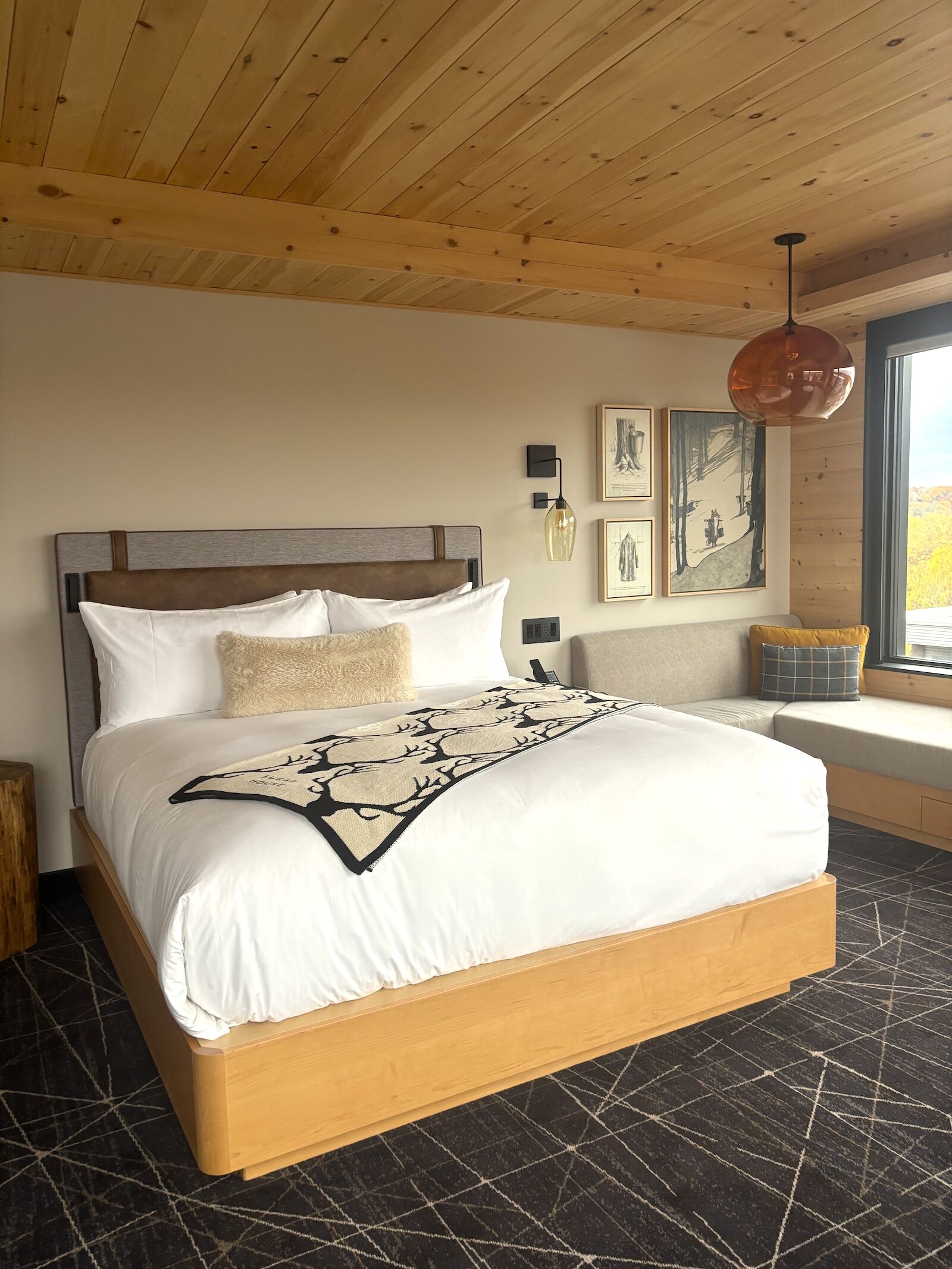
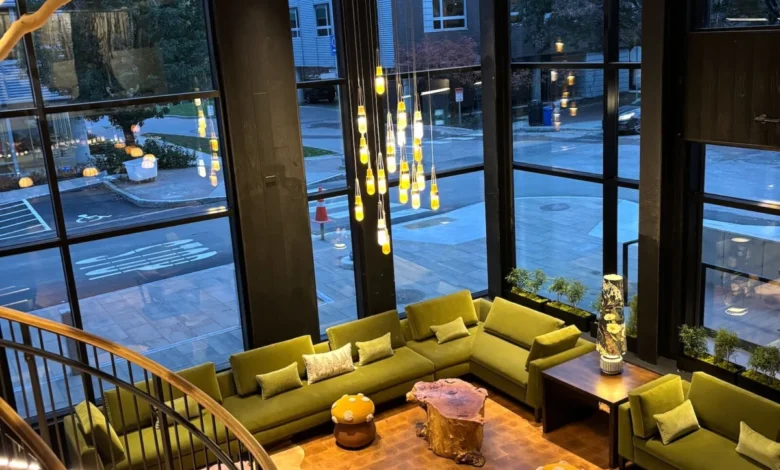
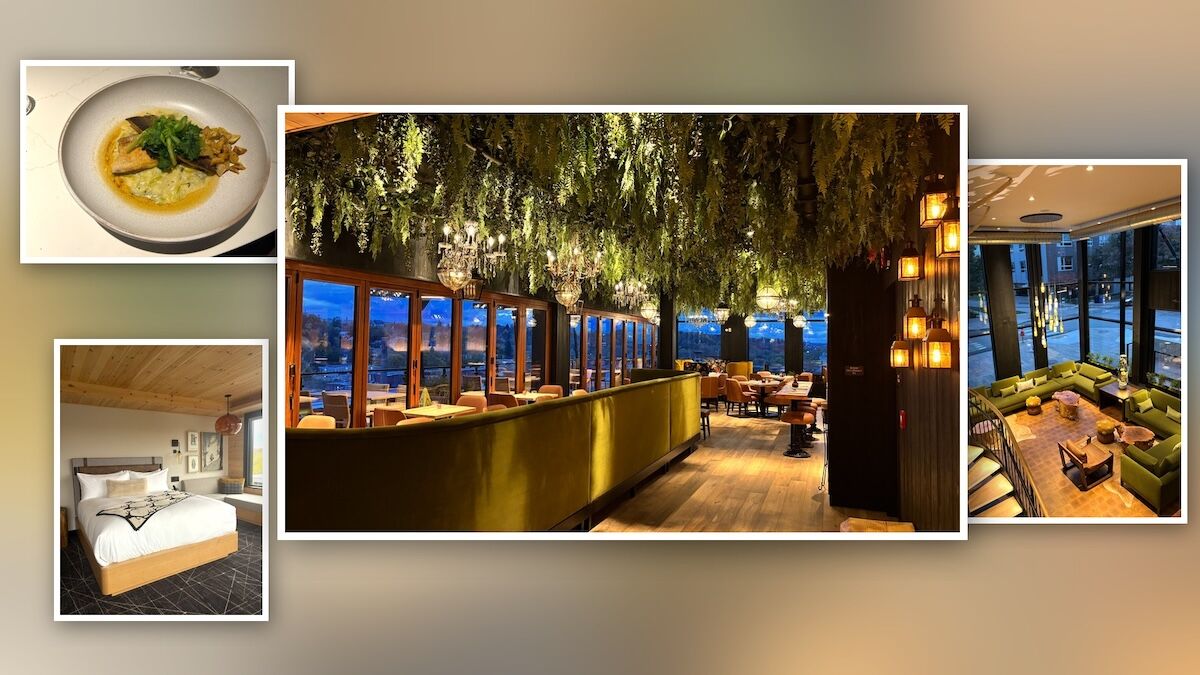
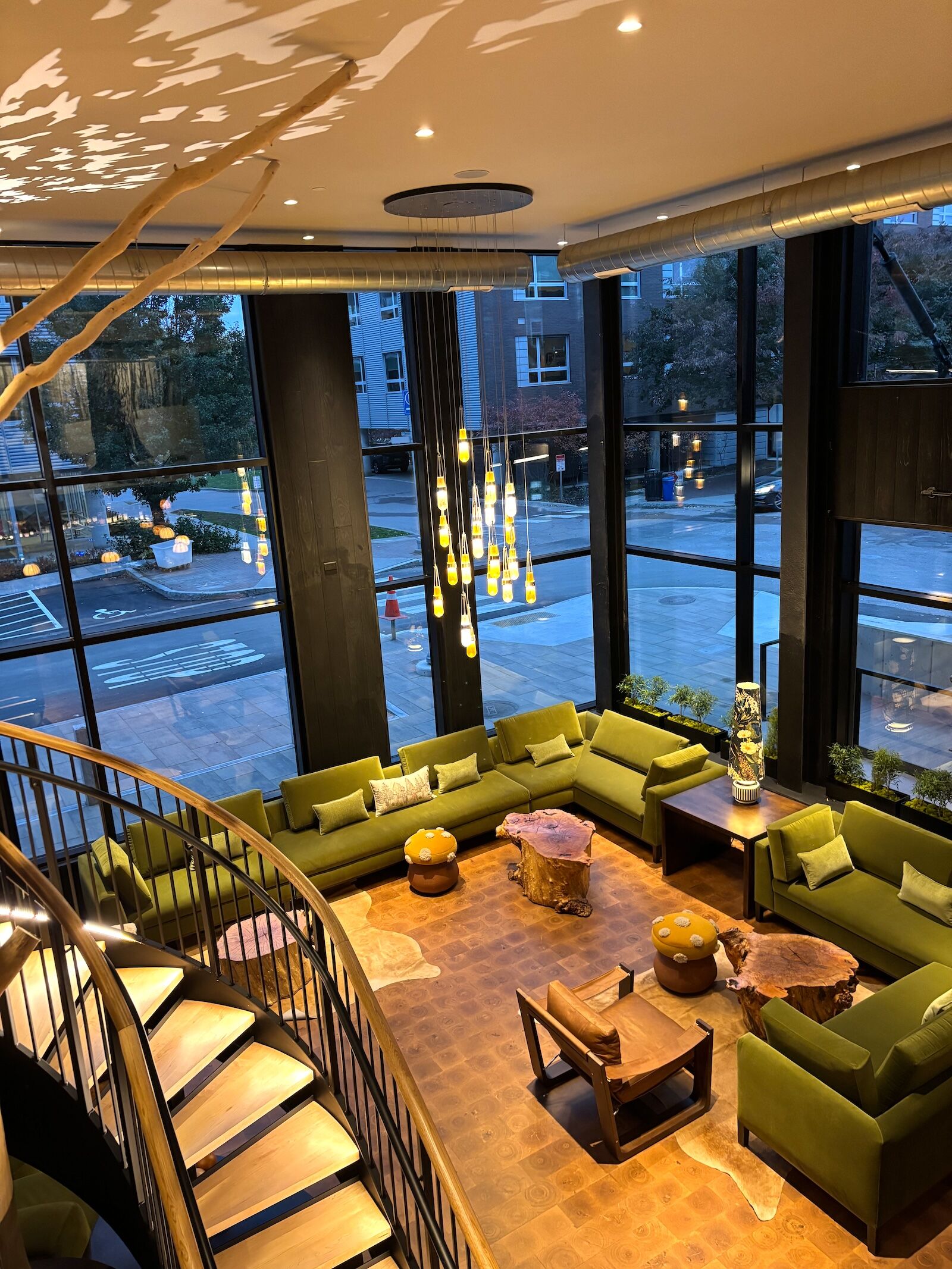
Inside the guest rooms and public areas, the hotel’s aesthetic pays homage to Vermont’s agricultural and forestry heritage, heavily emphasizing biophilic design principles. The sugar maple serves as a central design motif throughout the property. The main staircase connecting the lobby to the second-floor reading area is anchored by two large maple tree trunks sourced from Nedde’s personal property and a neighbor’s land.
The lobby features a central hearth crafted in the geographic shape of Vermont, incorporating the historical mantelpiece of a local 19th-century barn. Reclaimed farmhouse timber is integrated throughout the public lounges and the restaurant space, while the bar at Treetops is constructed from reclaimed timber salvaged from a historic drawbridge formerly connecting to North Hero Island.
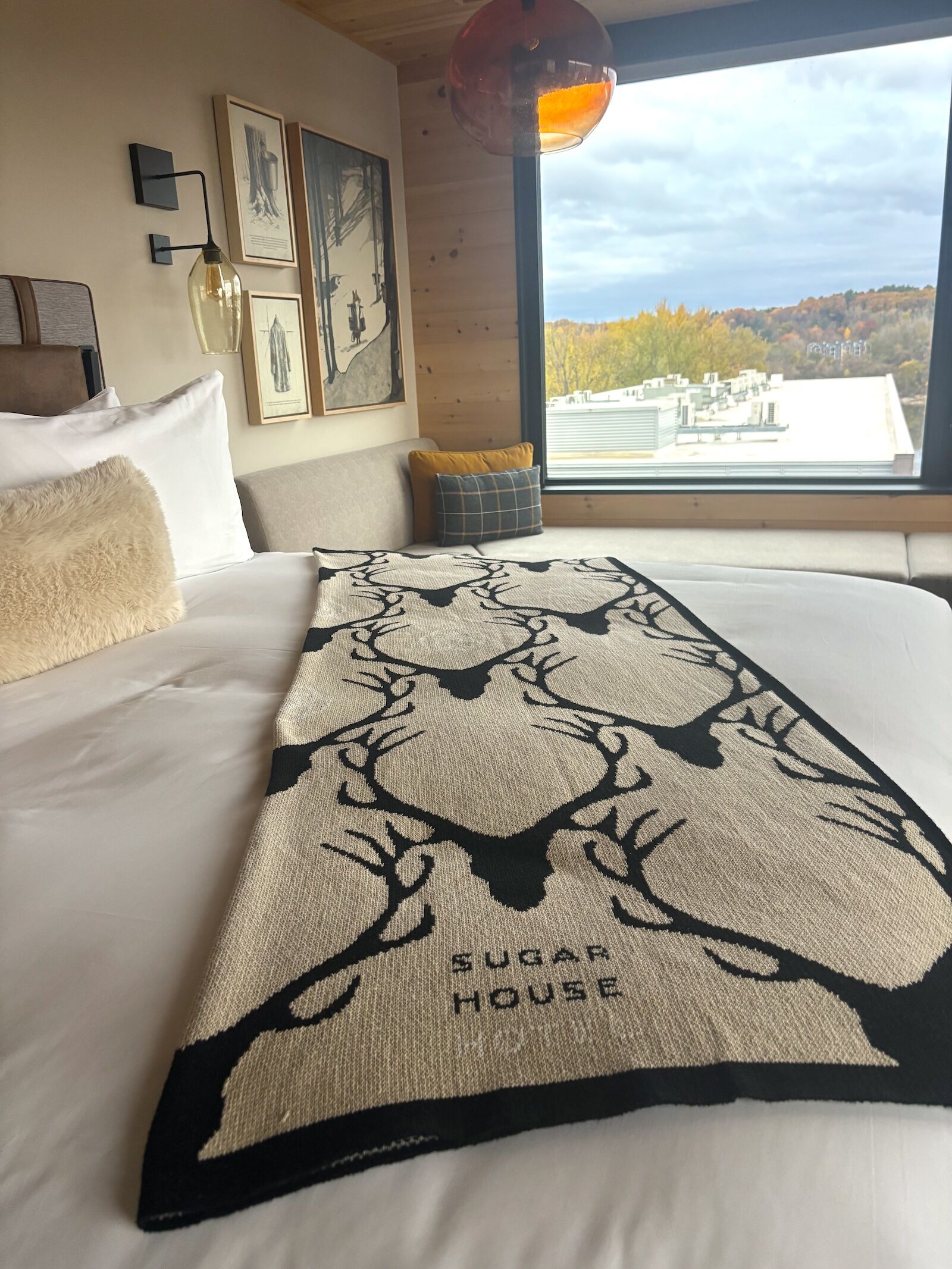
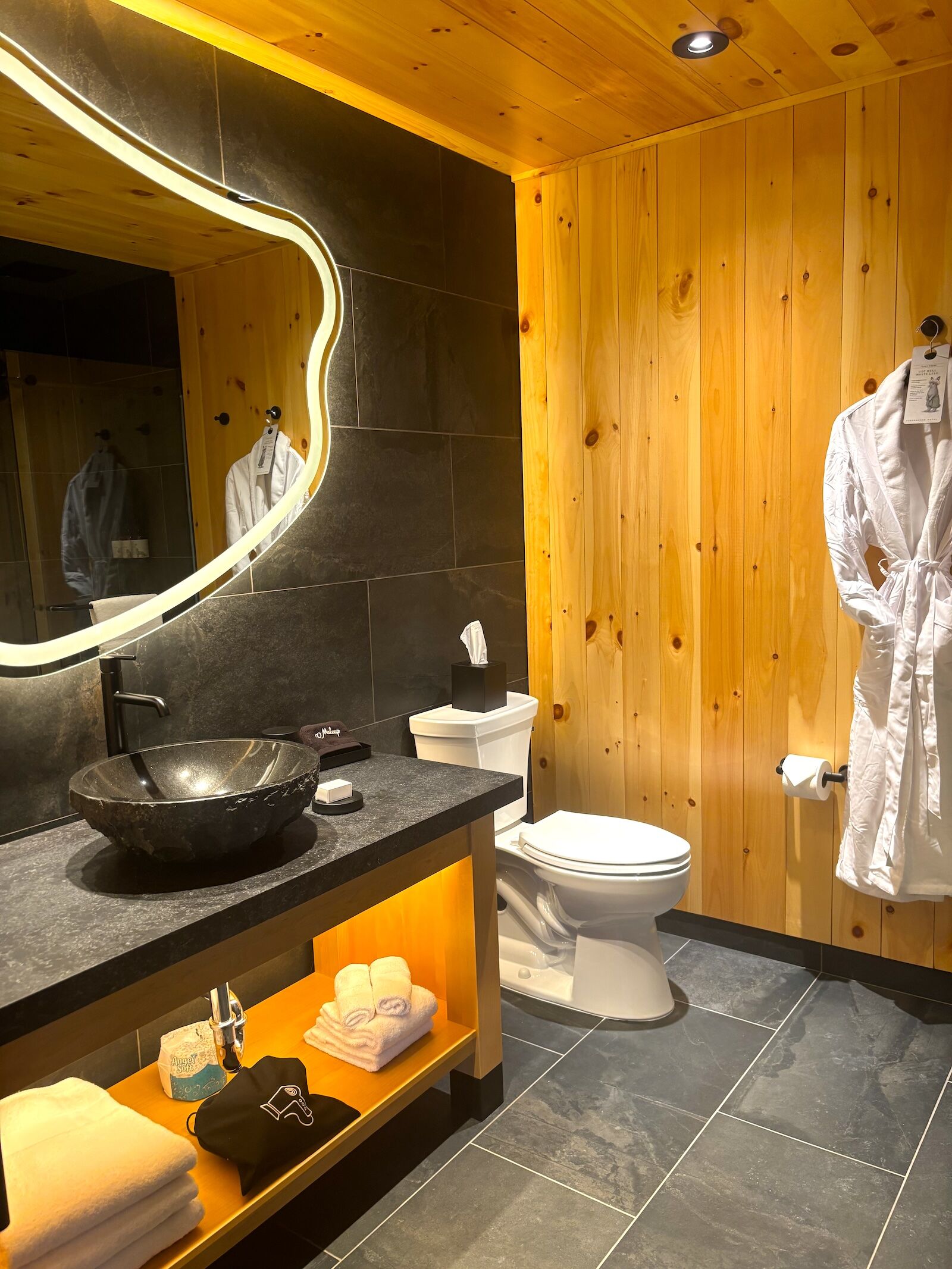
Guest accommodations, which start at approximately $234 per night, are individually named after historical Vermont sugar houses. Rooms feature localized amenities, including custom throw blankets manufactured from repurposed textiles and bath products commissioned using regional materials. Public spaces include the Moss Cafe & Bar, a fitness center, a specialized dog wash station, and the "Poetry Nook," a dedicated reading area stocked with Vermont-inspired literature. Art installations feature handblown glass light fixtures from local Burlington studios that depict traditional sugaring narratives.
Official Responses and Industry Stakeholder Perspectives
While formal corporate statements from Marriott International emphasize the brand’s ongoing commitment to exploring lower-impact operational models through its Tribute Portfolio, local stakeholders and developers have focused on the practical implications of scalable green engineering.
During property walk-throughs, Doug Nedde addressed the financial uncertainties of pioneering all-electric infrastructure in a full-service hotel environment. "There’s no economic case study to whether investing that extra money towards LEED certification and all the sustainability initiatives is going to pay off," Nedde noted. However, he emphasized a forward-looking perspective on industry standards: "I think five, 10 years down the line this will be the norm."

Hospitality analysts have noted that properties implementing net-zero operations without compromising the luxury guest experience bridge a critical gap in consumer adoption. By framing the property around authentic regional culture—such as offering in-house maple syrup tastings, creemee soft-serve machines, and electric vehicle transport via custom-branded vans—the ownership successfully positions sustainability as an integrated component of lifestyle travel rather than an overt, didactic marketing campaign.
Broader Impact and Industry Implications
The opening and operational trajectory of the Sugar House Hotel carry significant implications for the future of urban and regional development. As municipal governments increasingly tighten building emission standards and consumer demographics shift toward eco-conscious travel, hospitality developers face mounting pressure to decarbonize.

Historically, large-scale commercial hotels featuring full-service kitchens, extensive event spaces, and high daily guest turnover have presented formidable engineering challenges for complete electrification. By successfully eliminating natural gas infrastructure and leveraging geothermal and solar power at this scale, the Sugar House Hotel provides a tangible prototype for future commercial builds.
Furthermore, the project underscores the expanding definition of corporate sustainability within real estate. By pairing environmental engineering with community-focused initiatives such as adjacent employee housing and watershed restoration, the development model demonstrates that ecological responsibility and social equity are mutually reinforcing. If the property meets its long-term performance projections, it may accelerate the adoption of similar net-zero frameworks among major hotel conglomerates, ultimately redefining baseline operational standards for the international hospitality industry.