Mercedes-Benz Pivots Strategy Away From Early Level 3 Autonomy Toward Advanced Level 2 and Future Level 4 Systems

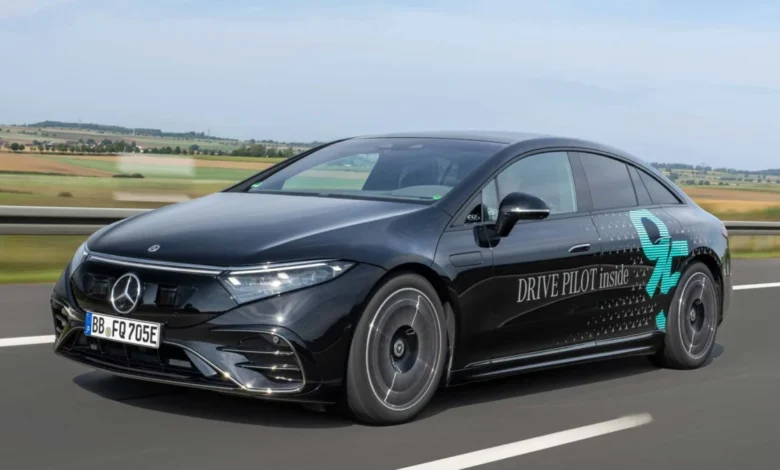
The automotive industry is currently witnessing a significant recalibration of long-term autonomous driving strategies as major manufacturers grapple with the intersection of regulatory hurdles, consumer demand, and technological feasibility. Mercedes-Benz, once a trailblazer in the race to bring conditional automation to public roads, has signaled a strategic shift. The German automaker, which made global headlines in 2023 for becoming the first manufacturer to receive regulatory approval for Level 3 autonomous driving in the United States, is now pivoting its development roadmap. The latest iteration of the flagship S-Class sedan has arrived in the U.S. market without the highly publicized Drive Pilot system, marking a definitive change in the company’s approach to driver-assistance technology.
This tactical retreat from the current Level 3 implementation is not an abandonment of autonomy, but rather a lessons-learned acknowledgment from leadership. Jörg Burzer, Chief Technology Officer at Mercedes-Benz, recently addressed this transition during a media roundtable, noting that the company’s initial foray into Level 3 autonomy provided a stark, data-driven lesson: being the first to market is not synonymous with providing the features that customers find most valuable in their daily commutes.
The Evolution of Drive Pilot and the Level 3 Challenge
To understand this shift, one must look at the technical and operational limitations of the initial Drive Pilot deployment. Launched with great fanfare, Drive Pilot was designed to allow drivers to disengage from the task of driving under specific, highly controlled conditions. Unlike Level 2 systems—which require constant driver supervision—Level 3 systems allow the driver to delegate the driving task to the vehicle, provided the human is ready to intervene when requested.
However, the reality of the 2023 rollout was characterized by strict operational design domains (ODD). The system was initially restricted to speeds of approximately 40 mph and was limited to specific highway stretches and environmental conditions. For many luxury vehicle owners, a system that only functions in slow-moving traffic—and only on select, pre-mapped roads—failed to provide a seamless or particularly useful experience. As Burzer candidly noted, the company realized that "if you are too early, then you see that you have to work on what the customer really wants."
The technical challenge of Level 3 is profound: the manufacturer must assume legal liability for the vehicle’s actions while the system is engaged. This liability requirement necessitates a high degree of sensor redundancy, including LiDAR, radar, cameras, and ultrasonic sensors, all working in concert with high-definition mapping. When the system encounters a situation outside of its predefined operational parameters, it must execute a "safe stop" maneuver. The complexity of managing these handovers in a way that is safe and intuitive for the driver, while adhering to varying state-level regulations across the U.S., proved to be an exercise with diminishing returns for current consumer adoption.
Shifting Focus: The Case for Enhanced Level 2 Systems
With the transition away from the current iteration of Level 3, Mercedes-Benz is reallocating resources toward what it describes as "highly capable" Level 2 systems. This move is consistent with industry trends where automakers are finding more immediate success by refining systems that assist the driver rather than attempting to replace them entirely.
The company’s current flagship driver-assistance suite, branded as MB.DRIVE Assist Pro, represents this evolution. Unlike the restricted, low-speed nature of the initial Level 3 implementation, this system is designed to provide comprehensive, point-to-point assistance in a wider variety of environments. The updated S-Class architecture now incorporates up to 27 distinct sensors, allowing the vehicle to assist with complex maneuvers including automated lane changes, navigation through urban intersections, and responsive braking at traffic signals.
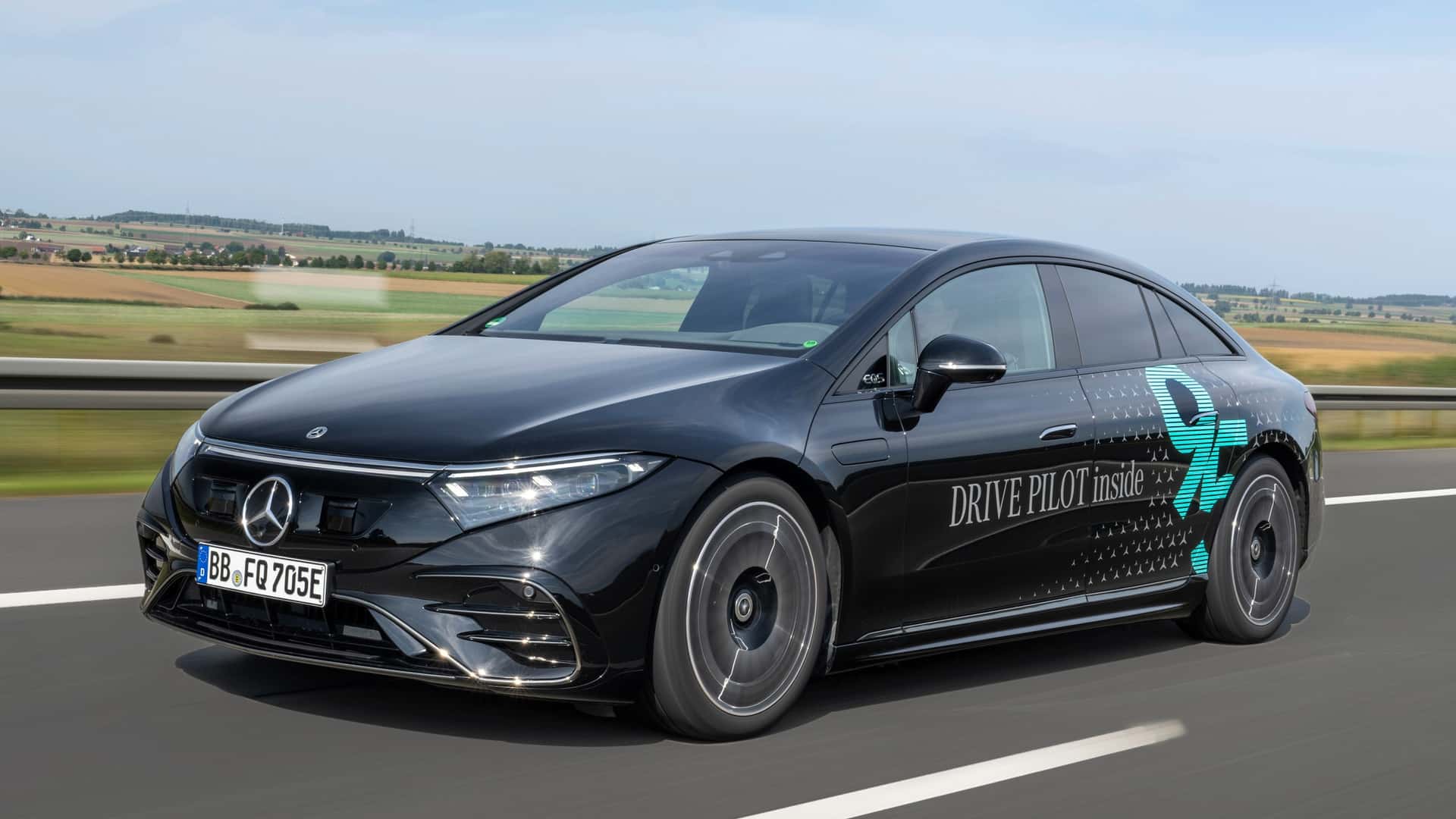
The primary difference in this philosophy is the role of the human operator. While the driver is still required to remain vigilant and ready to take control at all times, the system provides a more fluid, high-utility experience for daily driving. For the average consumer, a system that handles the tedium of highway cruising and urban stop-and-go traffic is perceived as more beneficial than a highly restricted, niche Level 3 feature that is only usable in gridlock. By refining Level 2, Mercedes-Benz aims to increase the frequency of system usage, thereby gathering more data and fostering greater trust in the underlying sensor suite.
The Road to Level 4 and Beyond
While the industry often views Level 3 as a bridge to full automation, Mercedes-Benz is now evaluating whether the resources required to perfect Level 3 are better spent on the leap to Level 4. Level 4 autonomy is defined as a system that can handle all driving tasks within a designated area without any human supervision. In a Level 4 vehicle, the "driver" could theoretically sleep or engage in other tasks for the duration of the trip, provided the vehicle is within its operational domain.
Burzer has clarified that this is a long-term goal. The company estimates that production-ready Level 4 technology will likely not reach the consumer market until after 2030. This timeline is indicative of the massive technical and regulatory barriers that remain. Achieving Level 4 requires not only advancements in artificial intelligence and machine learning but also significant infrastructure communication, known as V2X (Vehicle-to-Everything), to ensure that cars can communicate with traffic lights, road sensors, and other vehicles to avoid accidents.
The strategy for this rollout will be, by necessity, incremental. It is anticipated that Level 4 capabilities will first appear in controlled environments—such as high-end ride-hailing fleets or dedicated autonomous transport lanes—before migrating to private passenger vehicles.
Implications for the Automotive Landscape
The decision by Mercedes-Benz to deprioritize Level 3 in the U.S. is a bellwether for the broader luxury automotive sector. For years, the industry was locked in a "race to autonomy," with manufacturers competing to announce the highest level of self-driving capability. However, the cooling of the autonomous vehicle hype cycle—evidenced by the scaling back of programs at companies like Ford, Volkswagen, and various robotaxi startups—suggests a more pragmatic era.
The implications of this shift are threefold:
- Liability and Regulatory Alignment: By focusing on Level 2, manufacturers maintain the driver as the primary operator, significantly reducing the immediate legal exposure associated with autonomous incidents. This allows for faster deployment of software updates and feature enhancements.
- Consumer Value Propositions: Automakers are recognizing that technology is only as valuable as the time it saves. If a driver cannot comfortably or legally disengage from the vehicle’s operation, the "autonomous" label loses its appeal. The focus is shifting from the marketing of "levels" to the marketing of "convenience and safety."
- Capital Allocation: Developing Level 3 technology is an extremely expensive endeavor. By concentrating on Level 2 as a revenue-generating, high-adoption feature set, and moving toward a long-term, R&D-heavy approach to Level 4, Mercedes-Benz is optimizing its capital expenditures for long-term sustainability rather than short-term marketing victories.
Chronology and Context
- 2021-2022: The initial excitement surrounding Level 3 technology reached a peak as Mercedes-Benz and competitors announced plans for global deployment.
- 2023: Mercedes-Benz successfully received regulatory approval for Drive Pilot in select U.S. states, including Nevada and California, marking a historic moment for the automotive industry.
- Early 2024: Market feedback and internal data reviews lead to a strategic reassessment regarding the efficacy of the limited, 40-mph-restricted Level 3 system.
- Mid-2024 to Present: The announcement of the strategic pivot confirms that future U.S. models will focus on enhanced Level 2 systems while directing long-term autonomous development toward Level 4, with a target horizon post-2030.
Conclusion
Mercedes-Benz’s transition reflects a maturing industry. The initial push for Level 3 autonomy was a necessary phase of experimentation that helped define the boundaries of what is currently possible. By opting to refine the driver-assist experience for the present while reserving massive investment for the leap to true, unsupervised Level 4 automation in the next decade, the company is positioning itself to be a leader in practical, high-value vehicle technology.
As the industry moves forward, the focus will likely remain on enhancing safety, reducing driver fatigue, and integrating more sophisticated AI into the driving experience. Whether the "Level 3" nomenclature survives as a meaningful marketing tool remains to be seen, but the clear path for Mercedes-Benz is one defined by deliberate, high-utility innovation rather than the race to achieve a technological milestone for its own sake. The future of the automobile is undeniably automated, but the path to that future is proving to be much more complex than the industry initially projected.