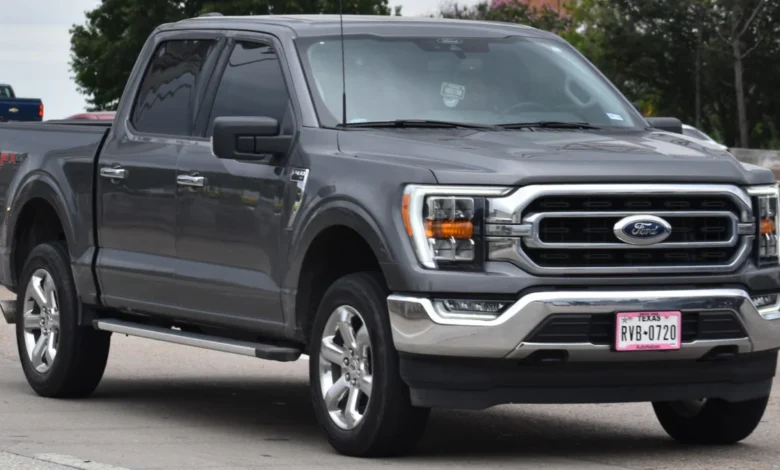
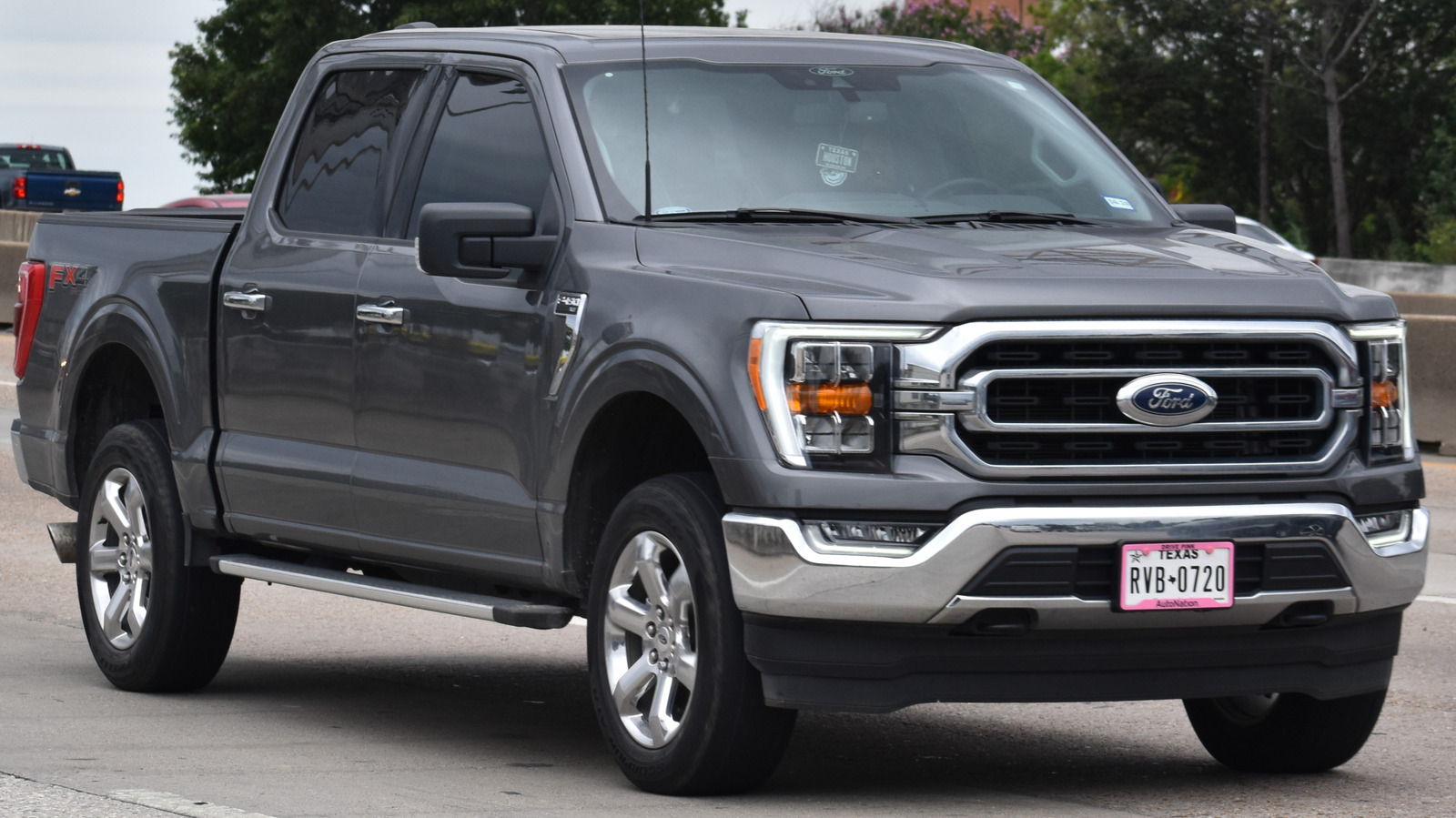
The Ford F-150 has occupied a near-mythic status in the American automotive landscape for nearly half a century, serving as the benchmark for utility, power, and cultural identity. For 49 consecutive years, Ford’s F-Series pickups have maintained their position as the best-selling trucks in the United States. In 2025 alone, American consumers purchased more than 828,000 units, and the F-150 specifically remains the top-selling vehicle in a significant majority of U.S. states. However, a growing body of consumer data and reliability metrics suggests a widening gap between the F-150’s market popularity and its actual long-term dependability. While the truck remains a sales juggernaut, a deeper analysis of recent vehicle dependability studies, recall histories, and repair costs indicates that several used competitors may offer a more reliable ownership experience.
The central tension in the full-size pickup market lies in the distinction between capability and reliability. While Ford has consistently pushed the envelope in terms of towing capacity, payload, and integrated technology, these innovations have frequently come at the cost of mechanical simplicity and long-term durability. According to the 2026 J.D. Power U.S. Vehicle Dependability Study (VDS), Ford’s overall brand reliability ranked 19th in the industry. This positioning reflects a broader trend of quality control challenges that have plagued the manufacturer in recent years. When examining the 2023 model year—a critical year for the used truck market—the data reveals a complex picture of a vehicle that leads in sales but lags behind its peers in several key reliability categories.
The Statistical Reality of F-150 Reliability
To understand why a buyer might look beyond the blue oval, one must examine the specific data points provided by industry watchdogs. RepairPal, a leading database for automotive repair costs and frequency, ranks the Ford F-150 7th out of 17 full-size trucks for overall dependability. While a middle-of-the-pack ranking is not inherently disastrous, it becomes more significant when compared to the annual cost of ownership. F-150 owners typically face higher annual repair bills than owners of several rival models, often paying a premium for unscheduled maintenance.
Furthermore, the recall history for the 2023 Ford F-150 serves as a cautionary note for used vehicle shoppers. According to data compiled by Consumer Reports, the 2023 F-150 has been subject to 22 separate recalls. These range from minor software glitches to severe mechanical and safety risks, including faulty brake lights, park function failures that can lead to vehicle rollaways, inoperative reverse lights, and failures in the Electronic Stability Control (ESC) system. More alarming are reports of electrical fire risks, suspension component failures, and deactivated airbags. For a vehicle intended to serve as a reliable workhorse, this volume of safety-related interventions suggests a manufacturing process under significant strain.
The Ram 1500: A Shift in the Full-Size Hierarchy
The most prominent challenger to the F-150’s dominance in the reliability sphere is the Ram 1500. Long considered an underdog in the "truck wars," Ram has made significant strides in quality control and interior refinement over the last decade. The 2023 Ram 1500, in particular, has emerged as a favorite among automotive critics and reliability analysts alike. It topped the full-size pickup segment in the 2026 J.D. Power VDS, a study that aggregates owner-reported problems over the first three years of ownership.
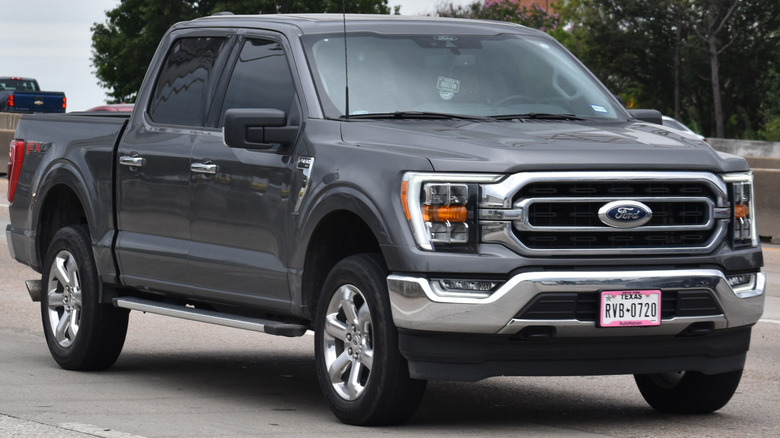
The Ram 1500’s rise is supported by RepairPal data, which ranks it 1st out of 17 full-size pickups for dependability. Owners of the Ram 1500 report fewer visits to the mechanic for major repairs compared to F-150 owners, and the truck’s annual repair costs are approximately $100 lower on average. From a performance standpoint, the base 2023 Ram 1500 features a 3.6-liter Pentastar V6 with eTorque, delivering 305 horsepower and 269 lb-ft of torque. While the F-150 still holds the crown for maximum towing capacity—offering up to 14,000 lbs compared to the Ram’s 12,750 lbs—the Ram is frequently cited for its superior ride quality, thanks to its unique link-coil rear suspension system, which offers a more car-like experience without sacrificing significant utility.
The Chevrolet Silverado 1500: The Perpetual Challenger
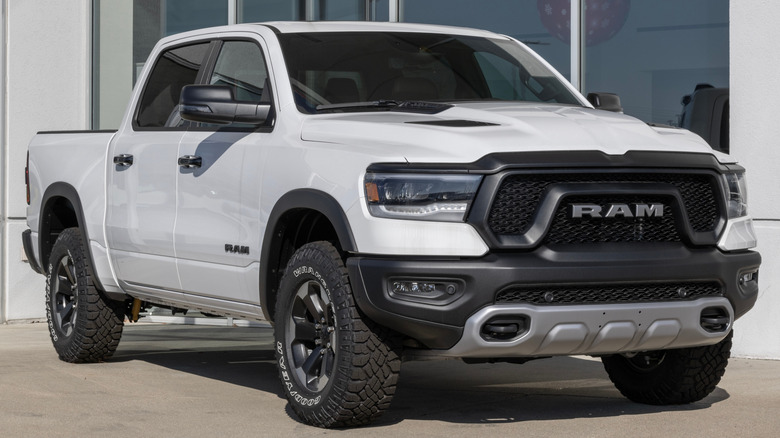
The Chevrolet Silverado 1500 has been the F-150’s most direct rival for decades, and current reliability metrics suggest it may be the more prudent choice for used truck buyers. In the 2026 J.D. Power Brand Rankings, Chevrolet secured the 5th spot—14 places ahead of Ford. This disparity in brand-level quality often translates directly to the individual vehicle experience.
Independent analysis from iSeeCars gives the Silverado a reliability score of 8.0 out of 10, edging out the F-150’s 7.7. Additionally, RepairPal indicates that the Silverado generates roughly $70 less in annual repair costs than the F-150. Mechanically, the 2023 Silverado offers a compelling base engine: a 2.7-liter turbocharged high-output I4 that produces 310 horsepower and 430 lb-ft of torque. This torque figure is particularly noteworthy, as it significantly exceeds the base F-150’s 265 lb-ft, providing better low-end grunt for hauling and towing despite the smaller engine displacement. The Silverado also benefits from a much lower recall count than the F-150, with only three listed recalls for the 2023 model year, suggesting a more stable production environment.
The GMC Sierra 1500: Professional Grade Dependability
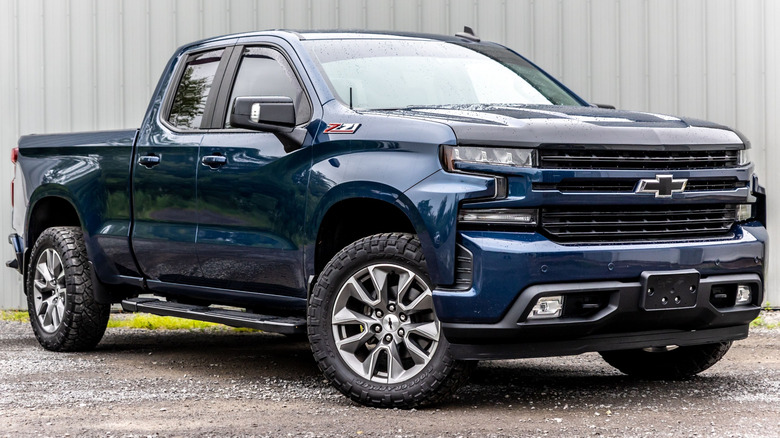
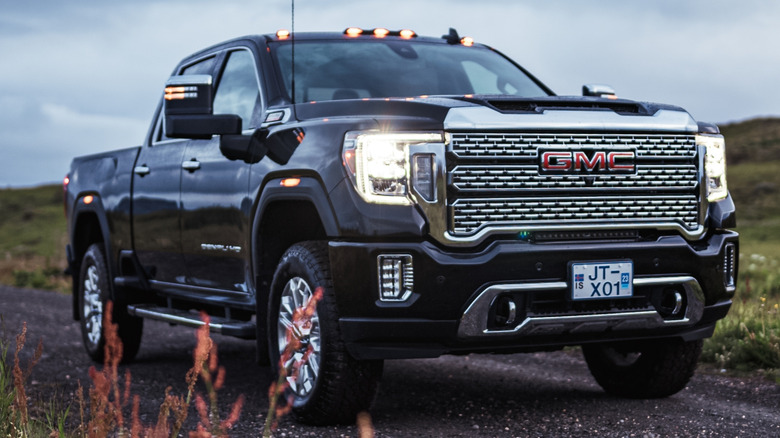
Sharing a platform with the Silverado, the GMC Sierra 1500 offers a more premium alternative that maintains high reliability standards. Positioned as General Motors’ "professional grade" truck, the Sierra consistently outperforms the F-150 in consumer satisfaction and dependability surveys. RepairPal ranks the Sierra 3rd out of 17 comparable full-size trucks, placing it well ahead of the F-150.
The 2023 GMC Sierra’s appeal lies in its combination of robust mechanicals and high-end interior appointments. The Denali Ultimate trim, for instance, introduced a level of luxury previously unseen in the segment, featuring full-grain leather, a 13.4-inch infotainment screen, and the Super Cruise hands-free driving technology. Because it shares the Silverado’s engine lineup, the Sierra benefits from the same high-torque turbocharged four-cylinder and the proven 5.3-liter and 6.2-liter V8 options. Like its Chevrolet sibling, the Sierra has maintained a clean record regarding recalls, with only three registered for the 2023 model, providing used buyers with greater peace of mind regarding potential safety defects.
The Toyota Tacoma: The Legend of Longevity
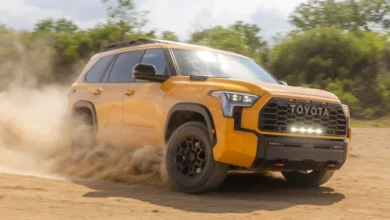
While the Toyota Tacoma competes in the midsize segment, it is frequently cross-shopped by F-150 buyers who prioritize longevity and resale value over sheer size. The Tacoma’s reputation for "bulletproof" reliability is backed by substantial data. In the 2026 J.D. Power VDS, the Tacoma topped the midsize pickup segment, and Toyota as a brand consistently ranks in the top 10 for overall quality.
The financial case for the Tacoma is perhaps its strongest selling point. According to RepairPal, the average annual cost for unscheduled repairs on a Tacoma is just $478, which is $310 less than the F-150. Furthermore, the Tacoma’s depreciation curve is the envy of the industry. Data from CarEdge and other valuation experts show that while an F-150 can lose up to 50% of its value over five years, a Tacoma typically depreciates by only 26% in the same period. While the 2023 Tacoma’s base 159-horsepower engine and 3,500-lb towing capacity cannot compete with the F-150’s raw power, its ability to reach 200,000 or 300,000 miles with minimal major repairs makes it a superior long-term investment for many users.
The Nissan Frontier: An Overlooked Value Proposition
The Nissan Frontier is often the "forgotten" truck in the midsize category, yet it holds one of the highest reliability ratings in the industry. For the 2023 model year, RepairPal gave the Frontier a 4 out of 5 reliability rating, ranking it 1st out of 7 midsize trucks. When compared to the F-150’s 3.5 out of 5 rating and its 7th-place ranking in the full-size category, the Frontier emerges as a statistically safer bet for durability.
The 2023 Frontier simplified its powertrain to a single, robust 3.8-liter naturally aspirated V6 producing 310 horsepower and 281 lb-ft of torque. By avoiding the complexities of turbocharging or hybrid systems in its base configuration, Nissan has created a powertrain that is both capable and easy to maintain. Maintaining a Frontier costs approximately $300 less per year than an F-150, and the probability of a "severe" repair—defined as a repair costing more than three times the average labor rate—is 12% for the Frontier versus 15% for the Ford. For buyers who need a truck for commuting and moderate utility rather than heavy-duty commercial hauling, the Frontier offers a compelling mix of modern tech and old-school reliability.
Market Implications and Consumer Trends
The discrepancy between the Ford F-150’s sales figures and its reliability rankings highlights a unique aspect of the American truck market: brand loyalty. For many consumers, the F-150 is a legacy purchase, supported by a massive dealer network and a deep catalog of aftermarket parts. However, as vehicle prices continue to rise and the used market remains competitive, consumers are increasingly looking at "Total Cost of Ownership" (TCO) as a primary metric.
Industry analysts suggest that Ford’s aggressive push into electrification and advanced driver-assistance systems (ADAS) has created a "complexity tax" for owners. While these features are attractive in a showroom, they represent more potential failure points as the vehicle ages. In contrast, brands like Toyota and Nissan, and even GM with its more conservative engine architectures, have focused on refining existing platforms.
For the used truck buyer, the data suggests a pivot may be necessary. While the F-150 will likely continue to lead in sales due to its high ceiling for towing and its status as a cultural icon, those seeking to minimize the headaches of unscheduled repairs and high maintenance costs are increasingly finding better value in the Ram 1500, the GM twins, or the Japanese midsize stalwarts. As the 2023 models continue to saturate the used market, the long-term track record of these vehicles will likely further cement the shift toward these more reliable alternatives.