World News in Brief: Refugee funding, US migration policy triggers ‘cascade’ of rights violations, world forests report, restorative justice in Colombia

The international humanitarian landscape faces mounting pressures across multiple fronts, highlighted by severe funding shortfalls for displaced populations, escalating legal and ethical concerns over cross-border migration policies, alarming rates of global deforestation, and historic strides in post-conflict transitional justice. Recent briefings and reports released by various United Nations agencies underscore the fragility of current global stability, emphasizing that localized crises—from the arid expanse of Middle Eastern refugee camps to the lush Amazonian and global forest ecosystems, and from North American administrative offices to the reconciliation courts of South America—are deeply interconnected through the shared imperatives of human rights, environmental stewardship, and institutional accountability.
Water Crisis Looms Large at Zaatari Refugee Camp
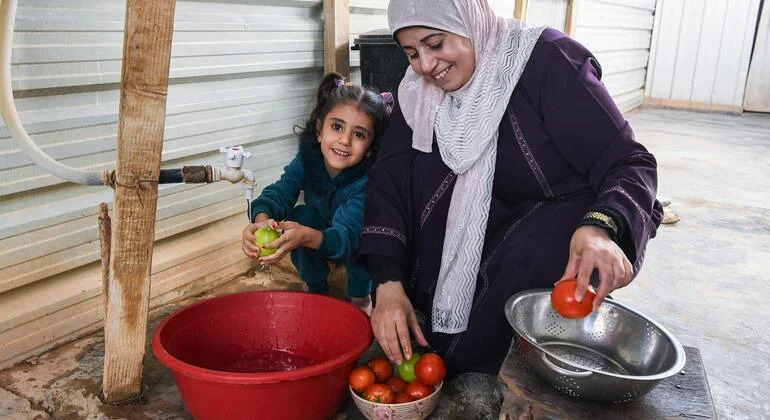
In the Hashemite Kingdom of Jordan, the Zaatari refugee camp stands as a stark monument to protracted displacement. Established more than a decade ago to shelter individuals fleeing the devastating civil war in Syria, the camp currently accommodates over 80,000 residents. More than half of this population consists of children, a significant demographic of whom have known no other home than the confines of the fenced facility.
According to recent warnings issued by the United Nations Children’s Fund (UNICEF), the camp’s critical water and sanitation infrastructure faces an imminent collapse unless substantial international investment materializes within the next few months. Louise Wateridge, a UNICEF regional spokesperson, emphasized the precarious nature of the daily existence led by Zaatari’s youth. For these children, the potential disruption of clean water supplies and functioning sanitation networks represents yet another destabilizing blow to lives already fractured by conflict and displacement.
The underlying causes of the crisis are multifaceted, driven by a combination of regional environmental pressures and chronic underfunding. Declining annual rainfall across Jordan, coupled with severe depletion of local groundwater tables and rising consumption demands, has placed an unsustainable burden on the camp’s subterranean water network. To counter dwindling supplies, humanitarian operators are forced to drill increasingly deeper wells, pushing earthward by seven to ten meters every year just to reach receding water tables.
Presently, UNICEF reports that its operational program for the camp is ninety percent underfunded. Humanitarian coordinators stress that every cubic meter of water must be managed with extreme precision and long-term strategic foresight. Until a safe, voluntary, and dignified return to Syria becomes viable, these fundamental utility services remain an indispensable lifeline for families navigating an otherwise bleak landscape of prolonged limbo.
US Migration Externalization Scheme Sparks Global Legal Alarms
Moving from the Middle East to the Americas, independent human rights experts mandated by the UN Human Rights Council have issued a stern collective warning regarding the administrative practices of the United States government. On Monday, these experts highlighted the rapid expansion of Washington’s migration externalization scheme—often referred to as third-country transfer agreements—which currently implicates at least 35 nations and territories worldwide.
Under these arrangements, the United States has transferred no fewer than 23,000 migrants and asylum seekers to 29 different countries and territories. Legal monitors report that new agreements are being finalized and signed on a near-daily basis. The independent experts stated unequivocally that the negative human rights impacts of these policies have transcended hypothetical projections, actively triggering a sweeping cascade of violations that expose vulnerable individuals to arbitrary detention, persecution, torture, and enforced disappearance.
Many transferred migrants find themselves deposited in nations with which they share no cultural, linguistic, or social ties. In several instances, the receiving countries are themselves embroiled in active domestic conflicts, severe economic deprivation, and systemic poverty, leaving local authorities entirely unequipped to guarantee the safety, processing, or basic human rights of new arrivals. Demographics identified as facing the highest degrees of peril include unaccompanied minors, women, individuals with physical and mental disabilities, victims of human trafficking, and members of the LGBTQ+ community.
Furthermore, legal experts scrutinized the coercive environments surrounding voluntary return programs. Pressuring migrants to return to their countries of origin while they are detained in impoverished conditions and denied access to competent legal representation cannot, under international law, be construed as voluntary compliance. Emphasizing that sovereign states cannot contract out of their binding international obligations under refugee and human rights conventions, the experts urged an immediate halt to these third-country arrangements. They reiterated that the governance of global migration must be anchored firmly in human rights principles rather than sacrificed on the altar of deterrence-driven containment strategies.
Global Deforestation and the Urgent Case for Reforestation
Addressing the interconnected crises of climate change and global food insecurity, the Food and Agriculture Organization of the United Nations (FAO) issued an urgent global appeal on Monday to prioritize the preservation, management, and restoration of the world’s forests. The agency released comprehensive data indicating that an estimated 489 million hectares of forest cover were lost globally between 1990 and 2025 due to unchecked deforestation, agricultural expansion, and industrial logging. Additionally, more than 460 million hectares of surviving forest ecosystems are currently categorized as degraded.
The drivers behind this ecological regression are complex, rooted in rapid global population growth, shifting land-use policies, and an escalating international demand for raw natural resources and commodities. However, the newly published State of the World’s Forests (SOFO) report argues that large-scale tree planting and structured land restoration represent one of the most cost-effective, scalable responses available to the international community.
Forests are not merely carbon sinks; they are foundational pillars of socio-economic stability. Approximately one-third of the global human population relies directly on trees and forests for daily food security, clean water regulation, and sustainable livelihoods. The FAO’s economic modeling suggests that successfully restoring more than one billion hectares of degraded land worldwide could yield up to $1.8 trillion annually in direct and indirect benefits. These returns would manifest as enhanced biodiversity, revitalized hydrological cycles, stabilized soils, and bolstered resilience for rural farming communities on the front lines of environmental degradation.
Realizing this potential, however, requires bridging the gap between political rhetoric and tangible financial commitment. The FAO underscored that long-term investment, robust legal frameworks, and sustained political will from national governments are non-negotiable prerequisites if global reforestation initiatives are to achieve their intended scale and impact.
Colombia’s Historic Step Forward in Transitional Justice
In a powerful counterpoint to international crises of displacement and rights violations, the United Nations human rights chief, Volker Türk, on Monday praised a landmark restorative justice initiative currently unfolding in Colombia. The development brings together former adversaries—specifically former commanders of the now-demobilized FARC-EP guerrilla movement and members of the Colombian armed forces—who have formally acknowledged their individual and institutional responsibility for grave atrocities committed during the nation’s five-decade internal armed conflict.
In lieu of traditional prison sentences determined by Colombia’s Special Jurisdiction for Peace (JEP), these former combatants are now working side by side in the southern municipality of Pitalito, located in the Huila department. Their shared mission is both grueling and sacred: excavating cemetery sites to locate, exhume, and ultimately identify the remains of individuals who were forcibly disappeared during the decades of bloodshed, ensuring that their families can finally receive closure and proper burials.
Mr. Türk lauded the initiative as a global triumph for transitional justice, describing the joint humanitarian labor as a profound contribution to historical truth, structural reparation, and societal healing. The framework stems from the historic 2016 peace accord that formally ended active hostilities between the Colombian state and the FARC-EP insurgency, a peace process that has received continuous technical assistance and political backing from the United Nations and its human rights offices.
Despite the monumental nature of these achievements, the UN High Commissioner for Human Rights issued a direct plea to the international community and domestic stakeholders to guarantee sustained, long-term funding for Colombia’s Comprehensive System for Peace. Stressing that transitional justice cannot be treated as a temporary or one-off administrative exercise, the UN remains committed to keeping the rights of victims at the absolute center of the peacebuilding architecture, proving that even after generations of war, institutional reconciliation and human empathy can prevail.