2027 Audi Q7 Debuts With Enhanced Performance and Premium Pricing to Redefine the Luxury Three-Row SUV Market

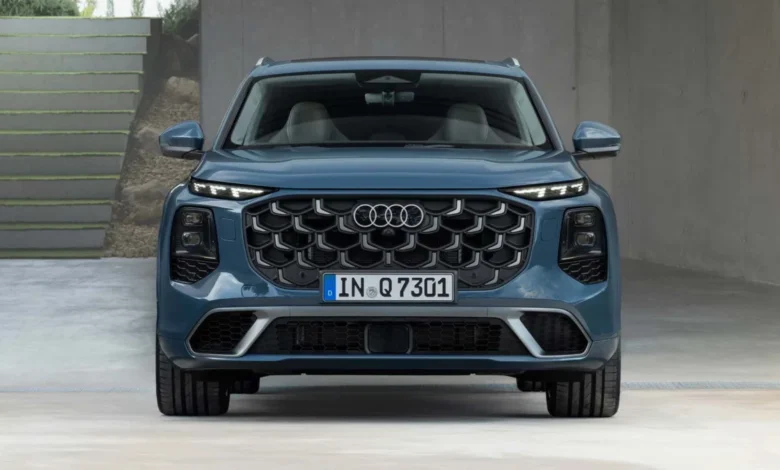
Audi has officially unveiled the 2027 Q7, signaling a significant evolution for its flagship mid-size SUV as it prepares to enter a highly competitive North American market. This major overhaul introduces a blend of refreshed aesthetics, substantial powertrain upgrades, and a suite of next-generation technologies designed to maintain Audi’s foothold in the premium family segment. When the 2027 Q7 arrives at United States dealerships in the fourth quarter of this year, it will carry a starting price of $70,900, representing a $3,300 increase over the outgoing 2026 model. This price adjustment reflects not only the inflationary pressures of the current automotive landscape but also the increased standard value provided by Audi’s engineering team.
The 2027 model year represents a pivotal moment for the Q7 nameplate. As the automotive industry transitions toward electrification, Audi is doubling down on its internal combustion engine (ICE) offerings by refining the efficiency and output of its traditional powerplants. The base Q7 now comes standard with a sophisticated twin-turbocharged 2.9-liter V6 engine. This unit generates a robust 429 horsepower and 442 pound-feet of torque, a configuration that allows the SUV to accelerate from zero to 60 miles per hour in just 4.8 seconds. This performance metric is particularly noteworthy as it marks a 0.7-second improvement over its predecessor, illustrating a successful effort to shave weight or optimize gear ratios and turbocharger response.
For enthusiasts seeking higher levels of performance, Audi continues to offer the SQ7. This high-performance variant utilizes a twin-turbocharged 4.0-liter V8 engine, delivering a staggering 591 horsepower and 590 lb-ft of torque. The SQ7’s sprint to 60 mph has been reduced to 3.7 seconds, a 0.3-second gain over the previous version. This level of acceleration places the SQ7 in the upper echelon of performance SUVs, rivaling dedicated sports cars. However, this power comes at a premium; the SQ7 starts at $98,700, which is $4,900 more than the 2026 iteration.
A Legacy of Versatility: The Evolution of the Audi Q7
The Audi Q7 has been a cornerstone of the brand’s global success since its initial debut at the Frankfurt Motor Show in 2005. Originally built on the PL71 platform shared with the Volkswagen Touareg and Porsche Cayenne, the Q7 was Audi’s first foray into the SUV market. Over two decades, it has evolved from a rugged, heavy-duty hauler into a refined, tech-forward executive lounge on wheels.
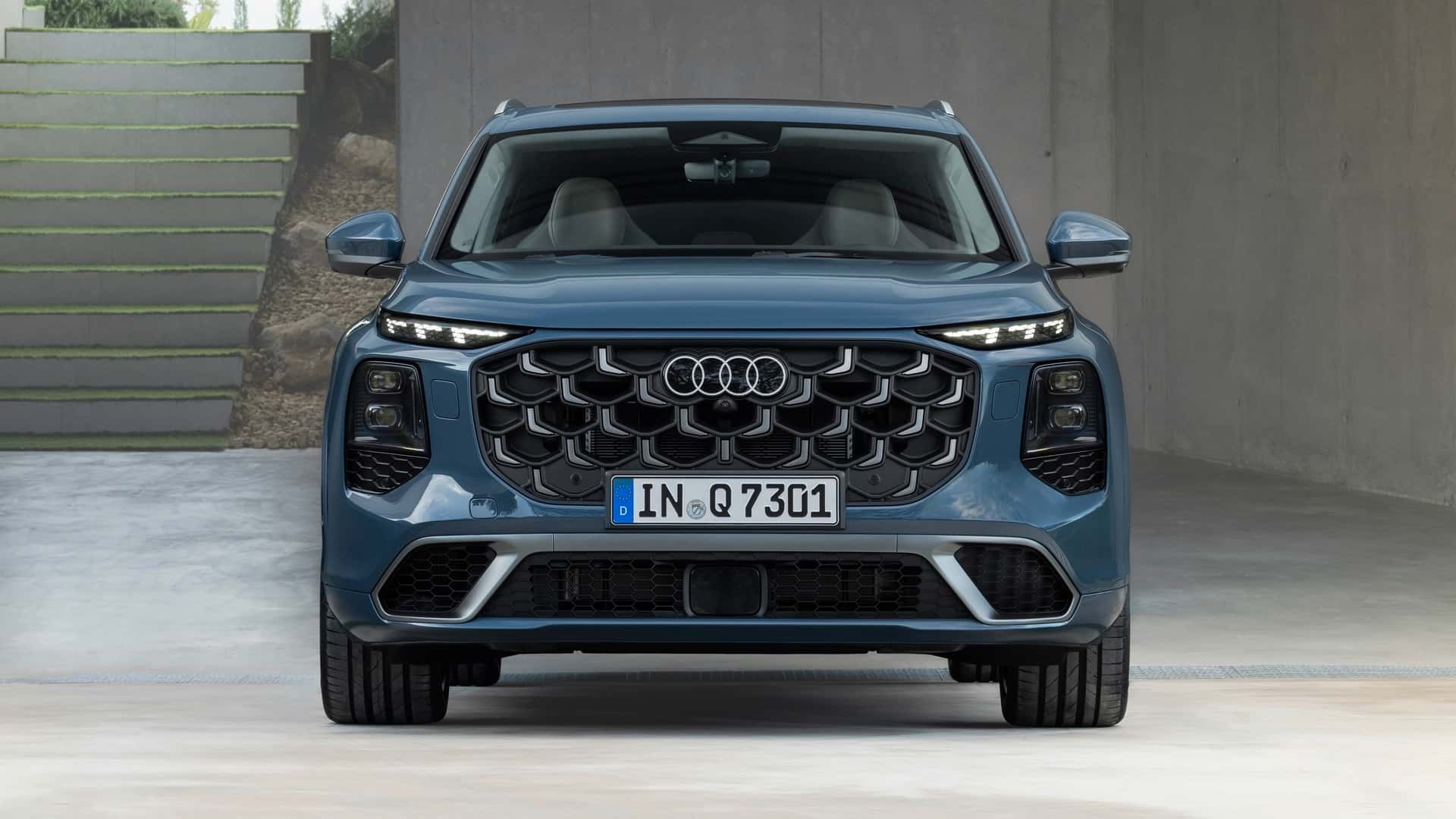
The 2027 refresh is part of the second generation’s second major facelift. Rather than moving to an entirely new platform, Audi has opted to maximize the potential of the current architecture. This decision allows the brand to focus R&D budgets on software integration and powertrain optimization. The exterior styling for 2027 adopts the latest Audi design language, characterized by a more pronounced Singleframe grille with a new octagonal theme. The air intakes have been redesigned to provide better cooling for the upgraded V6 and V8 engines, while the lighting signatures have been modernized. Audi’s leadership in lighting technology is on full display with the inclusion of customizable digital daytime running light signatures and available OLED rear lights that change their display based on the selected drive mode or proximity of other vehicles.
Comparative Market Analysis: The German Triumvirate
In the luxury SUV sector, the Audi Q7 remains locked in a perennial battle with the BMW X5 and the Mercedes-Benz GLE. However, the Q7 occupies a unique niche within this "German Triumvirate." While the BMW and Mercedes models are primarily sold as two-row vehicles with an optional (and often cramped) third row, the Audi Q7 comes standard with three rows of seating. This standard configuration is a primary driver for the Q7’s higher entry price point.
The 2027 BMW X5 carries a starting price of $69,800, which is $1,100 less than the base Q7. The X5 sDrive40i features a 3.0-liter turbocharged straight-six engine producing 394 horsepower. While the BMW is slightly more affordable, the lack of a standard third row and the slightly lower power output compared to the Audi’s 429-hp V6 positions the Q7 as a more comprehensive "out-of-the-box" family solution.
Mercedes-Benz, meanwhile, has taken a different approach with the GLE. For the 2027 model year, Mercedes has overhauled the GLE, though final pricing for the full lineup is still pending. The 2026 GLE 350 starts at a significantly lower $62,250, but this model is powered by a 255-hp four-cylinder engine, which pales in comparison to the Audi’s V6. To find a comparable Mercedes in terms of performance, buyers must look at the GLE 450, which utilizes a 375-hp 3.0-liter inline-six hybrid. The GLE 450 starts at $72,250—making it more expensive than both the Audi and the BMW.
Pricing at a Glance: 2027 Luxury SUV Comparison
| Model | Starting MSRP | Standard Engine | Horsepower | Seating Capacity |
|---|---|---|---|---|
| 2027 Audi Q7 | $70,900 | 2.9L Twin-Turbo V6 | 429 hp | 7 Passengers |
| 2027 BMW X5 | $69,800 | 3.0L Turbo I6 | 394 hp | 5 Passengers |
| 2027 Mercedes GLE | $62,250* | 2.0L Turbo I4 | 255 hp | 5 Passengers |
*Note: Mercedes GLE price based on 2026 entry model; 2027 pricing for GLE 450 exceeds $72,000.
Interior Refinement and Technological Advancements
One of the most significant aspects of the 2027 overhaul is the interior cabin. Audi has long been praised for its "Virtual Cockpit," and the 2027 Q7 takes this further with higher-resolution displays and faster processing speeds. The infotainment system now supports a wider array of third-party applications, including Spotify and Amazon Music, integrated directly into the MMI (Multi Media Interface) without the need for a smartphone connection.
Furthermore, Audi is responding to consumer feedback regarding interior ergonomics. While many manufacturers are moving toward "all-screen" dashboards, Audi is reintroducing a more tactile balance. The 2027 Q7 features high-quality physical buttons for essential functions alongside "subtle" screens that are designed to be less distracting during night driving. The use of sustainable materials has also increased, with recycled fibers used in the carpeting and headliners, and new open-pore wood veneers available for the dashboard inlays.
Safety remains a cornerstone of the Q7’s appeal. The 2027 model includes an updated suite of driver assistance systems. The "Audi Pre Sense" system has been enhanced with better sensor fusion, allowing the vehicle to detect potential collisions with cyclists or pedestrians more accurately in low-light conditions. The adaptive cruise assist now features a lane-change assistant that can suggest lane changes on the highway and perform them automatically when the driver taps the turn signal.
Performance Engineering and Driving Dynamics
Underpinning the 2027 Q7 is the highly capable MLB Evo platform. This longitudinal engine layout allows for superior weight distribution and handling compared to transverse-engine competitors. For 2027, Audi engineers have retuned the optional adaptive air suspension to provide a wider delta between "Comfort" and "Dynamic" modes. In its most comfortable setting, the Q7 is designed to float over road imperfections, making it an ideal long-distance cruiser. In Dynamic mode, the suspension lowers the ride height and stiffens the dampers, working in tandem with the standard Quattro all-wheel-drive system to provide surprising agility for a vehicle of its size.
The SQ7 takes these dynamics to another level. Beyond the V8 engine, the SQ7 features available all-wheel steering, which turns the rear wheels up to five degrees. At low speeds, the rear wheels turn in the opposite direction of the front wheels to reduce the turning circle, making the large SUV easier to maneuver in tight parking garages. At high speeds, the rear wheels turn in the same direction as the fronts to improve stability during lane changes.
Industry Implications and Market Outlook
The release of the 2027 Audi Q7 comes at a time when the luxury SUV market is facing a crossroads. While the push for Electric Vehicles (EVs) continues, sales of high-end ICE and hybrid SUVs remain the primary profit drivers for German automakers. By pricing the Q7 at a premium and enhancing its performance specifications, Audi is signaling that it believes there is still significant life in the luxury combustion market.
Industry analysts suggest that Audi’s decision to offer more standard horsepower and three rows of seating is a strategic move to "upsell" the value proposition. By starting at $70,900, Audi is moving away from the "entry-level" luxury buyer and focusing on established families who prioritize space and performance. This strategy also helps differentiate the Q7 from the smaller Q5, which is also undergoing a refresh.
As the 2027 Audi Q7 begins to arrive at dealerships in the final months of this year, the consumer response will be a litmus test for the brand’s current trajectory. With stiff competition from Munich and Stuttgart, Audi has put its best engineering forward, focusing on the core strengths of the Q7: versatility, German precision, and understated luxury. Whether the $3,300 price hike will deter buyers or be seen as a fair trade for the increased performance remains to be seen, but the 2027 Q7 stands as one of the most comprehensive packages in the modern SUV landscape.