Trump Administration Secures Massive Oil Concession Following Abduction of Venezuelan Leadership

The geopolitical landscape of the Western Hemisphere shifted dramatically last week as the United States administration announced a landmark energy arrangement with Venezuela. This agreement grants an American-led consortium, North American Blue Energy Partners (NABEP), long-term rights to extract from 17 critical oil fields, signaling a significant shift in U.S. foreign policy toward what many energy analysts are calling a modern era of "petro-imperialism." The deal follows a volatile series of events that began in January, when U.S. military operations in Caracas resulted in the detention of then-President Nicolás Maduro, creating a power vacuum that has since been filled by an interim government led by Delcy Rodríguez.
The Anatomy of the Energy Agreement
Under the terms of the agreement, which covers an unprecedented 100-year span, NABEP has been granted operational control over an estimated 65 billion barrels of oil reserves. According to official White House documentation, the structure of the deal provides the U.S. government with significant oversight. The Pentagon is slated to receive a 35 percent equity stake in the corporate parent of NABEP, while the State Department has secured the right to purchase 20 percent of the extracted crude at negotiated rates, holding a "right of first refusal" on the remaining 80 percent of production.
Furthermore, the U.S. government maintains veto power over any appointments to the board of directors of the private entity, a provision that has drawn scrutiny from international law experts regarding the blurring of lines between sovereign state authority and private corporate interests. While the administration frames this as a mechanism to ensure energy security, the scale of the transfer—effectively placing a substantial portion of Venezuela’s national wealth under the purview of U.S.-controlled entities—is unprecedented in the 21st century.
A Chronology of Escalation
The current state of affairs is the culmination of a decade of deteriorating relations and intensified U.S. focus on Venezuelan assets.
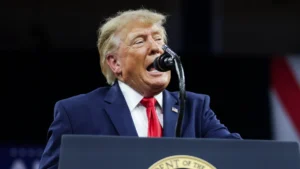
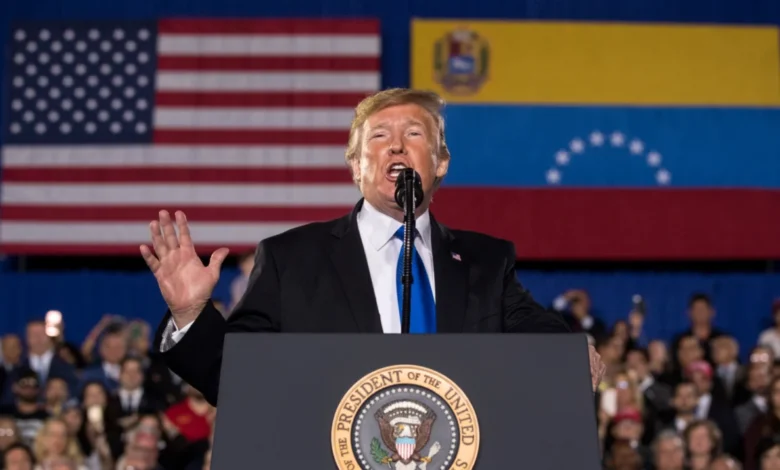
- February 2019: President Donald Trump addresses a large crowd of Venezuelan Americans at Florida International University in Miami, pledging support for democratic transition and signaling a hardening stance against the Maduro administration.
- January 2026: Following a period of heightening sanctions and regional instability, U.S. forces conduct a tactical strike in Caracas. The operation results in the capture of Nicolás Maduro, effectively ending his long-standing presidency and creating an immediate crisis of legitimacy in the Venezuelan government.
- April 2026: Interim leadership under Delcy Rodríguez signals a willingness to engage in new economic frameworks with Washington, as the country faces severe economic stagnation and a crumbling infrastructure.
- August 2026: The White House officially releases the details of the oil concession deal, framing it as a "historic agreement" for American energy dominance.
- September 2026: Major energy players, including Chevron, announce intentions to expand existing footprints in the region, though many international firms remain wary of the legal and political risks involved in the new arrangement.
Economic Implications and Energy Market Dynamics
The White House has consistently argued that access to Venezuelan oil will drive down domestic gas prices and insulate the United States from energy volatility caused by ongoing conflicts in the Middle East, particularly the instability in the Strait of Hormuz. However, energy economists argue that this premise lacks technical support.
"The argument that this will lower American gas prices in the near term is essentially disconnected from the realities of global energy markets," says Jeff Colgan, director of the Climate Solutions Lab at Brown University’s Watson Institute. "Oil is a fungible, globally integrated commodity. Increased production in Venezuela, assuming it can be brought online after years of neglect, will take years to reach significant volumes. Moreover, global companies are currently re-evaluating their portfolios. Investment directed toward the high-risk environment of post-conflict Venezuela may simply cannibalize investment in other regions, rather than adding a net increase to global supply."
Furthermore, the logistical challenges of the Venezuelan oil sector cannot be overstated. The state-run entity PDVSA has suffered from decades of underinvestment and operational mismanagement. While the infusion of American capital and technology is intended to revitalize the fields, the transition from current output levels to the projected 800,000 barrels per day will require massive infrastructure overhauls that may take years to complete.
International and Domestic Reactions
The deal has triggered a polarized reaction. In Venezuela, the opposition, led by conservative figures such as María Corina Machado, has characterized the move as a betrayal of national sovereignty. Even some remnants of the previous regime have voiced opposition, framing the agreement as an act of neo-colonialism. Conversely, the administration of Delcy Rodríguez has attempted to present the deal as a pragmatic necessity, arguing that foreign investment is the only viable path to economic recovery for a nation that has struggled with hyperinflation and the decay of its primary industry since the late 1990s.
In Washington, the reaction has been largely divided along party lines. Supporters of the administration applaud the assertive use of national power to secure long-term energy resources. Critics, however, point to the potential for conflicts of interest, noting that the administration has frequently engaged in similar public-private partnerships throughout its tenure. There is significant concern among transparency advocates regarding whether personal or political associates of the President might stand to benefit from the complex ownership structure of North American Blue Energy Partners.
Historical Parallels and the Legacy of Petro-Imperialism
The situation bears a striking resemblance to the geopolitical dynamics of the mid-20th century. Analysts frequently cite the 1953 coup in Iran, which followed the nationalization of the Anglo-Iranian Oil Company (now BP). That event, which saw the U.S. and Britain intervene to protect oil interests, fostered decades of anti-Western sentiment in the region.
"The parallels are hard to ignore," notes Colgan. "We are seeing a return to 19th-century-style resource extraction, where the influence of the state is leveraged to secure private access to foreign commodities. When you remove a head of state and immediately install a deal that transfers the primary wealth of that nation to your own corporate interests, it creates a deep-seated grievance that is very difficult to overcome."
The history of PDVSA itself—which was once an American-run institution before its nationalization in 1976—adds another layer of complexity. The workers and infrastructure in place today are the result of decades of attempts to shield the industry from foreign interference. The current deal effectively reverses that process, returning the sector to a structure that is likely to be viewed by the Venezuelan populace as an external imposition.
Looking Ahead: The Future of the Deal
As the U.S. approaches upcoming election cycles, the success of the Venezuela deal will likely be framed in political terms rather than economic ones. The administration is banking on the narrative of energy independence to bolster its platform, even as the tangible benefits of the deal remain speculative.
The coming months will be critical in determining whether this agreement achieves its stated goals or becomes a source of long-term regional instability. Key indicators to watch include the security situation in the Venezuelan oil fields, the willingness of international financial institutions to back projects under the shadow of the current political status, and the extent to which the U.S. government maintains its influence over the board of NABEP. For now, the world is watching as an unprecedented experiment in resource-driven foreign policy unfolds in the heart of South America.
Related posts: