The State of Food Security and Nutrition in the World 2026: Progress Fragile, Uneven, and Insufficient for 2030 Goals

Global hunger has seen a downward trend for the third consecutive year, reaching an estimated 7.8 percent of the world’s population in 2025. This marks a significant, albeit slow, improvement from 8.1 percent in 2024 and 8.6 percent in 2022. The latest report, "The State of Food Security and Nutrition in the World 2026" (SOFI 2026), released by five United Nations specialized agencies, confirms this progress but cautions that it remains fragile, unevenly distributed, and ultimately insufficient to achieve the ambitious Sustainable Development Goals (SDGs) by the 2030 deadline.
The report estimates that approximately 645 million people faced hunger in 2025, a reduction of nearly 14 million from the previous year and 43 million since 2022. While this decline offers a glimmer of hope, the overarching narrative is one of precarious gains overshadowed by persistent disparities and emerging challenges. The continued vulnerability of global food systems to shocks, exacerbated by geopolitical conflicts and climate extremes, casts a long shadow over future progress.
Regional Disparities: A Stark Reality
Despite the global reduction in hunger, the recovery is far from uniform across continents. Asia, alongside Latin America and the Caribbean, has demonstrated steady improvements in food security over recent years. However, Africa now bears the brunt of global hunger, with an estimated 309 million people affected, surpassing Asia’s 292 million. While Africa’s previously escalating trend of hunger is showing signs of stabilization, with the proportion of its population facing hunger dipping from 20.3 percent in 2024 to 20.0 percent in 2025, the sheer scale of the problem on the continent is amplified by a rapidly growing population. This makes Africa the region with the highest absolute number of hungry individuals globally.
The report’s findings on broader measures of food access paint a similarly uneven picture. In 2025, an estimated 25.8 percent of the global population, translating to around 2.1 billion people, experienced moderate or severe food insecurity. This indicates that a substantial portion of humanity was at times forced to compromise on the quality or quantity of the food they consumed. While this figure represents a decrease from 27.1 percent in 2024 and 28.7 percent in 2020 – equating to nearly 86 million fewer people than in 2024 and 135 million fewer than in 2020 – it remains above pre-pandemic levels.
The regional disparities in food insecurity are particularly stark. Over half of Africa’s population (56.6 percent) faced moderate or severe food insecurity in 2025. In contrast, the figures for other regions stand at 20.3 percent in Asia, 22.9 percent in Latin America and the Caribbean, and a comparatively lower 8.7 percent in Northern America and Europe. Further exacerbating the situation, food insecurity continues to be more prevalent in rural areas compared to peri-urban and urban settings. While the gender gap in food insecurity slightly narrowed in 2025, women remain disproportionately affected.
Hunger Projections Amidst Middle East Conflict and Climate Shocks
The SOFI 2026 report also provides updated projections for global hunger over the next five years, factoring in the significant impact of the conflict in the Middle East. The duration and intensity of this crisis, with its ripple effects on food inflation driven by elevated energy and fertilizer prices, could mean that between 510 to 520 million people may still be facing hunger in 2030. This is a notable increase from the pre-conflict projection of 503 million people. While the global number of undernourished people is still expected to decrease by approximately 20 percent by 2030, the Middle East conflict introduces a substantial upward revision to this optimistic outlook.
Furthermore, these projections do not account for other potential disruptors, such as the anticipated effects of extreme weather events like El Niño in 2026 and 2027. Such phenomena could further compound the existing challenges and exacerbate food insecurity.
The joint authors of the report – the Food and Agriculture Organization of the United Nations (FAO), the International Fund for Agricultural Development (IFAD), the United Nations Children’s Fund (UNICEF), the UN World Food Programme (WFP), and the World Health Organization (WHO) – issue a stern warning. The 2026 Middle East conflict, coupled with escalating weather extremes and concerning reductions in official development assistance and humanitarian funding, collectively threaten to unravel the hard-won progress made in the global fight against hunger.
Stalled Progress on Global Nutrition Targets
Beyond the headline figures on hunger, the SOFI 2026 report highlights a deeply concerning stagnation in global nutrition targets, particularly concerning maternal and child health. Progress towards international commitments, including the 2030 nutrition targets, remains insufficient.
Key indicators for child nutrition, such as stunting, wasting, overweight, low birthweight, and exclusive breastfeeding rates, show only marginal improvements. The pace of progress is too slow to meet the established targets. Simultaneously, the prevalence of anaemia among women aged 15 to 49 years is worsening globally. Compounding this, adult obesity continues its steady upward trajectory, rising from 12.1 percent in 2012 to 16.2 percent in 2024, directly contradicting the target of halting its rise by 2025. Globally, only 30.8 percent of children aged 6 to 23 months consume a minimally diverse diet, and a staggering 150 million children under five years of age remain stunted.
Regional variations are also evident in nutrition outcomes. While the prevalence of child stunting is declining in Africa and is on track to meet the 2030 target in Asia, exclusive breastfeeding rates are showing improvement across most regions with available data. However, nearly all regions are experiencing widening gaps in addressing anaemia among women. Child overweight is also rapidly increasing in Oceania, presenting a significant new challenge.
The Escalating Cost of a Healthy Diet
This year’s SOFI report dedicates a significant portion to examining the cost of a healthy diet – defined as the average minimum expenditure required to obtain locally available foods that meet energy and most nutrient requirements. According to the FAO and WHO, a healthy diet is characterized by being adequate, balanced, diverse, and moderate.
The report underscores that the prohibitive cost of healthy diets remains a primary obstacle to achieving SDG 2 (Zero Hunger). However, it also emphasizes that simply lowering these costs will not automatically translate into improved dietary quality and better nutrition outcomes.
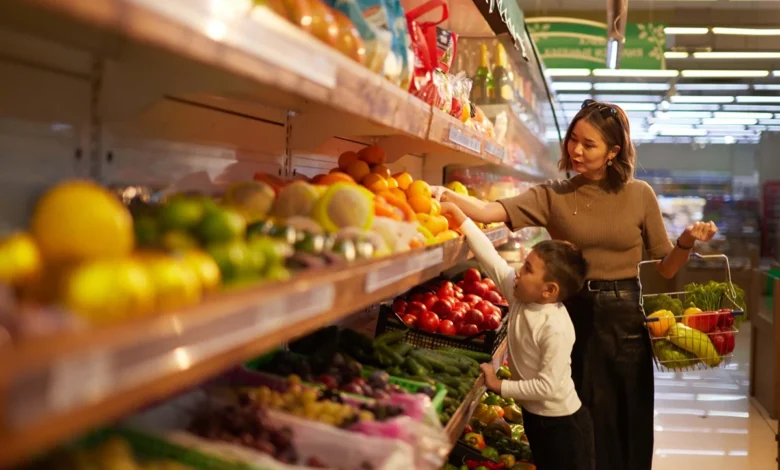
In 2025, the average global cost of a healthy diet rose to 4.28 purchasing power parity (PPP) dollars per person per day. This represents a substantial increase from 3.44 PPP dollars in 2021 and 2.94 PPP dollars in 2017. Latin America and the Caribbean recorded the highest average cost at 4.91 PPP dollars per day. Concurrently, the number of people unable to afford a healthy diet has seen a decline, falling from 2.97 billion (37.4 percent of the global population) in 2021 to 2.69 billion (32.7 percent) in 2025.
However, this downward trend in the number of people unable to afford healthy diets masks profound regional disparities. In Africa, affordability has worsened markedly, with a staggering 66.6 percent of the population unable to afford a healthy diet in 2025 – more than double the levels observed in Asia and in Latin America and the Caribbean.
The cost of healthy diets varies significantly across regions, influenced by structural differences in agrifood systems. Animal-source foods, fruits, and vegetables constitute the largest share of expenses, while starchy staples contribute relatively little. Animal-source foods are the primary driver of healthy diet costs in Africa, whereas vegetables represent the largest component in Latin America and the Caribbean.
Food value chains play a critical role in determining prices. Post-farmgate activities account for a substantial 70 to 75 percent of what consumers ultimately pay, with processing, logistics, and wholesale activities contributing up to 40 percent of total costs. Enhancing efficiency in these segments is therefore crucial, particularly for reducing the cost of perishable, nutrient-rich foods.
Addressing the cost of a healthy diet necessitates context-specific policy responses. These include expanding the supply of nutritious foods while simultaneously lowering structural costs across agrifood value chains. This requires strategic investments in infrastructure, research and development, irrigation systems, and cold chain facilities, alongside reforms in subsidy programs, trade facilitation, and regulatory frameworks. Targeted interventions aimed at boosting productivity, minimizing food losses, and promoting sustainable agricultural practices can simultaneously improve nutrition outcomes, bolster resilience, and contribute to climate goals.
The report’s concluding remarks underscore the immense task ahead, stating, "The work that lies ahead over the years to 2030 is immense. However, a world in which a healthy diet is no longer out of reach for nearly one in three people is a world worth building."
Official Responses and Analysis
The leaders of the five UN agencies involved in the SOFI report emphasized the urgency and complexity of the challenges ahead.
QU Dongyu, Director-General of the FAO, stated, "The report shows that progress is possible, but we must move faster. Ending hunger and making healthy diets affordable requires political commitment, sustained investment and enabling policies. Recent crises – from natural disasters like the COVID-19 pandemic to man-made disasters like hotspots of conflicts, the war in Ukraine, the Gaza crisis, and the recent Strait of Hormuz disruption – have demonstrated both the resilience of agrifood systems and the need to strengthen them further to better serve the world’s most vulnerable people, farmers and consumers."
Alvaro Lario, President of IFAD, highlighted the financial implications, saying, "SOFI tells us that the cost of a healthy diet continues to rise and that nearly 2.7 billion people may still be unable to afford a healthy diet. Resilient value chains must be a central part of the answer. Our task now is to turn the evidence SOFI provides into investment – and to do so through partnership. Together, we can build the value chains, market systems and rural economies that make healthy food affordable for all."
Catherine Russell, Executive Director of UNICEF, focused on the impact on children: "Every child deserves the chance to grow and develop to their full potential, and this starts with access to nutritious, affordable food. This report is a stark reminder that food systems fail millions of children and families. Food, health, education and social protection must go hand in hand to protect the most vulnerable children and women from global shocks."
Carl Skau, Acting Executive Director of WFP, underscored the human cost of food insecurity: "Behind every number in this report is a family counting the cost of food. Conflict and climate shocks push them further beyond their means. We must continue working with partner agencies, governments and communities to build food systems that hold up under shock, so families can afford nutritious diets, even in times of crisis. We now need sustained investment to match the scale of the challenge."
Dr. Tedros Adhanom Ghebreyesus, Director-General of WHO, stressed the link between diet and health: "While we welcome the clear progress we have made in reducing hunger, a healthy diet still remains unaffordable for one in three people globally. Obesity is rising and progress on maternal and child nutrition is stalling. But we know what works: policies that make healthy food the easy choice, promoting breastfeeding, front-of-pack labelling, taxing unhealthy products, and protecting children from harmful marketing. Healthy diets are not a luxury – they are the foundation of health and must be within everyone’s reach."
The implications of the SOFI 2026 report are profound. The continued persistence of hunger and food insecurity, particularly in Africa, threatens to exacerbate social and economic instability. The rising cost of healthy diets, coupled with climate change and ongoing conflicts, creates a complex web of challenges that requires coordinated global action. The warning that progress is fragile and insufficient to meet the 2030 SDGs serves as a critical call to action for governments, international organizations, and civil society to intensify their efforts and reform food systems to ensure that nutritious food is accessible and affordable for all. The report also implicitly points to the need for greater investment in sustainable agriculture, social protection programs, and robust early warning systems to mitigate the impact of future shocks. The gap between current progress and the 2030 goals is substantial, necessitating a renewed sense of urgency and commitment from all stakeholders.
Related posts: