The Odyssey: Christopher Nolan’s Epic Masterpiece Redefines Ancient Myth for the Modern Blockbuster Era

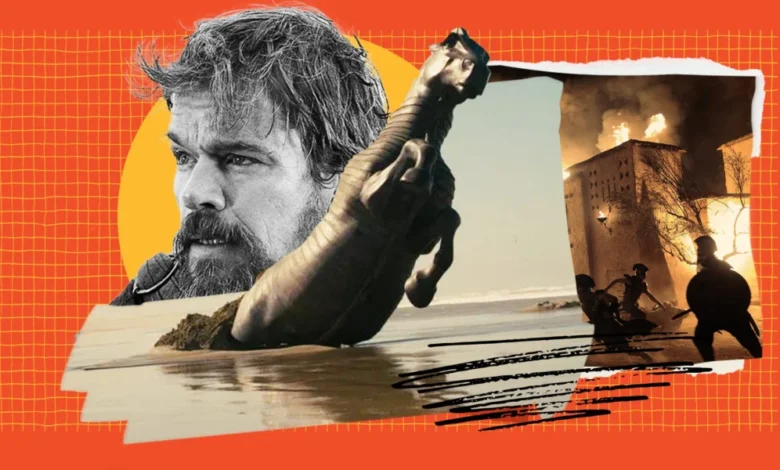
The cultural landscape has been irrevocably altered by the recent release of Christopher Nolan’s ambitious adaptation of Homer’s ancient epic, The Odyssey. In the wake of his critically acclaimed and commercially dominant 2023 film, Oppenheimer, Nolan has once again achieved the seemingly impossible, transforming a foundational work of Western literature, a story ingrained in the collective consciousness from childhood education, into a global box office phenomenon. This adaptation, a thrilling, star-studded spectacle that masterfully bridges the ancient and the contemporary, has ignited unprecedented discourse and shattered expectations, grossing an astounding quarter of a billion dollars in its opening weekend alone.
Nolan’s previous triumph with Oppenheimer, a three-hour biopic about J. Robert Oppenheimer, defied conventional wisdom by resonating with audiences and critics alike, culminating in a Best Picture and Best Director Oscar win. This success set the stage for an even bolder undertaking: to bring the harrowing ten-year journey of Odysseus home from the Trojan War to the silver screen. The result is a testament to Nolan’s singular vision, a film that, while rooted in a familiar narrative, feels remarkably fresh and relevant, proving that timeless stories, when approached with innovative filmmaking, can captivate audiences across generations.

The critical reception has largely focused on Nolan’s deft hand in transmuting Homer’s classic tale into a quintessential "Christopher Nolan movie." The film centers on a brilliant, hubristic protagonist, compelled to leave his home and family for arduous challenges that test his physical, mental, and spiritual fortitude. In doing so, Odysseus inadvertently contributes to the erosion of civility and societal order, a theme that resonates deeply with Nolan’s oeuvre. This interpretation suggests that The Odyssey is not merely being adapted but rather that its core themes are being recognized as foundational to much of Western storytelling, including Nolan’s own directorial output. The film’s brilliance lies in its ability to highlight these timeless threads, making the familiar structure feel both profoundly Nolanesque and refreshingly new.
However, a deeper examination reveals that Nolan’s Odyssey is also a significant departure for the director, known for his intricate plotting and non-linear narratives. Homer’s epic, by its very nature, is episodic and picaresque. While Nolan’s previous works have often been characterized as sustained tone poems – his distinctive takes on superhero films (The Dark Knight trilogy), spy thrillers (Tenet), war dramas (Dunkirk), science fiction epics (Interstellar, Inception), and biopics (Oppenheimer) – The Odyssey embraces a series of distinct vignettes. This structure allows for dramatic shifts in mood and style, providing a fertile ground for Nolan to experiment with entirely new genres within a single film, all while maintaining a cohesive and compelling narrative flow.
The film’s genius lies in its ability to seamlessly integrate these diverse cinematic influences, transforming The Odyssey into a Trojan Horse of sorts. It presents itself as a conventional blockbuster designed to capture the box office, yet it smuggles within its narrative a rich tapestry of cinematic traditions, appealing to a wide array of film enthusiasts.

Sword-and-Sandal Creature Feature
From the moment the monstrous tentacles of Scylla descend from a shadowy cave, snatching sailors from Odysseus’s ship, Nolan plunges the audience into a fantastical realm. This sequence, occurring as Odysseus strategically chooses an alternate route to evade a cataclysmic whirlpool, marks The Odyssey as arguably Nolan’s most overtly fantastical film. This is a significant statement from a director who has previously introduced audiences to mind-bending concepts like Tesla-inspired cloning machines, memory-manipulating corridor sequences, and the enigmatic "temporal pincer movements."
In The Odyssey, the journey is populated by a phantasmagorical array of creatures. A reanimated army of the dead rises from the mire, and a horde of formidable Laestrygonians, capable of tearing ships apart with their bare hands, adds to the visceral peril. The film also features the sorceress Circe and the monstrous Cyclops, Polyphemus. In its thrilling cavalcade of fantastical beings, many realized through practical effects, Nolan pays homage to classic matinee adventures like Don Chaffey’s Jason and the Argonauts, which famously utilized the stop-motion wizardry of Ray Harryhausen to bring its monsters to life. This section of the film serves as a direct nod to the grand tradition of mythological adventure cinema.
Prison Break Film
Following a harrowing encounter with the colossal Polyphemus, Odysseus and his surviving crew find themselves trapped within the giant’s cave. The narrative momentarily shifts into a tense procedural as the men meticulously devise an escape plan, prioritizing minimal casualties and the safety of every soldier. This segment involves strategic brainstorming, trial and error, and cunning maneuvers to break free. While audiences may never witness a dedicated Christopher Nolan Escape from Alcatraz, this section offers a compelling glimpse into what such a film might entail, showcasing Nolan’s ability to craft gripping suspense within confined, high-stakes scenarios.

Disaster Film
While Christopher Nolan has masterfully explored abstract realms like dreams, the vastness of space, and even the gritty urban landscape of Pittsburgh, his engagement with the raw power of nature and the natural world has been less pronounced. The Odyssey marks a significant shift in this regard. Despite some critics’ contention that Nolan didn’t fully capitalize on the IMAX format for its vistas, the film is a visual feast, showcasing the breathtaking beauty of the open sea and dramatic island cliffs, a testament to its substantial budget being effectively translated onto the screen.
The film’s climax of natural peril unfolds after Odysseus’s starving crew makes the catastrophic decision to feast on the sacred cattle of Helios. This transgression draws the wrath of Poseidon, who orchestrates a perfect storm that decimates the remaining sailors and casts Odysseus adrift. He washes ashore, facing not only the memory-erasing effects of Lotus-eaters’ opiates but also a prolonged entanglement with the enchantress Calypso, portrayed by Charlize Theron. While Nolan may not be typically associated with the grand disaster epics of Wolfgang Petersen or Roland Emmerich, this sequence brings him remarkably close, demonstrating his command of large-scale, elemental forces.
Psychosexual Love Triangle
"You don’t want to go home," Calypso, the alluring nymph, tells an amnesiac Odysseus, and within Nolan’s interpretation, there is compelling evidence to support her claim. The narrative repeatedly suggests Odysseus’s reluctance to reunite with his wife and children, perhaps stemming from guilt over past transgressions against Athena and the divine order, or perhaps influenced by the undeniable allure of Calypso, depicted with striking sensuality. Ludwig Göransson’s haunting score intensifies these moments of romantic tension, whether with Calypso or Penelope, underscoring Odysseus’s internal conflict and the profound fear, anxiety, and uncertainty he experiences. The film’s exploration of Odysseus’s fractured psyche and his struggle between duty and temptation evokes the psychological depth found in the works of Alfred Hitchcock, particularly in films like Vertigo, and Adrian Lyne, known for his explorations of desire and obsession in Fatal Attraction. This thematic resonance adds a layer of psychological complexity to Odysseus’s epic journey, as he battles for his memory, his soul, and his marriage against potent temptations.

Body Horror
Himesh Patel, as the pragmatic and often exasperated Eurylochus, embodies the perspective of a Nolan cinematographer grappling with the director’s audacious practical demands. Eurylochus’s best decision in the film is arguably leaving Odysseus behind on one of the enchanted islands the ship encounters. While the men venture out for provisions, they fall prey to the sorceress Circe. Instead of succumbing to her magical allure, they are instead transformed into pigs. This seemingly grim fate ultimately serves as a perverse form of salvation, sparing them a life of degradation.
This sequence, which evokes the transformative magic of Hayao Miyazaki’s Spirited Away, offers a glimpse into what a Christopher Nolan installment of the Saw franchise might resemble. Samantha Morton delivers a powerful eight-minute performance as Circe, representing the silent suffering of countless individuals subjected to the violence and pillage of ancient warfare. She serves as a poignant symbol for the victims of soldiers like Odysseus’s crew, who exploited their strength and ruthlessness to seize what others possessed. The Circe scenes feature what is arguably the film’s most ingenious sequence: a horror set piece that utilizes Rick Baker-level practical effects and makeup. As Patel confirmed to Men’s Health, "I can tell you there’s no CGI in that sequence… I think people won’t quite believe it, but there’s none." This masterful use of prosthetics and transformation vividly depicts the men being turned into swine, only to be later reverted to their human forms under duress.
Revenge Thriller
In a role reminiscent of Michael Caine’s sage advice in Nolan’s Batman films, the venerable John Leguizamo, as Antinous, urges the disguised Odysseus to "bring vengeance." Odysseus’s chilling reply, "I’m bringing it all," accompanied by a steely gaze that has already spawned a thousand memes, perfectly encapsulates the film’s climactic turn. Throughout the narrative, the recurring scenes of the suitors in Ithaca, lurking outside Penelope’s chamber, build a palpable sense of dread and anticipation. Their avarice—coveting Odysseus’s wife, plotting to usurp his throne, and consuming his resources—fuels the audience’s desire for retribution. Their cruelty towards the vulnerable—the elderly, the young, the infirm, and even loyal animals—amplifies the injustice.

The satisfaction derived from Odysseus finally stringing his legendary bow and unleashing righteous fury upon these transgressors is immense. It culminates in an electrifying and cathartic conclusion to the film’s three-hour runtime, which has been a complex exploration of morality. The ensuing battle, a masterpiece of choreographed action, sees Odysseus, vastly outnumbered, systematically eliminating his foes. The sequence plays out on multiple narrative levels, culminating in a moment of profound, albeit grim, poetic justice. Before dispatching the slimy Antinous, Odysseus ensures his victim’s father is informed of his son’s ultimate shame, a stark reminder of the consequences of their hubris. This masterful conclusion demonstrates that, were he inclined, Christopher Nolan possesses the directorial prowess to craft the definitive John Wick installment. However, in true showman fashion, he leaves the audience yearning for more, dreaming of the cinematic possibilities he has so brilliantly explored.
The release of The Odyssey is more than just a cinematic event; it is a cultural milestone. Christopher Nolan has not only adapted an ancient epic for a modern audience but has done so by deconstructing and reassembling the very fabric of cinematic storytelling. By weaving together disparate genres and drawing upon decades of film history, he has created a work that is both a faithful homage to its source material and a bold, innovative statement on the enduring power of myth and the boundless potential of filmmaking.
The film’s success underscores a fundamental truth: that the stories that have resonated with humanity for millennia continue to hold profound relevance. Through his visionary approach, Nolan has not only resurrected Homer’s epic for a new generation but has also reinforced its timeless themes of heroism, perseverance, temptation, and the arduous journey home, proving that the greatest adventures are often the ones that lead us back to ourselves.