WHO Director-General visits Jordan to recognize strong collaboration on health system delivery, emergency relief and advancing mental health

The Director-General of the World Health Organization (WHO), Dr. Tedros Adhanom Ghebreyesus, has concluded the inaugural day of a pivotal two-day State visit to the Hashemite Kingdom of Jordan, a mission designed to fortify the strategic partnership between the global health body and a nation that serves as a critical frontline for regional humanitarian stability. The visit, which underscores Jordan’s outsized role in the Middle East’s health landscape, highlighted the kingdom’s dedication to Universal Health Coverage (UHC), the expansion of mental health services, and the management of complex humanitarian health crises. Central to the visit was a high-level dialogue with His Majesty King Abdullah II, where the discourse moved beyond regional health policy to address the systemic challenges of sustaining medical infrastructure amidst persistent regional volatility.
A Strategic Meeting at the Royal Palace
The meeting with King Abdullah II served as the cornerstone of the visit, signaling the alignment between WHO’s global health mandates and Jordan’s national health priorities. Discussions between the two leaders were multifaceted, focusing on the long-term sustainability of Jordan’s health systems, which are currently under significant pressure due to the influx of displaced populations. According to figures provided by the Jordanian government and corroborated by UN agencies, the kingdom currently hosts more than three million refugees, predominantly from Syria and Gaza. This population density presents a massive challenge to primary healthcare infrastructure, requiring a sophisticated and resilient delivery model.
King Abdullah II and Dr. Tedros explored the efficacy of the "Medical Corridor" initiative, a hallmark of Jordan’s humanitarian policy. This initiative has been instrumental in facilitating the transfer of critically ill and injured children from the Gaza Strip to Jordanian medical facilities, such as the King Hussein Cancer Center. By acting as a stable, high-capacity conduit, Jordan has prevented the total collapse of medical care for hundreds of patients who would otherwise have faced insurmountable barriers to life-saving treatment.
Chronology of the Diplomatic Mission
The itinerary for the visit was structured to provide the WHO leadership with a comprehensive view of both the successes and the systemic gaps in Jordan’s health sector.
Day One:
- Morning: A formal reception and bilateral policy discussions with His Majesty King Abdullah II, focusing on national health strategy and regional emergency response.
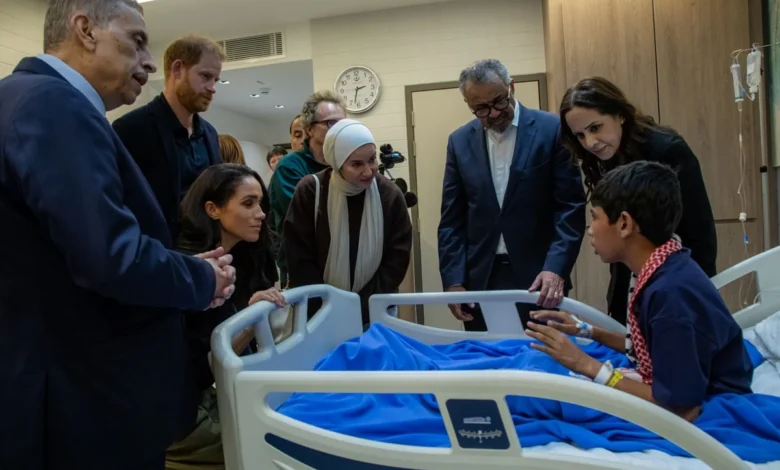
- Mid-day: A site visit to a WHO-supported hospital designated for pediatric evacuations from Gaza. Dr. Tedros engaged directly with frontline healthcare workers and families, witnessing the logistical realities of providing oncology and trauma care in a conflict-adjacent environment.
- Afternoon: A high-level assembly of health stakeholders, including international donor countries, UN agencies, and private philanthropies. This session aimed to bridge the funding gap for mental health integration and refugee health services.
- Late Afternoon: A series of bilateral meetings with the Jordanian Minister of Health to review the progress of the WHO Director-General’s Special Initiative for Mental Health, which Jordan has pioneered in the region.
Day Two (Scheduled):
- Morning: A visit to the National Center for Rehabilitation of Addicts to evaluate integrated psychological and medical support systems.
- Mid-day: Engagement with civil society actors, including the Jordanian Hashemite Fund for Human Development, to discuss community-based health resilience.
- Afternoon: A concluding tour of the King Hussein Cancer Center to assess advancements in regional cancer treatment protocols and medical technology transfer.
The Integration of Mental Health and UHC
A recurring theme during the visit was the aggressive pursuit of Universal Health Coverage. Jordan has distinguished itself in the Middle East by integrating mental health services into primary care, effectively de-stigmatizing treatment and making it accessible at the community level. Dr. Tedros praised this approach, noting that the inclusion of psychological support within routine medical check-ups is a model that other nations in the WHO Eastern Mediterranean Region should emulate.
Current data from the Ministry of Health indicates that the demand for mental health services has spiked significantly over the last decade, exacerbated by the stressors of refugee displacement and economic pressures. The WHO’s commitment to supporting this expansion is not merely advisory; it involves technical training, the supply of essential psychiatric medications, and the development of local health-worker capacity to manage trauma-related conditions.
Collaborative Philanthropy: The Role of Archewell
The visit featured the participation of the Duke and Duchess of Sussex, Prince Harry and Meghan, who attended in their capacity as founders of Archewell Philanthropies. Their presence served to amplify the visibility of the humanitarian challenges facing Jordan. Archewell has maintained a long-standing collaboration with the WHO, focusing on equitable access to vaccines and the provision of mental health support for vulnerable youth.
Prince Harry’s involvement was particularly directed toward the intersection of mental health and conflict. "Mental health is fundamental to recovery, dignity and long-term peace," the Duke noted during the high-level meeting with stakeholders. By highlighting the psychological toll of conflict on men, women, and children, the delegation sought to shift the international donor narrative from purely physical medical aid to a more holistic understanding of wellness.
Economic and Humanitarian Implications
The implications of this visit extend far beyond the diplomatic optics. For Jordan, the backing of the WHO is a crucial factor in securing ongoing international financial support. With the regional humanitarian burden increasing, Jordan’s fiscal capacity to provide healthcare to both its citizens and its refugee population is strained. The meeting with international donors was intended to stabilize these funding streams.
From a global perspective, Jordan is currently viewed as a "proof-of-concept" for regional health resilience. If the country can continue to manage its internal health demands while simultaneously serving as a regional medical hub for evacuees, it provides a replicable framework for other nations hosting large refugee populations. However, the sustainability of this model relies on three key factors:
- Sustained Funding: Shifting from emergency-based funding to multi-year development grants to ensure the longevity of infrastructure.
- Capacity Building: Training and retaining local medical staff to prevent "brain drain" to more affluent nations.
- Technological Integration: Utilizing digital health records and telehealth, areas where Jordan is already making significant strides, to maximize the reach of medical practitioners.
Official Reactions and Future Outlook
The Jordanian Ministry of Health expressed optimism following the initial sessions, emphasizing that the alignment with WHO protocols is accelerating the modernization of their national health system. "Jordan’s commitment to health is a commitment to humanity," a government spokesperson noted, highlighting that the nation’s policies are driven by the belief that health is a human right, not a privilege of status.
Dr. Tedros concluded his remarks on the first day by reaffirming the WHO’s unwavering support. "Jordan continues to show the world what it truly means to put health and humanity first," he stated. As the visit transitions into its second day, the focus will shift from high-level policy to grassroots implementation. By visiting community centers and specialized oncology facilities, the delegation aims to connect the high-level policy discussions with the tangible reality of patient outcomes.
The visit is expected to culminate in a joint communiqué that will outline the next phase of the WHO-Jordan partnership, likely focusing on the digitalization of the national health system, the scaling of the Medical Corridor to include more diverse specialized treatments, and the creation of a regional training hub for mental health professionals. This State visit represents a critical juncture in regional health policy, reinforcing the importance of international cooperation in a world where health crises are increasingly borderless and interconnected. As the delegation prepares for the final day of engagements, the focus remains clear: to ensure that the resilience shown by Jordan is matched by the commitment of the international community to provide the resources necessary for a sustainable, healthy future for the entire region.
Related posts: