US Space Force Escalates National Security Space Launch Investment to $17 Billion Amid Soaring Demand for Orbital Capabilities

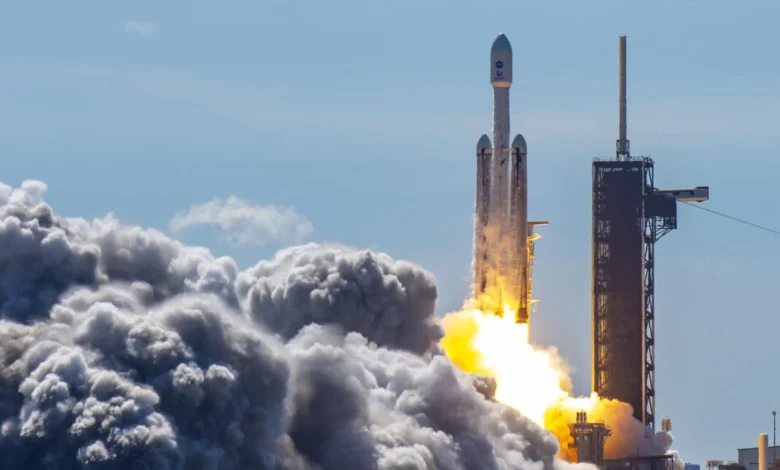
The United States Space Force announced on Friday a monumental tripling of the maximum value for one of its crucial National Security Space Launch (NSSL) contracts, escalating it from an initial $5.6 billion to an unprecedented $17 billion. This significant increase underscores a growing urgency within the Pentagon to enhance and expand its military satellite launch capabilities, reflecting a rapidly evolving geopolitical landscape and the critical role of space in modern defense. The expansion specifically targets the NSSL Phase 3 Lane 1 contract, a program designed to leverage commercial launch providers for a variety of missions deemed less risk-averse, yet increasingly vital to national security.
The Evolving Landscape of National Security Space Launch
The NSSL program is the cornerstone of the Space Force’s strategy for assured access to space, enabling Space Systems Command (SSC)—the entity overseeing the service’s launch initiatives—to procure launch services from a competitive pool of providers. This program represents a significant evolution from previous paradigms, particularly the Evolved Expendable Launch Vehicle (EELV) program, which, while successful, often relied on a limited number of providers and offered less flexibility. The NSSL’s dual-lane structure is central to its design, segmenting missions based on their strategic importance and risk tolerance.
-
From EELV to NSSL: A Quest for Competition and Resilience
For decades, the United States relied heavily on the EELV program, which emerged in the 1990s to ensure consistent and reliable access to space for critical national security payloads. Initially, the program fostered competition between Lockheed Martin and Boeing, but these two giants eventually merged their launch assets into United Launch Alliance (ULA) in 2006. While ULA provided unparalleled reliability, this effective monopoly led to concerns about rising costs and a lack of innovation. The advent of new commercial space companies, particularly SpaceX, with its reusable rocket technology, fundamentally challenged this landscape.
The NSSL program, formally launched in the mid-2010s and evolving through several phases, was conceived precisely to inject competition back into military launch procurement. Its core objectives were to reduce launch costs, foster innovation within the domestic launch industrial base, and ensure assured access to space across a diverse set of providers, thereby mitigating risks associated with reliance on a single entity or technology. By diversifying the launch options, the NSSL aims to enhance the resilience of U.S. space capabilities against potential disruptions, whether technical failures, supply chain issues, or adversarial actions.
-
The Dual-Lane Strategy: Prioritizing Missions and Leveraging Commercial Innovation
The NSSL program is strategically divided into two distinct lanes, each tailored to different types of missions and levels of risk.
Lane 1 is designed for the Space Force’s more risk-tolerant missions. This category includes medium-lift launches, experimental payloads that push technological boundaries, and crucial rideshare missions. These rideshare opportunities are increasingly used to deploy satellites for burgeoning constellations, such as those supporting the Pentagon’s surveillance or data relay networks. A key characteristic of Lane 1 is its accessibility to commercial launch providers without requiring the extensive, often years-long, and costly certification and oversight processes mandated for the most sensitive missions. This approach significantly lowers the barrier to entry for commercial companies, encouraging broader participation and fostering a more dynamic and competitive market. The recent $17 billion authorization specifically applies to this lane, signaling a massive expansion in the Pentagon’s intent to utilize these more agile and cost-effective commercial options.
Lane 2, in contrast, is reserved for the highest-priority strategic missions. This includes the government’s largest, most expensive, and most sensitive spy satellites, as well as radiation-hardened communications satellites engineered to withstand extreme conditions, including those associated with a nuclear conflict. Given the irreplaceable nature and strategic criticality of these payloads, missions in Lane 2 can only launch on rockets that have undergone the military’s rigorous and lengthy certification reviews. This stringent process ensures the highest levels of reliability and security. Currently, only SpaceX’s Falcon 9 and Falcon Heavy rockets, alongside United Launch Alliance’s Vulcan Centaur rocket, possess the necessary certifications for these paramount missions.
Surging Demand Drives Unprecedented Investment
The dramatic increase in the NSSL Phase 3 Lane 1 contract ceiling is a direct response to the Pentagon’s escalating demand for military satellite launches. This demand is not merely incremental; it reflects a fundamental shift in defense strategy, driven by an acknowledgment of space as a contested domain and the imperative to maintain a decisive advantage over peer competitors.
-
The Strategic Imperative: Why More Satellites?
The geopolitical landscape has profoundly influenced the urgency to bolster space capabilities. China and Russia have significantly advanced their own space programs, developing sophisticated anti-satellite weapons and demonstrating capabilities that could threaten U.S. space assets. In response, the U.S. military doctrine has evolved to emphasize "resilience" and "proliferation" in space. Instead of relying on a few exquisitely capable but vulnerable large satellites, the strategy now increasingly calls for deploying numerous smaller, more distributed, and often less expensive satellites. This "proliferation" makes the overall constellation more resilient to attack, as the loss of a single satellite would have a minimal impact on the system’s overall functionality.
This shift directly translates into a requirement for a significantly higher launch cadence. Programs like the Space Development Agency’s (SDA) Proliferated Warfighter Space Architecture (PWSA) exemplify this strategy. The PWSA aims to deploy hundreds of satellites into low Earth orbit (LEO) to provide a resilient network for missile warning, missile tracking, and secure communications. These constellations require frequent launches to establish initial capabilities, refresh aging satellites, and rapidly replace any assets lost to technical failures or adversarial actions. The demand for launches for these constellations is a primary driver behind the expanded Lane 1 funding.
-
Quantifying the Need: Launch Cadence and Constellation Proliferation
While specific launch manifests are classified, publicly available information from the Space Force and the Space Development Agency indicates a substantial increase in planned missions. The SDA alone aims to launch dozens, if not hundreds, of satellites annually over the next decade as it builds out its Tranche 0, Tranche 1, and subsequent iterations of the PWSA. These are precisely the types of missions that fit perfectly within the Lane 1 framework—requiring reliable, cost-effective access to orbit but not necessarily the ultra-premium security and reliability associated with Lane 2 missions.
The original $5.6 billion ceiling for Lane 1 was likely based on earlier projections for satellite deployment. However, as the strategic imperative intensified and the pace of constellation development accelerated, those projections proved insufficient. The tripling to $17 billion suggests a recognition that the volume of Lane 1-eligible missions will be far greater and more sustained than initially anticipated, potentially spanning a longer procurement period or accommodating a significantly higher number of individual launch task orders. This investment signals the Space Force’s commitment to ensuring a robust and continuous flow of satellites into orbit to meet national security objectives.
A Chronology of NSSL’s Evolution
The NSSL program, while rooted in the EELV’s legacy, has steadily evolved to meet contemporary demands, culminating in the recent funding surge.
-
Phase 1 and 2 Foundations: The journey towards the current NSSL structure began with preliminary phases aimed at fostering competition. The NSSL Phase 1 contracts, for instance, focused on early development and risk reduction for new launch vehicles. The crucial NSSL Phase 2 contracts, awarded in 2020, marked a significant milestone, allocating the bulk of strategic mission launches for the 2022-2027 timeframe. United Launch Alliance secured approximately 60% of these missions, primarily leveraging its new Vulcan Centaur rocket, while SpaceX secured the remaining 40% with its Falcon 9 and Falcon Heavy vehicles. These awards solidified a competitive landscape for the most critical missions, laying the groundwork for the more expansive Lane 1 approach.
-
Phase 3: Broadening the Base for Lane 1: The NSSL Phase 3 initiative was designed to further diversify the launch industrial base, particularly for the less stringent Lane 1 missions. In 2024, Space Systems Command made its initial selections for Lane 1 providers under Phase 3, naming industry titans SpaceX and ULA, alongside emerging powerhouse Blue Origin, as qualified contenders. This initial cohort brought significant capabilities to the table, from SpaceX’s flight-proven Falcon family to Blue Origin’s forthcoming New Glenn rocket.
However, the Space Force’s commitment to fostering a broader and more resilient launch ecosystem didn’t stop there. Recognizing the rapid advancements and increasing capabilities within the commercial space sector, the service continued to add new entrants to the Lane 1 roster. Companies like Rocket Lab, known for its Electron small-lift rocket and developing the Neutron medium-lift vehicle, were brought in. Stoke Space, an innovative startup focusing on fully reusable launch systems, also joined the pool. Most recently, Relativity Space, with its 3D-printed Terran 1 and upcoming Terran R rockets, and Impulse Space, a company specializing in orbital transfer vehicles and space logistics, were added to the list of competitors. These additions reflect the Space Force’s agile approach to integrating cutting-edge commercial capabilities and ensuring a wide array of options for its diverse mission needs.
-
The $17 Billion Milestone: The announcement on Friday, tripling the Lane 1 contract value to $17 billion, is the latest and most significant development in this chronology. It signals not just an increased budget but a strategic pivot towards greater reliance on the commercial market for a substantial portion of national security space requirements. This decision was likely influenced by a confluence of factors, including the accelerated pace of satellite development by entities like the SDA, the demonstrated reliability and cost-effectiveness of commercial providers, and the escalating need for resilient space architecture in an increasingly contested domain. The funding empowers the Space Force to issue a greater number of fixed-price "task orders" for individual missions, allowing for flexibility and responsiveness to evolving operational demands.
Fostering a Robust Commercial Launch Ecosystem
The substantial increase in the Lane 1 contract value is poised to have profound implications for the commercial space launch market, serving as a powerful catalyst for innovation, competition, and growth.
-
Diverse Provider Pool: Opportunities for New Entrants
The growing list of qualified Lane 1 providers—including SpaceX, ULA, Blue Origin, Rocket Lab, Stoke Space, Relativity Space, and Impulse Space—demonstrates the Space Force’s commitment to a broad industrial base. This expanded funding creates significant opportunities not just for the established players but critically for newer entrants and innovative startups. For companies like Stoke Space, Relativity, and Impulse, securing military launch contracts offers not only substantial revenue but also a critical stamp of approval, attracting further private investment and accelerating their technological development. This diversification reduces reliance on any single company, enhancing the overall resilience of the nation’s access to space.
-
The Task Order Mechanism: Agility and Competition
The Space Force procures Lane 1 missions through a system of competitive fixed-price "task orders." Each year, the Space Force issues a request for bids on a number of Lane 1 missions. Qualified providers then submit proposals, and the Space Force awards individual task orders to the winners. This mechanism is inherently agile, allowing the Space Force to rapidly respond to changing mission requirements and to leverage competitive pricing. It also encourages providers to continually innovate and improve their services to win these coveted contracts. The increased funding means a larger volume of these task orders will be available, intensifying competition and driving efficiency across the industry.
-
Market Dynamics: SpaceX’s Dominance and Emerging Players
To date, SpaceX has been the dominant recipient of Lane 1 task orders, leveraging its highly reliable and cost-effective Falcon 9 and Falcon Heavy rockets, which are also certified for Lane 2 missions. This success reflects SpaceX’s mature capabilities and aggressive pricing strategies. However, the increased contract ceiling provides ample room for other providers to secure a more significant share of future missions. Blue Origin, for instance, secured its first Lane 1 task order earlier this year, a significant milestone for the company as it prepares for the debut of its heavy-lift New Glenn rocket. As other providers like Rocket Lab and Relativity Space bring their medium-lift vehicles online, the competitive landscape for Lane 1 is expected to become even more dynamic, offering the Space Force a wider array of launch options and potentially even greater cost savings in the long term.
Implications for National Security and the Space Industry
The $17 billion commitment to NSSL Phase 3 Lane 1 is more than just a budget allocation; it is a strategic declaration with far-reaching implications for national security and the broader space industry.
-
Enhanced Resilience and Responsiveness: The most immediate implication is a significant enhancement in the U.S.’s ability to deploy and sustain its space assets. With more funding and a wider pool of launch providers, the Space Force gains unprecedented flexibility to launch satellites quickly and efficiently. This improved responsiveness is critical for reconstituting constellations after an attack, rapidly deploying new capabilities, or replacing failing satellites, thereby bolstering the resilience of the nation’s space architecture against adversarial threats.
-
Economic Stimulus and Innovation: This substantial investment acts as a powerful economic stimulus for the domestic space industry. It provides a stable and significant revenue stream that supports thousands of high-tech jobs, encourages research and development, and fosters technological innovation across the entire launch ecosystem—from rocket propulsion to advanced manufacturing and ground support systems. This government backing can de-risk private investment, accelerating the development of next-generation launch vehicles and associated technologies.
-
Maintaining Strategic Superiority: In an era where space is increasingly recognized as the ultimate high ground, maintaining strategic superiority in orbit is paramount for national security. The expanded NSSL Lane 1 funding ensures the U.S. military has the means to deploy and sustain the intelligence, surveillance, reconnaissance (ISR), communication, and navigation assets vital for modern warfare. This capability underpins everything from precision-guided munitions to global situational awareness, acting as a crucial deterrent and providing a decisive advantage in any potential conflict.
-
Future Outlook: Sustained Investment and Evolution: The tripling of the Lane 1 contract value suggests that this level of investment in commercial launch services for national security missions is not a temporary measure but a long-term strategic commitment. Future NSSL phases will likely continue to emphasize the integration of commercial innovation and competition, adapting to new technologies such as in-space servicing, advanced propulsion, and ever-more capable satellite constellations. The Space Force will undoubtedly continue to refine its procurement strategies to balance cost-effectiveness with mission assurance, leveraging the best of both commercial ingenuity and military rigor.
The decision to escalate the NSSL Phase 3 Lane 1 contract to $17 billion represents a clear strategic imperative for the U.S. Space Force. It signals a robust commitment to leveraging the dynamism of the commercial space industry to meet accelerating national security demands, ensuring the nation’s continued dominance in the critical domain of space. This investment is set to reshape the commercial launch market while simultaneously fortifying America’s defenses in an increasingly complex and contested orbital environment.