Navigating the Mosaic: How Toronto’s Distinct Neighborhoods Define Canada’s Largest Metropolis

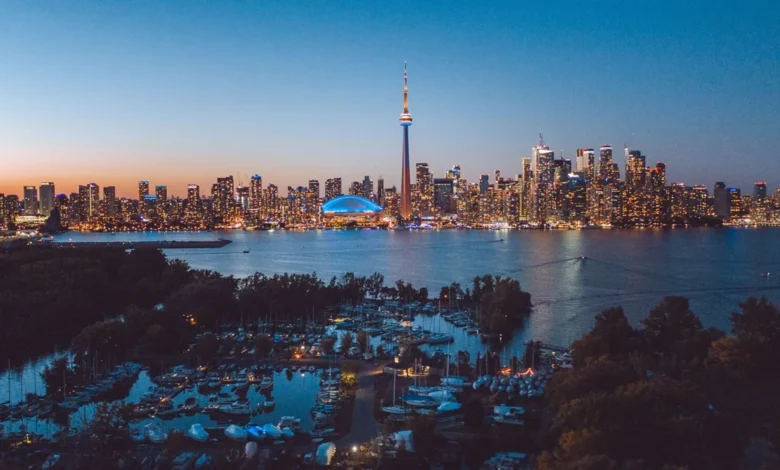
Toronto stands today as Canada’s most populous municipality and economic engine, yet it refuses to be categorized by a single urban identity. Rather than presenting a monolithic downtown core surrounded by homogenous suburbs, the city operates as a sprawling mosaic of more than 150 distinct neighborhoods hugging the northwestern shore of Lake Ontario. Driven by a multicultural population representing over 250 distinct ethnic origins and speaking more than 180 languages, the city lives up to its municipal motto: “Diversity Our Strength.” For both the casual traveler and the urban sociologist, Toronto offers a unique case study in how targeted, neighborhood-led urban planning and cultural preservation can coexist within a modern North American metropolis.
Urban development analysts and tourism economists frequently point to Toronto’s segmented geography as a primary driver of its economic resilience. Unlike cities that rely on a singular downtown commercial district, Toronto’s multi-nodal layout distributes foot traffic, retail investment, and cultural tourism across a vast geographic footprint. From the polished, high-end avenues of Midtown to the bohemian, graffiti-lined alleyways of the West End, each enclave functions as an independent ecosystem while remaining connected by an extensive public transit network operated by the Toronto Transit Commission (TTC).
The structural evolution of these neighborhoods traces back to waves of mid-to-late 20th-century immigration, which transformed peripheral working-class enclaves and industrial sectors into vibrant cultural hubs. As manufacturing facilities relocated away from the waterfront and inner-city cores during the latter half of the 1900s, Toronto experienced a massive wave of urban adaptive reuse. Historic textile factories, Victorian-era distilleries, and railway warehouses were systematically converted into residential lofts, contemporary art galleries, and culinary incubators. This deliberate preservation of industrial architecture has shielded the city from the sterile uniformity common in other post-industrial North American urban centers.
Yorkville and the Mink Mile: Luxury Retail and Cultural Heritage
At the upper echelon of Toronto’s real estate and retail market is Yorkville, an upscale Midtown neighborhood historically recognized as a bohemian counterculture haven in the 1960s before evolving into Canada’s premier luxury shopping district. Anchored by the stretch of Bloor Street West colloquially known as the "Mink Mile," Yorkville generates hundreds of millions of dollars in retail revenue annually, competing directly with high-end commercial corridors on New York’s Fifth Avenue and Chicago’s Magnificent Mile.
The economic significance of the Mink Mile lies in its unique retail mix, which juxtaposes international luxury conglomerates—such as Gucci, Prada, and Chanel—with prominent Canadian flagships and homegrown designers like Pink Tartan, established by Kimberley Newport-Mimran. Complementing this commercial density is the Holt Renfrew Centre, which houses both institutional luxury department stores and the Toronto Designers Market, a municipal incubator designed to counter the dominance of foreign brands by showcasing emerging domestic talent.
Beyond commerce, Yorkville serves as a major institutional anchor for the city’s arts and heritage sector. The neighborhood is home to the Royal Ontario Museum (ROM), Canada’s largest museum of world cultures and natural history. Originally established in 1912 and radically expanded in 2007 with the controversial yet architecturally striking Michael Lee-Chin Crystal designed by Daniel Libeskind, the ROM houses a permanent collection of more than 13 million objects. Just steps away, the Gardiner Museum provides specialized cultural programming focused entirely on ceramic art, reinforcing Yorkville’s status as a comprehensive cultural district rather than a mere consumer playground.
The culinary landscape of Yorkville mirrors its affluent demographic, featuring long-standing institutions such as Sassafraz, housed within a row of converted Victorian townhouses, and Alobar Yorkville, a Michelin-starred establishment that marries French culinary techniques with locally sourced Canadian proteins. According to municipal hospitality data, Yorkville’s dining and hospitality sector remains one of the highest-yielding employment zones in the city’s service economy, drawing high-net-worth tourists and business travelers attending conferences at nearby five-star properties like the Four Seasons Hotel Toronto.
The Entertainment District and King West: Sports, Spectacle, and Performing Arts
Moving south toward the shoreline, the Entertainment District and King West form the high-octane commercial and cultural core of Toronto. This dense urban corridor packs major league sports venues, North America’s oldest continuously operating legitimate theater, and a critical mass of Michelin-recognized dining establishments into a tightly compressed grid.
The district’s architectural and cultural epicenter is bounded by King Street West, which doubles as Canada’s Walk of Fame—a civic installation featuring granite stars embedded in the pavement to honor Canadian cultural icons ranging from hockey legend Wayne Gretzky to international music superstar Céline Dion. Adjacent to this pedestrian thoroughfare is the Scotiabank Arena, home to the Toronto Maple Leafs (National Hockey League) and the Toronto Raptors (National Basketball Association). During the Raptors’ historic 2019 NBA Championship run, the outdoor plaza outside the arena, colloquially dubbed "Jurassic Park," drew crowds exceeding 20,000 fans per game, effectively demonstrating the capacity of downtown public spaces to generate civic cohesion and massive economic spinoffs for local hospitality businesses.
A few blocks west stands the Rogers Centre, the permanent home of the Toronto Blue Jays and the only remaining stadium in Major League Baseball featuring a fully operational motorized retractable roof, completed in 1989. The venue recently underwent a multi-hundred-million-dollar privately funded renovation to modernize player facilities and fan viewing areas, shifting its configuration from a multipurpose concrete bowl to a baseball-specific stadium with distinct social zones.
Performing arts infrastructure in the Entertainment District is equally robust. The Royal Alexandra Theatre, opened in 1907 and designated a National Historic Site of Canada, has staged continuous theatrical productions longer than any other theater in North America. It operates alongside the Princess of Wales Theatre, built by the late theatrical impresarios David and Ed Mirvish in 1993, which routinely hosts pre-Broadway tryouts and major West End transfers. Meanwhile, the Four Seasons Centre for the Performing Arts—purpose-built with specialized acoustic engineering for the Canadian Opera Company and the National Ballet of Canada—and Roy Thomson Hall, home to the Toronto Symphony Orchestra, anchor the classical music economy of the region.
The area also plays a pivotal global role every September as the primary host of the Toronto International Film Festival (TIFF). Headquartered at the TIFF Bell Lightbox, the festival routinely generates upwards of $200 million in annual economic impact, serving as a critical launchpad for Academy Award contenders and bringing international media focus directly to King West.
The Distillery District and St. Lawrence Market: Industrial Heritage and Gastronomy
East of the downtown core, Toronto’s historical consciousness is preserved within the Distillery Historic District and the St. Lawrence Market neighborhood. The Distillery District occupies a 13-acre pedestrian-only enclave that once housed the Gooderham and Worts Distillery, which, by the late 19th century, operated as the largest distillery in the British Empire.
Following the cessation of industrial operations in 1990, the site underwent one of the most successful historic preservation projects in North American urban planning. Developers retained more than 40 Victorian-era industrial buildings constructed from reddish-brown brick and local limestone, transforming them into a pedestrianized commercial zone populated by independent art galleries, artisanal bakeries, and craft breweries. Today, the district acts as a year-round cultural site, culminating annually in the Distillery Winter Village, which draws millions of visitors during the winter holiday season.
Directly adjacent to the historic industrial zone stands the St. Lawrence Market complex, which has served as the municipal food hub of Toronto since 1803. The South Market building, featuring a red-brick exterior and a cast-iron interior structure dating to 1899, houses over 120 vendors selling local agricultural produce, artisanal cheeses, and specialty meats. The market’s global reputation has been largely sustained by iconic local vendors such as Carousel Bakery, famous for its peameal bacon sandwich—a cured pork loin rolled in cornmeal that has been officially endorsed by visiting dignitaries, chefs, and international food critics alike.
Architecturally, the St. Lawrence neighborhood is defined by the Gooderham Building (popularly known as the Flatiron Building). Constructed in 1892—predating its more famous Manhattan counterpart by ten years—this distinctive wedge-shaped red-brick structure sits at the intersection of Front, Wellington, and Church streets, serving as an enduring visual symbol of Toronto’s late-Victorian commercial expansion.
Little Italy and Little Portugal: Cultural Enclaves and Culinary Fusion
Toronto’s multicultural demographic policy is perhaps most evident in the West End neighborhoods of Little Italy and Little Portugal. Spanning College Street and Dundas Street West, these adjacent enclaves illustrate the fluid boundaries of urban ethnic enclaves, where Italian espresso bars gradually bleed into Portuguese bakeries, interspersed with contemporary Mexican, Japanese, and Caribbean kitchens.
Little Italy established its roots along College Street in the early-to-mid 20th century as waves of Italian immigrants settled around industrial and rail corridors. While demographic shifts have diversified the neighborhood, institutions like Café Diplomatico and Trattoria Taverniti remain operational, preserving the mid-century social fabric of the area. The Italian Walk of Fame, established along College Street, permanently honors notable Italian-Canadians who have made significant contributions to arts, sports, science, and public life.
Directly to the west, Little Portugal along Dundas Street West reflects the post-World War II migration of Portuguese workers, particularly from the Azores and mainland Portugal. Bakeries such as Caldense and Nova Era continue to supply traditional pastéis de nata (custard tarts), while local restaurants like Bairrada Churrasqueira anchor the neighborhood’s charcoal-grilled meat traditions.
In recent decades, these traditional enclaves have experienced culinary and cultural diversification. Restaurants like Quetzal, which features Michelin-starred open-fire Mexican cooking, and Ten, an experimental plant-forward dining concept operating on a rotating multi-course tasting menu, demonstrate how contemporary chefs utilize the historic infrastructure of these neighborhoods to experiment with global gastronomy. Furthermore, annual community festivals such as Do West Fest attract hundreds of thousands of visitors, transforming Dundas Street West into a pedestrian thoroughfare celebrating street art, live music, and cross-cultural culinary collaboration.
Queen West and Ossington: Creative Industries and Urban Regeneration
At the western vanguard of Toronto’s creative economy are Queen West and Ossington Avenue. Recognized internationally for their concentration of independent fashion designers, contemporary art galleries, and storied live music venues, these corridors represent the epicenter of Toronto’s youth culture and design community.
The transformation of Queen West from a neglected industrial and working-class residential strip into a global design district accelerated in the late 1990s and early 2000s, driven by the expansion of the Ontario College of Art & Design University (OCAD U) and the opening of boutique hospitality properties like the Drake Hotel. The neighborhood’s physical environment actively encourages public artistic expression, most notably through Rush Lane—commonly known as Graffiti Alley. This permitted municipal laneway features miles of continuous, rotating murals by local and international street artists, transforming a utilitarian service corridor into an open-air public art gallery protected by municipal policy.
Live music remains a foundational pillar of the Queen West identity. Venues such as the Cameron House have operated continuously for decades, serving as foundational incubators for Canadian roots and alternative rock acts, including the Barenaked Ladies, who cut their teeth on the venue’s backroom stage before achieving international stardom.
On Ossington Avenue, formerly a gritty industrial strip characterized by automotive repair shops and modest residential housing, commercial zoning changes in the early 2000s paved the way for an influx of independent bistros, wine bars, and specialty retail shops. Establishments such as Paris Paris, La Banane, and Union have helped establish Ossington as one of the most densely packed culinary stretches in the country, attracting food critics and urban tourists seeking unpretentious yet highly refined dining experiences.
Broader Impact and Socio-Economic Implications
The success of Toronto’s neighborhood-centric model has profound implications for urban planning, municipal taxation, and tourism strategy. By distributing major attractions, cultural institutions, and commercial clusters across a polycentric geography, the city avoids the hyper-congestion and tourist-bubble isolation seen in urban centers like central London or Manhattan.
However, this decentralized vibrancy presents significant socio-economic challenges. Rapid gentrification across Queen West, Ossington, and Yorkville has driven commercial and residential real estate values to historic highs, raising concerns regarding housing affordability and the displacement of historical immigrant communities and independent mom-and-pop retailers. Municipal policymakers continue to grapple with the tension between fostering creative economic development and protecting the cultural diversity that originally defined Toronto’s appeal.
Despite these municipal challenges, the collective identity of Toronto’s neighborhoods remains its most potent asset. For the traveler navigating the city, the experience is not defined by a single landmark, but by the seamless transition from the high-end luxury of Midtown to the historic brickwork of the Distillery District, and onward to the diverse immigrant flavors of the West End. It is an urban ecosystem where distinct communities maintain their individual histories while contributing to a cohesive, globally engaged metropolitan whole.
Related posts: