The Strategic Evolution of Hospitality Merchandise and the Shift Away from Profit-Centric Retail Models

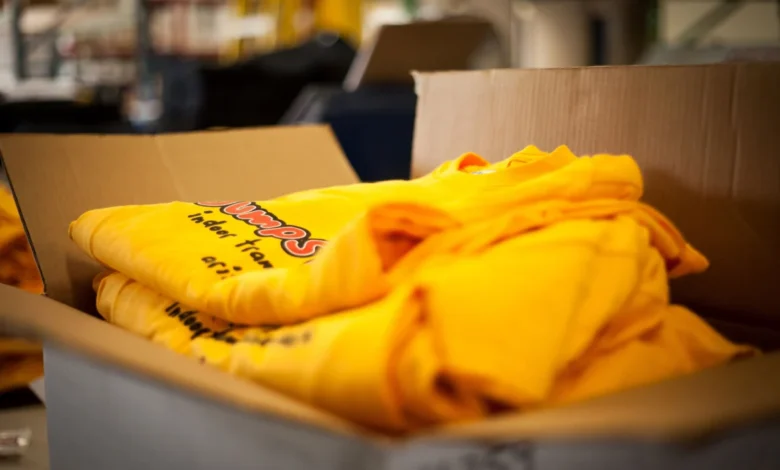
In the contemporary hospitality landscape, the inclusion of branded apparel and accessories—commonly referred to as merchandise—has become a standard, yet often contentious, revenue stream for restaurants, bars, and entertainment venues. While historically viewed as a secondary income source, the pricing strategies currently employed by many establishments have sparked a growing disconnect between business owners and their core clientele. Recent market observations indicate that while businesses increasingly rely on these items for brand exposure, the high retail price points are causing friction during an era already defined by "fee fatigue" among consumers.
The Economics of Hospitality Retail
To understand the current tension, it is necessary to examine the cost-to-retail ratio of corporate merchandise. Industry data from promotional product manufacturers indicates that the wholesale cost for custom-branded apparel—including T-shirts, hoodies, and headwear—typically ranges from $5 to $15 per unit, depending on order volume, material quality, and printing complexity. Despite these relatively low entry costs, many hospitality venues apply aggressive markups, with retail prices for a single hoodie often reaching $50 to $80.
From a financial accounting perspective, these markups are intended to offset the operational costs of maintaining inventory, such as storage space and the labor required for point-of-sale processing. However, the volume of sales in the average restaurant or bar remains statistically low. Often, the lack of a dedicated retail infrastructure leads to disorganized inventory management, where frontline service staff—who are primarily trained for food and beverage service—are ill-equipped to handle merchandise transactions. This logistical inefficiency suggests that for many establishments, the retail arm is not the profit engine it is perceived to be, but rather a missed opportunity for brand loyalty.
The Consumer Sentiment Crisis: Fee Fatigue
The current resistance to high-priced merchandise must be viewed through the lens of the broader economic environment in the hospitality sector. Following the inflationary pressures of the post-pandemic era, consumers are increasingly sensitive to the accumulation of surcharges. This phenomenon, often termed "fee fatigue," involves a heightened awareness of non-essential costs added to a dining bill.
Data from the National Restaurant Association and various consumer sentiment indices reveal that customers are encountering a rising number of line items on their final bills, including credit card processing fees, health and wellness surcharges, mandatory gratuities, and even administrative fees for large parties. When an establishment adds an $80 price tag to a branded sweatshirt, it is frequently perceived as an extension of these aggressive pricing tactics. Consequently, what should be a celebratory purchase—a souvenir of a positive experience—is instead viewed as an unnecessary financial burden, potentially damaging the customer’s perception of the establishment’s value proposition.
Shifting Paradigms: From Profit Centers to Marketing Assets
Industry experts suggest that the most successful businesses are moving away from treating merchandise as a high-margin product and are instead leveraging it as a dynamic marketing tool. This shift requires a fundamental change in how owners perceive the return on investment (ROI). Rather than calculating profit by the unit, businesses are beginning to calculate the "cost of acquisition" for new customers generated through brand visibility.
The Charitable Integration Model
A growing number of mid-sized restaurant groups have begun partnering with local non-profits to distribute branded goods. By earmarking a portion or all of the proceeds from merchandise sales for a charitable cause, these businesses transform a transaction into a community-building exercise. This strategy not only justifies the price point in the eyes of the consumer but also fosters positive public relations. Evidence shows that when a purchase is linked to a transparent philanthropic effort, consumer price sensitivity decreases significantly.
Incentivized Giveaways and Loyalty Programs
Instead of keeping merchandise on a shelf, many forward-thinking operators are integrating apparel into their loyalty programs. By treating items as rewards for high-frequency patrons, businesses cultivate deeper relationships. A customer who reaches a specific spending threshold and receives a branded cap as a gesture of appreciation is statistically more likely to return. This approach effectively moves the cost of the item from the "Retail Sales" ledger to the "Marketing/Customer Retention" ledger, where it provides a measurable benefit in terms of repeat business.
The Role of Social Media Engagement
The modern consumer acts as a brand ambassador, particularly when incentivized. Several innovative bars and restaurants have launched social media campaigns that offer discounts or complimentary items to guests who post photographs wearing the establishment’s apparel. This peer-to-peer marketing strategy is highly effective in the hospitality sector, where recommendations and social proof are primary drivers of foot traffic. By distributing branded items at cost—or even slightly below—the business secures long-term advertising that reaches a wider, more targeted demographic than traditional paid media.
Operational Recommendations for Business Owners
For establishments looking to reform their merchandise strategy, a three-pronged approach is recommended:
- Inventory Streamlining: Audit the current merchandise catalog. Remove slow-moving or low-quality items that do not align with the brand’s image. Focus on a smaller, high-quality collection that customers are genuinely inclined to wear.
- Transparent Pricing: Consider lowering retail prices to a point that feels "fair" to the consumer—ideally closer to the $15–$25 range for standard apparel. The goal should be to encourage adoption rather than maximize the margin on a per-unit basis.
- Experiential Integration: Shift the focus of merchandise from the shelf to the event. Utilize hats, shirts, and mugs as prizes for trivia nights, contests, or tournaments. This increases the visibility of the brand within the venue and encourages engagement without the friction of a direct sales transaction.
Broader Market Implications
The trajectory of the hospitality industry suggests that the "souvenir" business model is undergoing a necessary correction. As competition for discretionary spending intensifies, businesses that prioritize the guest experience—and remove barriers to that experience—are positioned to outperform those that focus on short-term gains from high-markup retail.
Ultimately, the true value of a branded garment lies in its ability to persist outside the four walls of the establishment. When a customer wears a branded hoodie, they are essentially providing mobile advertising. If a business overprices that hoodie, the customer may never make the purchase, and that advertising opportunity is permanently lost. By recalibrating the role of merchandise to serve as a reward or a community engagement tool, business owners can turn their retail presence into a sustainable, long-term asset that drives brand equity, fosters customer loyalty, and ultimately, supports the bottom line through increased repeat visits and word-of-mouth marketing.
The goal is to ensure that when a patron leaves an establishment, they carry with them a positive memory of the service and the atmosphere, supported by a physical reminder that serves as a badge of loyalty rather than a symbol of overpayment. In the competitive, data-driven world of modern hospitality, the most successful brands will be those that understand that their greatest asset is the goodwill of their patrons.