WHO and the African Union Renew Strategic Partnership to Bolster Continental Health Sovereignty Amid Global Financial Headwinds

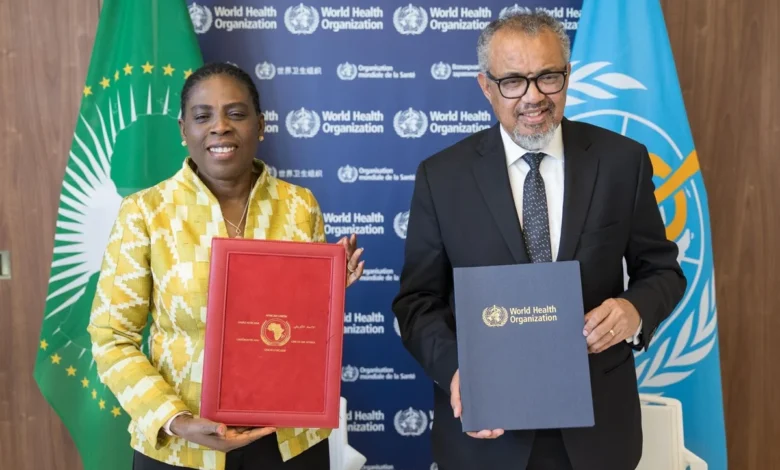
The World Health Organization (WHO) and the African Union (AU) Commission officially renewed their long-standing strategic partnership today, formalizing an updated Memorandum of Understanding (MoU) during the 78th World Health Assembly in Geneva. This landmark agreement arrives at a pivotal juncture in global health, as the African continent faces a convergence of fiscal constraints, shifting geopolitical priorities, and the urgent need to transition from external aid dependency toward sustainable, self-reliant health systems.
The ceremony, attended by high-level delegates from both organizations, marks a definitive shift in how international health bodies and regional blocs interact. By codifying their cooperation, the WHO and the AU are aiming to harmonize their technical, financial, and policy frameworks to better address the complex health landscape currently characterizing the African continent.
A Foundation Built on Historical Cooperation
The relationship between the WHO and the AU is rooted in a long history of collaborative disease prevention, emergency response, and policy advocacy. The 2019 Memorandum of Understanding served as the previous benchmark for this cooperation, providing the structural framework that guided the organizations through the unprecedented challenges of the COVID-19 pandemic.
During the pandemic, the partnership proved essential for the deployment of the Africa Medical Supplies Platform and the coordination of the Africa Centres for Disease Control and Prevention (Africa CDC). However, the 2019 agreement was conceived in a different fiscal era. As the global economy grapples with rising inflation, debt distress in developing nations, and a retraction in bilateral development assistance, the new 2024 MoU has been redesigned to reflect the necessity of "health sovereignty"—a core pillar of the AU’s updated agenda.
The Strategic Shift: From Survival to Sovereignty
The core motivation behind the updated MoU is a transition in philosophy. As emphasized by Her Excellency Ambassador Amma Adomaa Twum-Amoah, the AU Commissioner for Health, Humanitarian Affairs, and Social Development, the current era demands that African nations move beyond "budgeting for survival."
This shift toward sovereignty is not merely rhetorical. It involves a systemic redesign of how health programs are funded and implemented. Historically, many health initiatives in Africa have been vertical, donor-driven programs focused on specific diseases. The new partnership aims to integrate these efforts into robust, horizontal primary health care systems that are managed and sustained by domestic resources.
The agreement places the Department of Health, Humanitarian Affairs, and Social Development of the AU Commission at the center of this transition. By centralizing policy implementation, the AU aims to speak with a more unified voice on the global stage, ensuring that regional priorities are not sidelined by the competing interests of global donors.
Key Pillars of the Renewed Collaboration
While the specific operational details are being finalized in secondary annexes, the renewed MoU outlines five primary areas of strategic collaboration:
- Strengthening Health Systems: A renewed focus on Universal Health Coverage (UHC), ensuring that all people have access to necessary health services without suffering financial hardship.
- Health Security and Pandemic Preparedness: Establishing more resilient surveillance and rapid-response mechanisms to mitigate the impact of future infectious disease outbreaks.
- Local Manufacturing and Supply Chain Resilience: Reducing the continent’s reliance on imported pharmaceuticals and medical supplies—a lesson starkly learned during the global vaccine inequity of 2021.
- Policy Harmonization and Regulatory Alignment: Aligning the health regulations of the 55 AU member states to facilitate the movement of medical goods and health personnel across borders.
- Data-Driven Governance: Leveraging the AU’s increased political capital and the WHO’s technical expertise to improve the collection and analysis of health data, enabling more accurate and targeted resource allocation.
The Global Context: Africa’s Rising Voice
The timing of this agreement is significant, coinciding with the African Union’s recent admission as a permanent member of the G20. This elevation in status provides the AU with a platform to influence global macroeconomic policies that directly affect health, such as debt relief and the restructuring of international financial architectures.
Dr. Tedros Adhanom Ghebreyesus, the WHO Director-General, noted during the signing that the agreement is a direct response to the "cuts to bilateral aid" that currently imperil the health of millions. "We are determined to translate our partnership into tangible results," Dr. Tedros stated, underscoring the urgency of the situation. The WHO’s role in this partnership remains that of the primary technical and normative leader, providing the evidence-based guidance that the AU uses to craft continental policy.
Supporting Data and Financial Realities
The necessity for this renewed partnership is underscored by current economic indicators. According to recent World Bank and IMF reports, many sub-Saharan African nations are currently spending a larger percentage of their government revenue on debt servicing than on health and education combined. This fiscal squeeze has led to a stagnation in primary health care funding.
Furthermore, the WHO’s own Global Health Expenditure Database indicates that while domestic health spending has increased in some African nations, the gap to achieve the Sustainable Development Goal (SDG) 3 (Good Health and Well-being) remains massive. Estimates suggest that the continent requires an additional $60–$100 billion annually to build truly resilient, universal health care systems.
By aligning the WHO’s technical standards with the AU’s political leverage, the hope is to create a more attractive environment for private sector investment and to optimize the limited public funds currently available.
Implications and Future Outlook
The implications of this agreement extend far beyond the administrative offices in Addis Ababa and Geneva. For the average citizen, a successful implementation of this MoU could mean more reliable access to essential medicines, better-equipped primary health clinics, and more effective protection against future health crises.
However, the success of the agreement will hinge on implementation. The history of international cooperation is littered with high-level agreements that lacked the necessary follow-through at the country level. The inclusion of clear, actionable, and measurable targets within this new MoU suggests a learning process from past limitations.
As the international community watches, the AU and WHO must now navigate the challenge of turning high-level political commitment into grassroots reality. If successful, this partnership could serve as a model for regional-global cooperation, demonstrating how international organizations can empower, rather than replace, regional leadership.
Expert Perspectives and Stakeholder Responses
Public health analysts have largely welcomed the agreement, noting that it aligns with the "New Public Health Order" for Africa, an initiative championed by the Africa CDC. The focus on local manufacturing is particularly praised, as it addresses the core vulnerability exposed during the COVID-19 pandemic—the lack of local production capacity for vaccines and diagnostics.
However, critics caution that the success of the partnership remains vulnerable to the ongoing geopolitical tensions that often disrupt global health cooperation. The ability of the AU to maintain a unified front on health policy, despite the diverse political and economic landscapes of its member states, will be a key variable in the efficacy of this partnership.
In conclusion, the signing of the updated MoU represents a maturing of the relationship between the WHO and the African Union. It is a pragmatic, survival-oriented, and forward-looking document that recognizes the constraints of the current global climate while refusing to abandon the long-term objective of achieving equitable health for all citizens on the African continent.
Contact Information for Further Inquiries:
For detailed information regarding the implementation of the MoU and specific programmatic timelines, stakeholders and members of the press are encouraged to contact:
- Professor Julio Rakotonirina, Director of the Department of Health, Humanitarian Affairs and Social Development, African Union Commission. Email: [email protected].
- Ms. Stéphanie Seydoux, Director and DG Envoy for Multilateral Affairs, World Health Organization. Email: [email protected].
Additional support for media inquiries is provided by the WHO Media Team and Mr. King David Cartey of the African Union Commission.