Jeep Takes Its Brand Across the Marvel Multiverse in Final Chapter of Cinematic Marketing Campaign

Jeep has officially launched the third and final installment of its year-long promotional partnership with Marvel Studios, titled "A Jeep 4×4 for Any Universe." This concluding chapter, which premiered on November 6, serves as a high-octane bridge to the highly anticipated theatrical release of "Avengers: Doomsday," scheduled to hit cinemas on December 18. By embedding its current vehicle lineup into iconic Marvel environments—ranging from the high-tech confines of Avengers Tower to the sprawling landscapes of Doctor Doom’s Latveria—the brand is attempting to solidify its identity as the quintessential vehicle for explorers, whether they are traversing Earth’s deserts or navigating the complexities of the Marvel Cinematic Universe (MCU).
The campaign is not merely a collection of advertisements; it is a sophisticated, multi-channel narrative effort designed to maintain brand visibility during the critical Q4 holiday shopping season. By leveraging the immense cultural footprint of the Marvel franchise, Jeep is moving beyond traditional automotive marketing, opting instead to place its vehicles in the center of a global pop-culture phenomenon.
A Chronology of the Marvel-Jeep Collaboration
The "A Jeep 4×4 for Any Universe" campaign represents the culmination of a strategic trajectory that began in early 2024. The partnership has been characterized by a shifting creative focus, evolving from specific product promotion to broad brand-storytelling.
Phase One: The Origin Story (May 2024)
The collaboration kicked off with "Origin Story," a campaign that capitalized on a unique historical alignment: both the Jeep brand and the character of Captain America trace their roots back to 1941. This phase was heavily product-focused, introducing the 2026 Jeep Wrangler America250 special edition. This vehicle featured distinct aesthetic nods to the Marvel hero, including a Captain America shield tire cover, and was supported by a limited-edition comic book cover that visually linked the vehicle with the iconic character.
Phase Two: The Original Superheroes (Summer 2024)
The second phase, titled "The Original Superheroes," marked a pivot away from fictional comic book characters. During the "Summer of Jeep" promotional window, the brand focused on real-world narratives, featuring actual United States military veterans who had served as captains in various branches of the armed forces. This phase aimed to ground the brand’s rugged identity in reality, pairing veterans with the full Jeep portfolio, including the Grand Cherokee, Gladiator, Grand Wagoneer, and Compass, thereby reinforcing the brand’s long-standing connection to military service and American heritage.
Phase Three: The Multiverse Finale (November–December 2024)
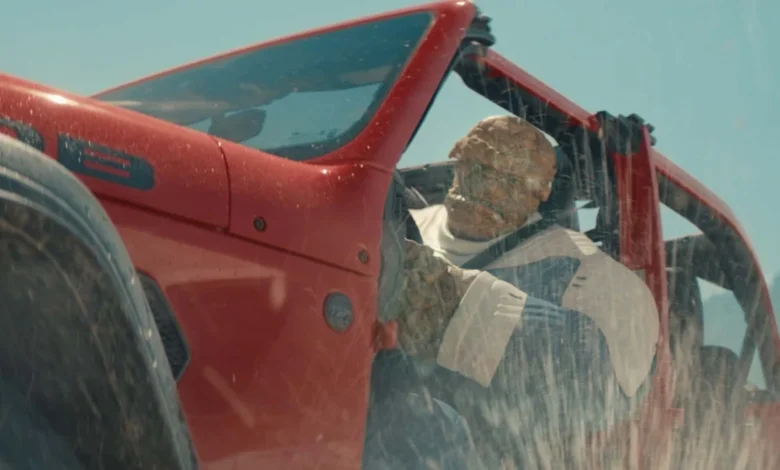
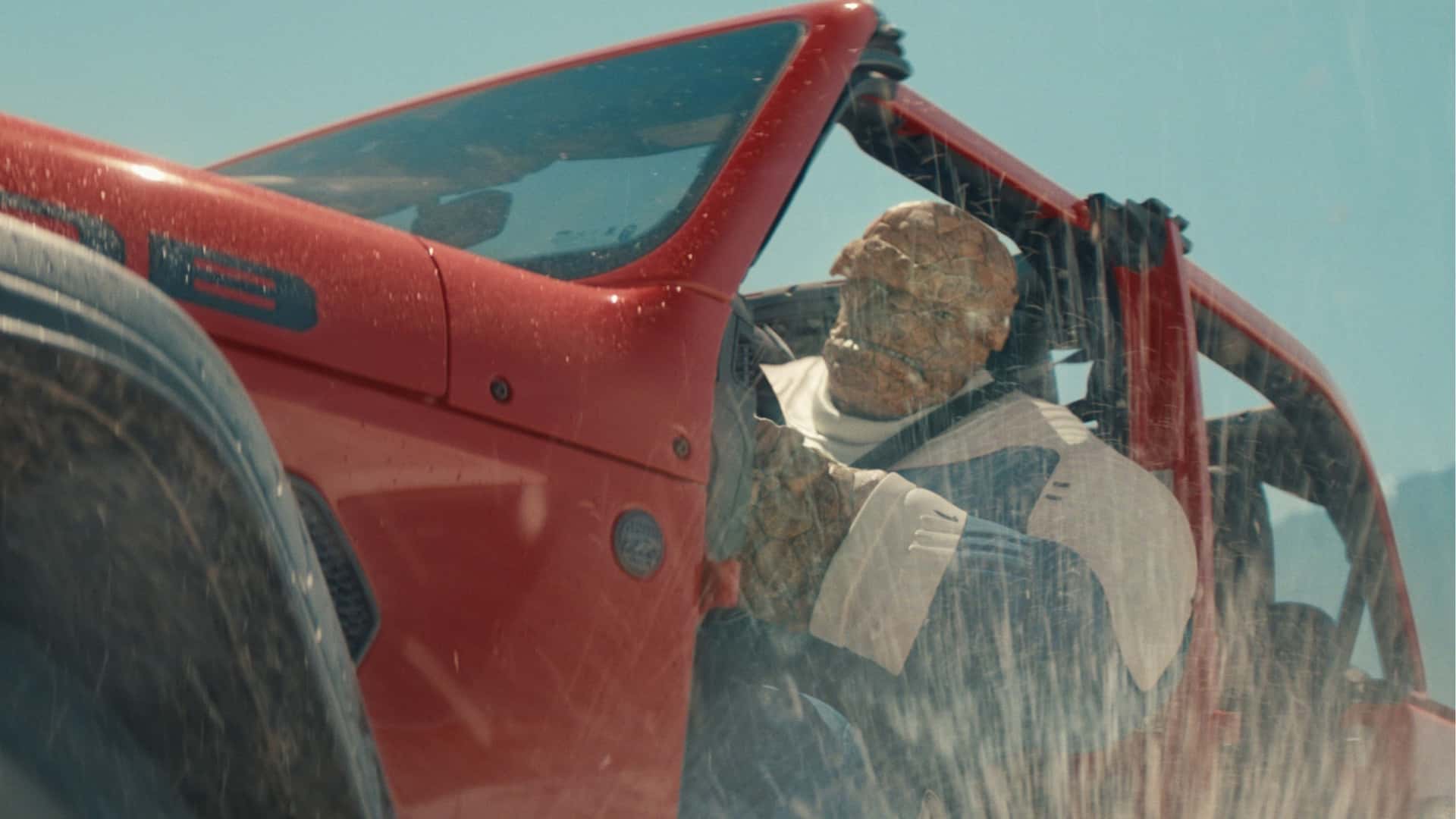
The current and final phase returns to the fantastical. By incorporating characters such as The Thing, the Human Torch, H.E.R.B.I.E., and Nightcrawler, the campaign utilizes the "multiverse" concept to showcase the versatility of the Jeep fleet. One of the most prominent pieces of creative content features The Thing behind the wheel of a Jeep Wrangler, a visual intended to emphasize the vehicle’s durability and strength.
Strategic Objectives and Brand Positioning
The decision to execute a year-long arc tied to a single franchise release is a bold departure from traditional automotive advertising, which often favors short-term, model-specific spots. Stellantis North America’s Chief Marketing Officer, Nate Buelow, has framed this initiative as an extension of Jeep’s eight-and-a-half-decade history. The core objective is to position Jeep as the vehicle of choice for individuals who "go beyond the familiar."
From a marketing perspective, the campaign is designed to maximize reach across broadcast, social, digital, and dealership channels. By aligning with "Avengers: Doomsday," a project directed by Anthony and Joe Russo, Jeep is positioning itself to capture the attention of a massive, multi-generational audience. Industry analysts suggest that this type of "tentpole" marketing is becoming increasingly essential for legacy automakers looking to maintain relevance in a fragmented media landscape.
Official Statements and Industry Insights
The collaboration has been a collaborative effort between the creative teams at the Chicago-based agency Highdive and the strategic leads at Disney and Marvel Studios.
Jeep CEO Branden Coté emphasized that the campaign was designed to turn the massive scale of the film into a "uniquely Jeep idea." In his official statement, Coté remarked, "Jeep people have always looked at the unfamiliar as an invitation to explore." By utilizing the multiverse as a backdrop, the brand is attempting to convey that no matter the environment—or the universe—the Jeep lineup is equipped to handle the terrain.
From the perspective of Disney and Marvel, the partnership represents a sophisticated storytelling integration. Holly Frank, Disney’s vice president of global marketing partnerships and promotions, noted that the Jeep lineup was a "natural fit" for the creative vision of the MCU. According to Frank, the collaboration allowed Disney to connect specific vehicles with the personalities and capabilities of the various characters, effectively blending product placement with narrative depth.
Lylle Breier, executive vice president of partnerships, promotions, and events at Disney, described the year-long journey as an "incredible creative journey," suggesting that the synergy between the two brands went beyond standard sponsorship agreements.
The Impact of Brand-Franchise Synergy
One of the more distinct aspects of this campaign is its breadth. Unlike previous marketing efforts that might focus on a single high-performance trim or a limited-edition launch, this campaign promotes the entire portfolio. This approach serves a dual purpose: it boosts general brand awareness and avoids the trap of focusing exclusively on niche, high-cost models that may not represent the bulk of the brand’s sales volume.
This global, non-model-specific strategy is further supported by the international expansion of the concept. For instance, Jeep’s Brazilian division recently teased a Marvel-branded "Avenger" special edition. While the U.S. campaign focuses on brand equity and storytelling, international markets are moving toward localized product integration, suggesting that the partnership is delivering tangible value across diverse geographical regions.
Analysis of the Automotive Marketing Landscape
The automotive industry has long utilized high-profile entertainment partnerships to influence consumer sentiment. However, the scale of this collaboration is significant. In an era where consumers are increasingly immune to traditional commercial formats, the integration of brand values into popular narratives—such as the Marvel multiverse—represents an attempt to create "sticky" content that consumers are more likely to engage with voluntarily.
Whether this campaign will translate directly into immediate sales is a question for market researchers; however, in the immediate term, it is successfully "moving attention." By occupying the digital and social media space alongside one of the year’s most anticipated film releases, Jeep is ensuring that its brand remains part of the cultural conversation as consumers enter the competitive holiday shopping season.
Furthermore, the consistency provided by keeping the Chicago agency Highdive at the helm for all three phases has likely allowed for a cohesive visual language and brand narrative. This continuity is rare in the automotive sector, where creative agencies are frequently rotated. By maintaining a single creative vision throughout 2024, Jeep has effectively built a "story-driven" brand image that persists across all three distinct phases of the campaign.
Future Implications and Conclusion
As the campaign heads toward its conclusion in December, the focus will shift from awareness to conversion. Dealerships and digital platforms are currently being aligned to capture the interest generated by the creative content. With the release of "Avengers: Doomsday" expected to dominate box-office headlines, Jeep will continue to benefit from the halo effect of the film’s promotion.
Ultimately, the "A Jeep 4×4 for Any Universe" campaign serves as a case study for modern automotive marketing. It highlights the shift from product-feature-based advertising to thematic, values-based storytelling that leverages the power of major intellectual properties. By aligning itself with the concept of the multiverse, Jeep has effectively managed to keep its brand imagery fresh and adaptable, suggesting that for the iconic automaker, the horizon of exploration is not limited to the physical world, but extends into the digital and cinematic realms as well.
As the year closes, the success of this endeavor will be measured not only by sales volume but by the brand’s ability to remain top-of-mind for consumers who value the spirit of adventure—whether they are driving a Wrangler in the real world or imagining it navigating the complex realities of the Marvel multiverse.
Related posts: