Abandon All Hope For A Free And Open Strait Of Hormuz Until Late 2027, Energy Analysts Say

The Strategic Importance of the Strait of Hormuz
To understand the gravity of Rapidan Energy Group’s forecast, it is essential to consider the strategic role the Strait of Hormuz plays in the global economy. Located between Oman and Iran, the strait connects the Persian Gulf with the Gulf of Oman and the Arabian Sea. At its narrowest point, the shipping lanes are only two miles wide in either direction. Despite its narrow geography, it is the conduit for approximately 20% of the world’s total oil consumption. On average, more than 20 million barrels of oil flow through the strait every day, originating from major producers including Saudi Arabia, Iraq, the United Arab Emirates, Kuwait, and Iran itself.
Furthermore, the strait is the primary exit point for nearly all of the world’s Liquefied Natural Gas (LNG) exported from Qatar. Because there are limited pipeline alternatives that can bypass the waterway—and none with the capacity to handle the full volume of Persian Gulf exports—any prolonged disruption is viewed by economists as a "black swan" event for global trade. The current disruption, characterized by high tolls, security fees, and the physical threat of seizure or attack, represents a fundamental shift in the cost of doing business in the energy sector.
A Chronology of Escalation
The transition from a free and open waterway to a contested military zone has been years in the making. Analysts trace the current volatility back to the collapse of international diplomatic frameworks and the subsequent return to "open war" conditions. While cargo ships previously navigated the strait with minimal interference, the landscape shifted dramatically following the breakdown of the temporary ceasefire agreement. The failure of recent diplomatic efforts to secure a lasting peace has left a power vacuum that military forces and non-state actors have filled.
The Rapidan Energy Group report highlights that the failure of political leadership to negotiate a sustainable resolution has forced the market to accept a "new normal." Where analysts once assumed that military risks would be a short-term hurdle, they now believe that ongoing hostilities will constrain vessel transits "well into next year" and beyond. The timeline for a return to pre-conflict production levels in the Arab Gulf has been pushed back repeatedly, with the latest estimates now pointing toward the fourth quarter of 2027 as the earliest window for recovery.
Deepening Inventory Draws and Market Tightness
The implications of a closed or restricted strait extend far beyond the immediate geography of the Middle East. Rapidan Energy Group’s upcoming July oil market report is expected to show significant updates to global inventory forecasts. The firm’s current "crude balance" indicates a steady draw on global inventories through the end of the year. In economic terms, when inventory draws outpace production, the result is a "bullish" environment for crude prices, meaning prices are likely to trend upward as supply fails to meet demand.
For investors and traders, this environment creates a paradox of high volatility and high profitability. While the broader global economy struggles with inflationary pressures, energy markets are bracing for a period where "materially tightening global oil balances" become the primary driver of valuation. The persistent inability to move crude through the strait effectively removes a significant portion of global spare capacity from the market, leaving the world vulnerable to additional supply shocks from other regions, such as North Africa or Eastern Europe.
The Prospect of $200 Oil and Its Economic Consequences
One of the most alarming aspects of the current analysis is the potential ceiling for oil prices. Bob McNally, CEO of Rapidan Energy Group and a former White House energy advisor, has suggested that if the U.S. and its allies are unable to successfully escort ships and degrade the ability of hostile forces to disrupt traffic, prices could shatter previous records. While the historical high for oil stands at approximately $147 per barrel—reached during the summer of 2008—McNally sees a path toward the $200 range.
The leap from $100 to $200 per barrel would have a transformative impact on the global cost of living. Financial experts have predicted that such a spike would result in average gasoline prices in the United States climbing to between $6.50 and $7.00 per gallon. This level of pricing often leads to "demand destruction," a phenomenon where fuel becomes so expensive that consumers and businesses are forced to drastically reduce their usage, often triggering a broader economic downturn or recession. The current market is already seeing signs of stress, with national gas prices crossing the $4.00 mark and diesel prices exceeding $5.00 for the second time in a single calendar year—a historical anomaly that underscores the fragility of the current supply chain.
Military Realities and Escort Scenarios
The path back to freedom of navigation is currently viewed through a military lens rather than a diplomatic one. McNally has outlined three primary scenarios for what is being termed the "Third Gulf War." With diplomatic ceasefires no longer on the table, the focus has shifted to the ability of the U.S. military and its international partners to provide security for commercial shipping.
The primary objective of such military operations would be to "degrade Iran’s ability to disrupt traffic." This involves complex naval maneuvers, including the use of carrier strike groups and destroyers to provide "shotgun" escorts for tankers. However, the nature of modern asymmetric warfare—utilizing drones, sea mines, and fast-attack craft—makes it increasingly difficult to ensure 100% safety for slow-moving commercial vessels. If the military cannot "get attacks down to a reasonable level," insurance companies may refuse to cover voyages through the strait, effectively ending commercial traffic regardless of whether the waterway is physically "open."
The Domestic Impact: A New Reality for Consumers
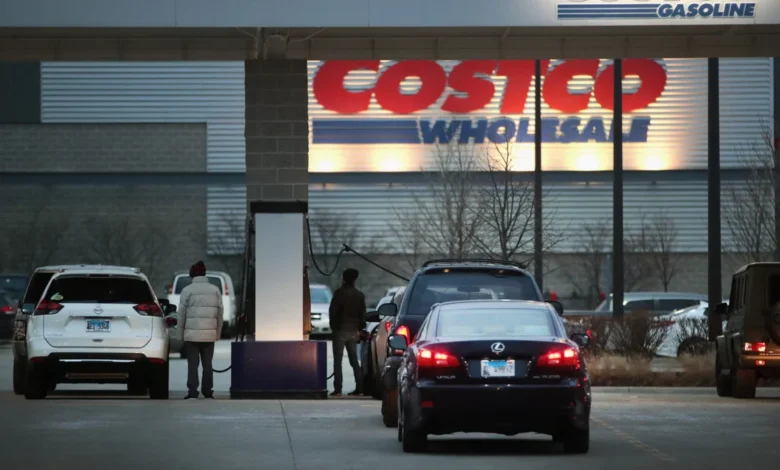
For the average motorist, the high-level geopolitical maneuvering in the Strait of Hormuz translates directly to the pump. The U.S. has experienced unprecedented volatility in fuel pricing over the last two years. Data from GasBuddy, a fuel-tracking platform, indicates that the U.S. has entered a period of "yo-yo" pricing that defies historical trends. Patrick De Haan, head of petroleum analysis at GasBuddy, noted that the U.S. has never before seen gas prices cross the $4.00 threshold, retreat, and then climb back above it within the same year.
This volatility creates significant challenges for the transportation and logistics sectors. Diesel, which powers the majority of the world’s shipping and trucking fleets, is particularly sensitive to these disruptions. When diesel stays above $5.00 a gallon, the cost of transporting food, consumer goods, and industrial materials rises, feeding into the "sticky" inflation that central banks have been struggling to tame. The prospect of another three years of this uncertainty suggests that the inflationary pressures currently felt by households may not be a passing phase, but a long-term structural reality.
Geopolitical Shifts and Long-Term Implications
The extended closure or disruption of the Strait of Hormuz is likely to accelerate several long-term global trends. First, it incentivizes oil-consuming nations to seek even greater energy independence, potentially accelerating the transition to renewable energy and electric vehicles (EVs) as a matter of national security. However, in the short term, the high cost of energy can actually slow this transition by making the manufacturing of EV batteries and components more expensive.
Second, the crisis is reshaping alliances in the Middle East. Countries that were once bitter rivals may find common ground in the need to secure trade routes, while others may lean further into the influence of Eastern powers like China and Russia to mediate the conflict. As the U.S. focuses its military resources on the strait, its ability to project power in other theaters, such as the Indo-Pacific or Eastern Europe, may be stretched thin.
Finally, the Rapidan Energy Group’s forecast serves as a stark reminder of the vulnerability of the global "just-in-time" supply chain. The assumption that energy would always be cheap and transit would always be free has been thoroughly debunked. As the world looks toward 2027, the focus for policymakers, businesses, and consumers alike will be on resilience and adaptation in an era of permanent energy insecurity. The "hope" for a quick return to the status quo has been abandoned; in its place is the realization that the battle for the Strait of Hormuz is a marathon, not a sprint, with the global economy hanging in the balance.