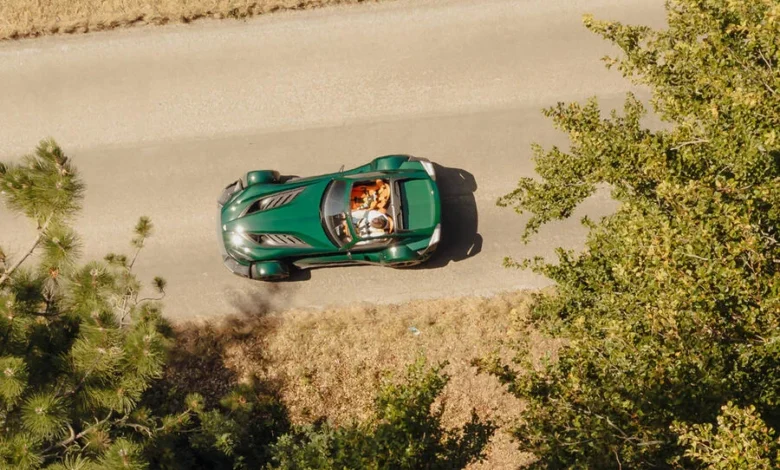
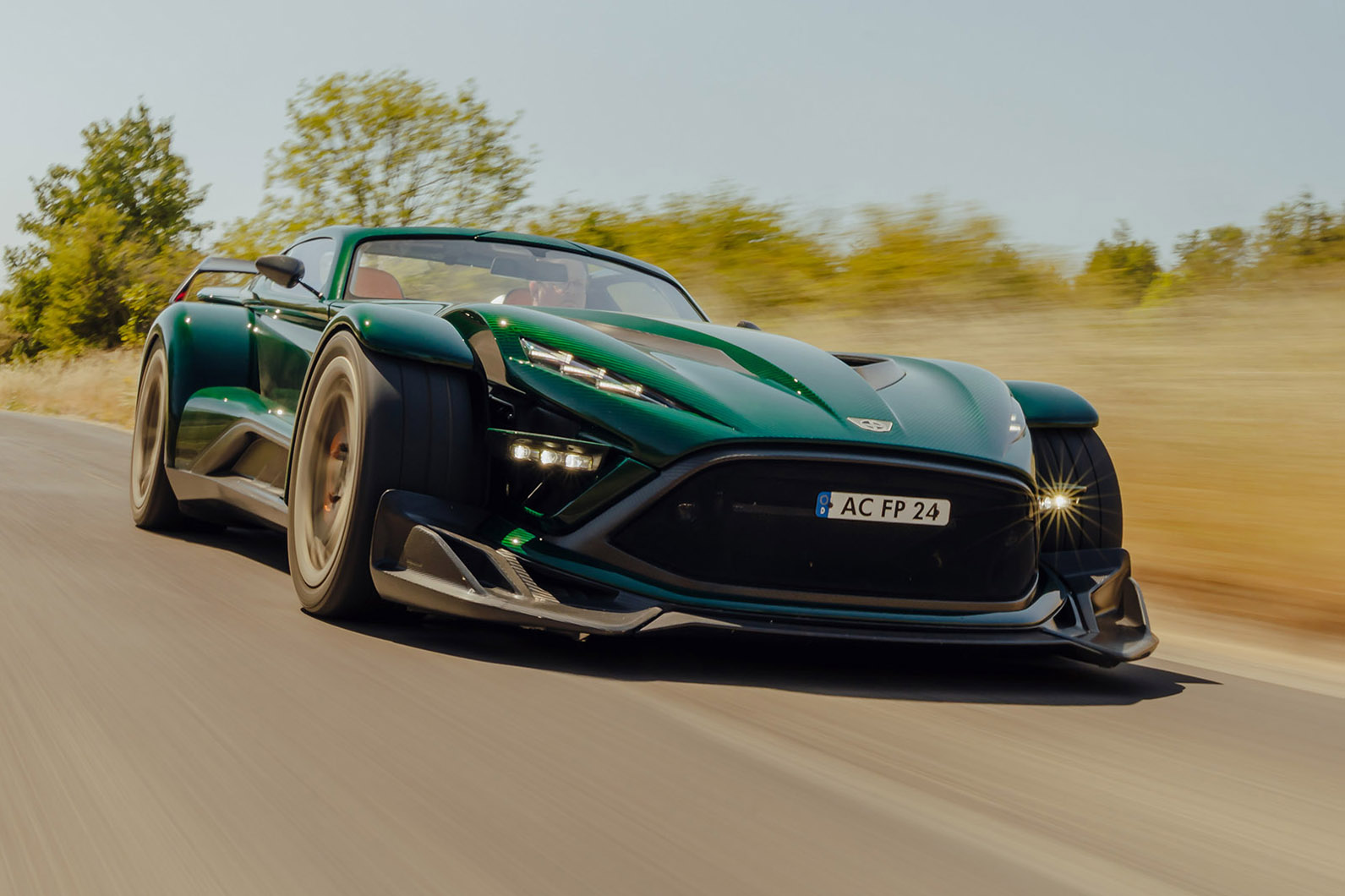
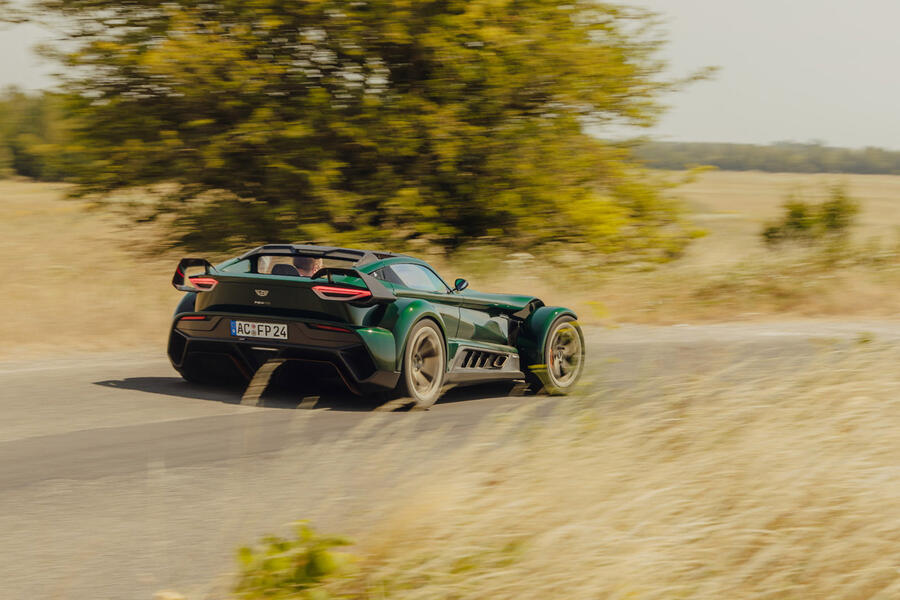
The arrival of the Donkervoort P24 RS on British soil marks a significant milestone for the Dutch boutique manufacturer, signaling its formal entry into one of the world’s most competitive markets for lightweight performance machinery. For decades, the Lelystad-based firm has been a cult favorite among European purists, known for evolving the basic architecture of the Lotus Seven into a high-tech, ultra-powerful supercar slayer. Now, with the introduction of its first right-hand-drive (RHD) production models slated for early 2027, Donkervoort is challenging the domestic dominance of brands like Caterham, Ariel, and Radical.
The expansion into the United Kingdom is a strategic pivot for the company, which recently appointed Premier GT in Washington, West Sussex, as its sole UK retail partner. This move is more than just a logistical update; it represents a homecoming of sorts for a design philosophy that was born in the UK but perfected in the Netherlands.
A Legacy of Iteration: From Lotus Kits to Dutch Engineering
The history of Donkervoort Automobielen B.V. is rooted in the vision of its founder, Joop Donkervoort. In the late 1970s, Joop intended to import and distribute Lotus Seven kit cars in the Netherlands. However, he quickly encountered a bureaucratic wall: the original Seven did not meet Dutch type-approval regulations. Rather than abandoning the project, Donkervoort began a series of extensive modifications to the chassis and safety systems.
By 1978, these modifications had become so comprehensive that the cars were no longer recognizable as Lotus products. With the blessing of Lotus founder Colin Chapman, Joop began selling the vehicles under his own name. The lineage progressed through several key iterations:
- The S8 (1983): Introduced a wider track and Ford-sourced engines.
- The D8 (1993): Marked the beginning of the long-term partnership with Audi for engine supply.
- The D8 GTO (2013): A radical departure that utilized Audi’s 2.5-liter five-cylinder turbocharged engine, pushing the brand into the "supercar-performance" bracket.
- The F22 (2022): Introduced the "Ex-Core" carbon fiber technology, doubling torsional rigidity while maintaining a sub-800kg kerb weight.
The P24 RS is the culmination of this 45-year evolution, representing the most powerful and technologically advanced vehicle in the company’s history.

Technical Specifications and Powertrain Innovation
The defining characteristic of the P24 RS is its shift in powertrain architecture. For years, Donkervoort was synonymous with the Audi 2.5-liter inline-five. However, the P24 RS transitions to a 3.5-liter V6 engine, a specialized variant of the unit found in the modern Ford GT. This engine features parallel-twin, ball-bearing turbochargers developed by Van der Lee, a Dutch supplier with extensive experience in Formula 1.
The performance metrics are staggering for a vehicle weighing only 840kg:
- Maximum Power: 592bhp at 5,500rpm.
- Maximum Torque: 590lb ft at 4,500rpm.
- Top Speed: Over 186mph.
- Transmission: Tremec TKX five-speed manual.
- Drivetrain: Rear-wheel drive with a Torsen mechanical torque-biasing differential.
The choice of a five-speed manual gearbox is a deliberate nod to analogue driving enthusiasts. The ratios are exceptionally long; first gear is designed for high-speed engagement rather than low-speed crawling, and fifth gear is calibrated to reach the engine’s 6,000rpm redline at the car’s top speed. This configuration requires a high degree of mechanical sympathy and precision from the driver, eschewing the seamless but often detached experience of modern dual-clutch transmissions.
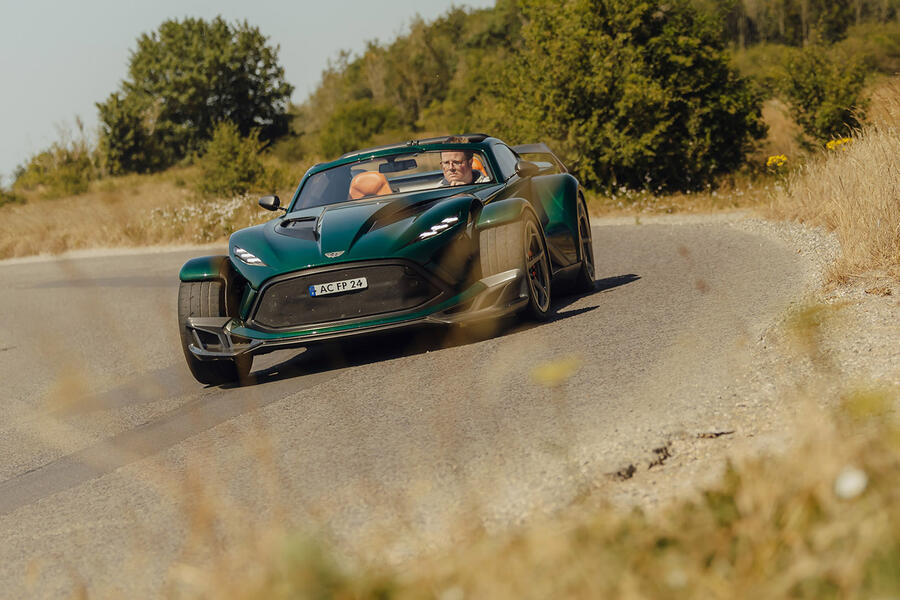
Chassis and Suspension: The "Ex-Core" Advantage
The P24 RS utilizes Donkervoort’s proprietary "Ex-Core" carbon fiber technology. This manufacturing process allows for the creation of complex, high-strength carbon fiber shapes that are both lighter and more rigid than traditional autoclave methods. The chassis is a hybrid construction, combining an alloy spaceframe with stressed carbon fiber sandwich mouldings.
This rigidity is essential for the car’s sophisticated suspension system. The P24 RS employs a semi-active hydraulic setup that offers 35mm of ride-height adjustment. The six-stage adaptive dampers include roll-cancelling functionality, which effectively replaces conventional anti-roll bars. This reduces unsprung weight and allows for a more nuanced interaction between the tires and the road surface.
While the car includes advanced traction control, it notably lacks electronic stability control (ESC). Anti-lock brakes (ABS) and electromechanical power steering are available as options, emphasizing the brand’s "no-compromise" approach to driver involvement.
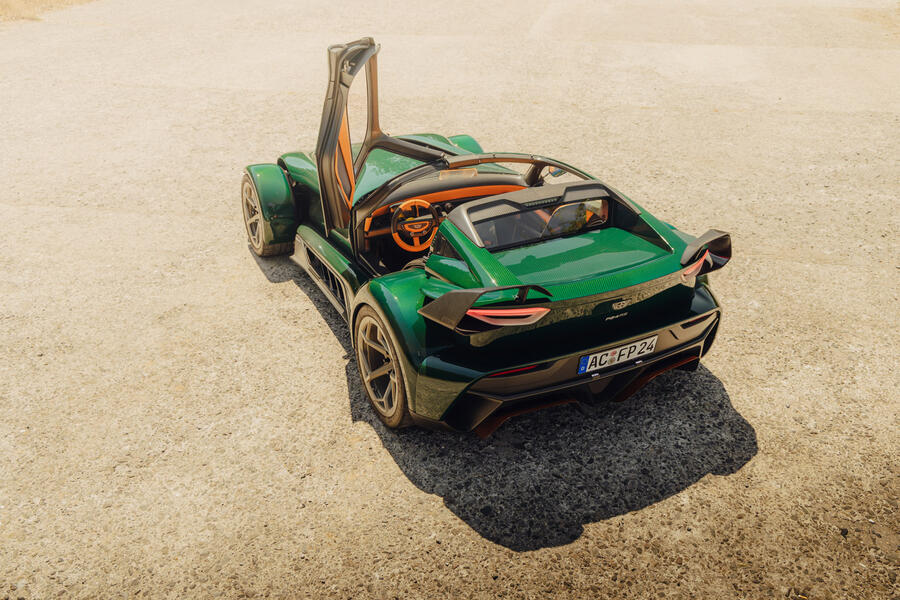
Ergonomics and Cabin Environment
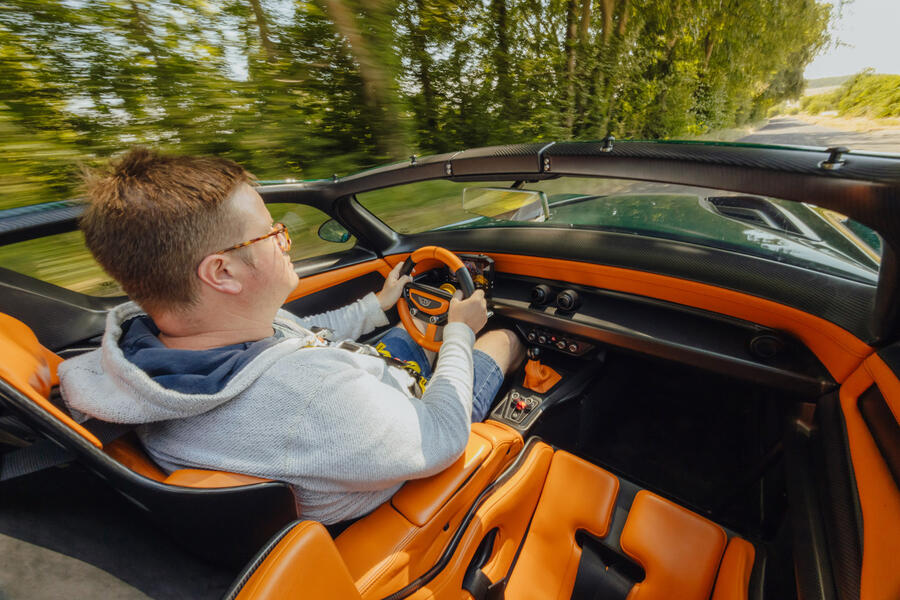
Despite its roots as a minimalist roadster, the P24 RS has grown significantly in size compared to a standard Caterham Seven. It is approximately 20% longer and a foot wider, providing a cabin that can comfortably accommodate drivers over six feet tall. The dihedral-style doors and removable steering wheel facilitate entry, while the bucket seats are designed for long-distance support.
However, the pursuit of performance creates certain environmental challenges within the cockpit. The proximity of the large V6 engine and the extensive use of carbon fiber—which acts as a heat sink—can lead to significant cabin temperatures. During testing in summer conditions, engine heat can permeate the footwell, making the optional air conditioning system a recommended addition for road use.
The vehicle also features a surprisingly practical 298-liter boot, a capacity that exceeds many conventional hatchbacks. This underscores Donkervoort’s ambition for the P24 RS to be more than just a track toy, but a viable, albeit extreme, grand tourer.
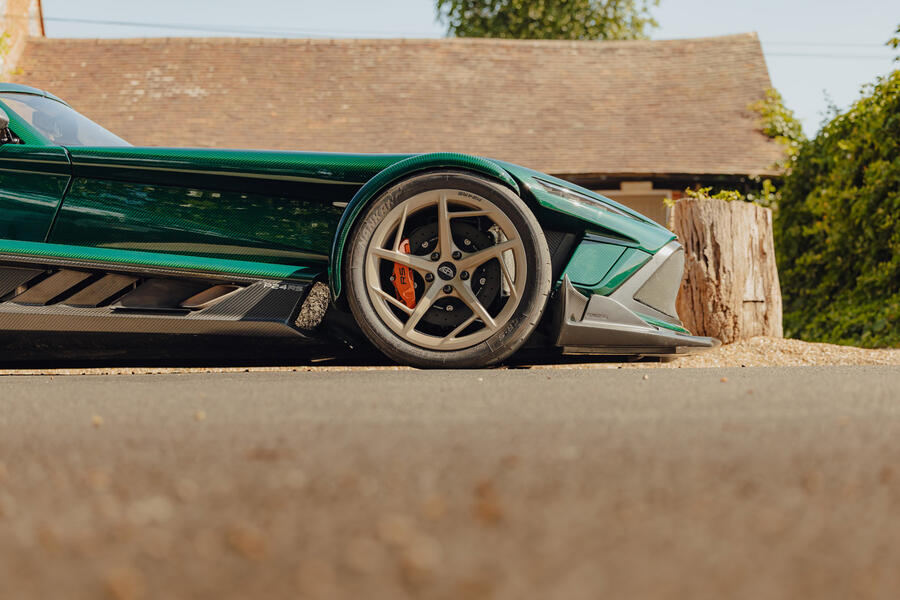
Market Entry and the UK Timeline
The decision to produce RHD versions of the P24 RS is a direct response to demand from the British market. Historically, the asymmetric layout of the Audi five-cylinder engine made RHD conversion difficult due to steering column packaging constraints. The move to the Ford V6, which is mounted symmetrically "north-south" in the engine bay, has resolved these engineering hurdles.
The timeline for the UK rollout is as follows:
- Late 2024 – 2025: Initial showcase of left-hand-drive demonstrators at events such as the Goodwood Festival of Speed.
- 2026: Finalization of UK-specific tuning and type-approval processes.
- Early 2027: Delivery of the first customer-spec RHD vehicles.
The entry price for the P24 RS is set at £302,400. While this places it in the same price bracket as established supercars from Ferrari or Lamborghini, Donkervoort argues that the power-to-weight ratio and the raw, analogue experience offer a value proposition that mass-produced supercars cannot match.
Competitive Landscape and Implications
The UK is the global epicenter for lightweight sports cars, a sector currently undergoing significant transformation. Lotus, the spiritual forebear of Donkervoort, has transitioned toward heavy, electric SUVs and grand tourers like the Eletre and Emeya. This has left a vacuum in the high-end, internal-combustion lightweight market.
The P24 RS faces competition from several fronts:
- Ariel Atom 4RR: Offers similar performance for a lower price but lacks the weather protection and "car-like" cabin of the Donkervoort.
- Noble M500: A more traditional mid-engined supercar that shares the Ford V6 engine but lacks the ultra-lightweight focus.
- Caterham Seven 620R: The benchmark for the Seven-style silhouette, though it lacks the sophisticated carbon construction and top-end power of the Dutch rival.
Industry analysts suggest that Donkervoort’s entry could stimulate a "luxury-lightweight" niche. By offering a vehicle that combines the raw feedback of a track car with the material quality and bespoke engineering of a boutique hypercar, Donkervoort is targeting a demographic of collectors who are increasingly fatigued by the digitalization of modern performance cars.
Conclusion: A Singular Vision for the UK Road
The Donkervoort P24 RS is a defiant statement in an era of electrification and automated driving aids. Its arrival in the UK represents a bold bet that there is still a significant market for a £300,000, manual-shift, petrol-powered machine with no stability control.
While the car requires further fine-tuning to perfectly master the unique challenges of British B-roads—specifically regarding damper compliance on uneven surfaces—the foundational engineering is robust. As the company moves toward its 2027 RHD launch, it stands as a testament to the enduring appeal of Joop Donkervoort’s original vision: that a car should be as light as possible, as powerful as manageable, and above all, an unfiltered extension of the driver.