In a significant shift within the automotive software landscape, Ford Motor Company has announced that its upcoming affordable electric vehicle platform will utilize Apple Maps as its primary, native navigation solution, eschewing the Google Maps integration that has become increasingly common among its competitors. This strategic partnership centers on Apple’s new MapKit for Automotive SDK, a software development kit designed to embed Apple’s navigation ecosystem directly into a vehicle’s hardware and instrument clusters. The move signals a deepening alliance between the Dearborn-based automaker and the Cupertino tech giant, positioning Ford as a key player in Apple’s bid to reclaim the digital dashboard from Google’s Android Automotive OS.
The cornerstone of this collaboration is Ford’s highly anticipated "Universal Electric Vehicle Platform," a flexible architecture designed to underpin a new generation of high-volume, low-cost electric vehicles. The first product of this initiative—a midsize electric pickup truck expected to be priced around $30,000—will serve as the debut vehicle for this integrated Apple experience. By choosing Apple Maps as the foundational navigation layer, Ford is betting that a seamless, high-quality user interface will be a primary differentiator in an increasingly crowded and price-sensitive EV market.
The Evolution of the Dashboard: MapKit for Automotive
For years, the battle for the car’s infotainment system was fought through "mirroring" technologies like Apple CarPlay and Android Auto, which projected a smartphone’s interface onto the car’s screen. However, as vehicles have become more technologically complex, automakers have moved toward "embedded" systems where the operating system and navigation are built directly into the car. While many manufacturers, including General Motors, Volvo, and Polestar, have adopted Google Automotive Services (GAS) to power their native maps and voice assistants, Ford is taking a distinct path.
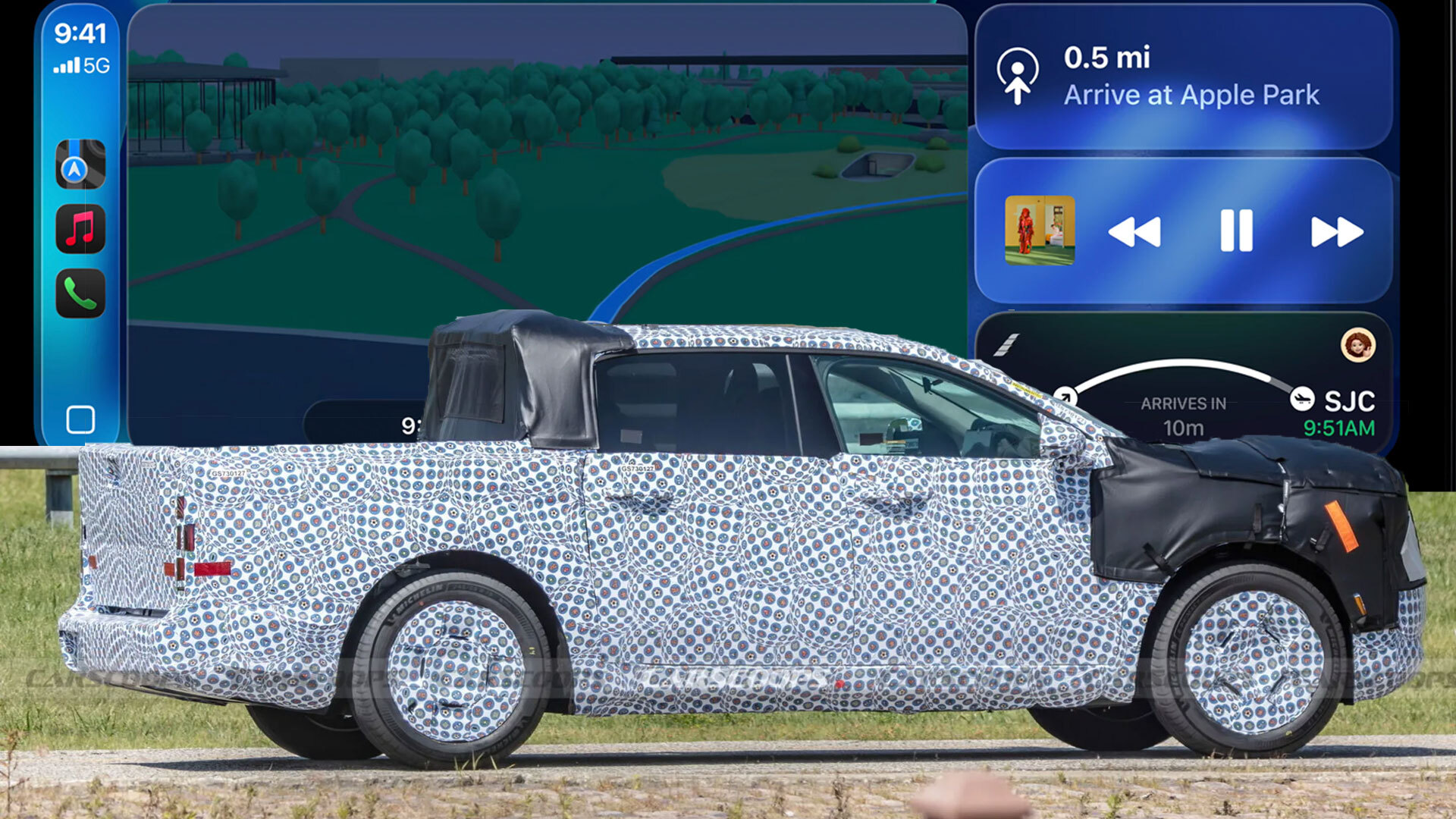
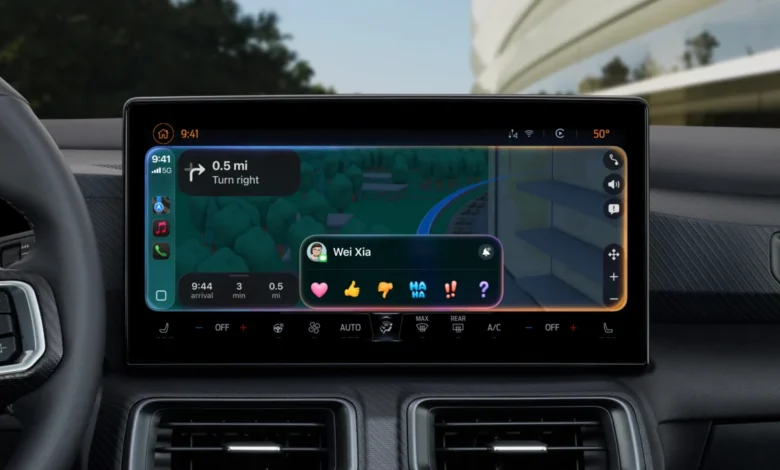
Apple’s MapKit for Automotive SDK represents a sophisticated middle ground. Unlike standard CarPlay, which operates as a secondary layer, the SDK allows Apple Maps to function as the vehicle’s native navigation system. This means the maps can be displayed not only on the central infotainment screen but also on the digital driver instrument cluster and head-up displays. The system promises a "beautiful and easy-to-use" interface that leverages Apple’s design language while maintaining deep integration with the vehicle’s core hardware.
Drivers can expect a suite of features tailored for the automotive environment, including natural language turn-by-turn directions, real-time traffic updates, and incident reporting. The system will also feature "detailed place cards" for points of interest and a variety of routing options designed to prioritize efficiency, speed, or charging availability.
Synergy with BlueCruise and Semi-Autonomous Driving
Beyond simple navigation, the partnership extends into the realm of semi-autonomous driving. Ford has confirmed that it will utilize road-level data provided by Apple Maps to refine and enhance the next generation of BlueCruise, its hands-free highway driving system. BlueCruise currently allows for hands-free driving on pre-mapped sections of divided highways, known as "Hands-Free Blue Zones."
By integrating Apple’s high-fidelity mapping data, Ford aims to create a more seamless and reliable autonomous experience. High-resolution map data is critical for Level 2 and Level 3 autonomy, as it provides the vehicle with a "digital horizon"—knowledge of upcoming curves, lane changes, and exit ramps that sensors alone might not detect until they are within immediate range. This data-sharing agreement suggests that Apple’s mapping capabilities have reached a level of precision and detail that meets the rigorous safety standards required for semi-autonomous vehicle operation.

Optimizing the EV Experience: Charging and Preconditioning
One of the most critical components of the modern electric vehicle experience is range management and charging infrastructure. Ford and Apple have confirmed that the integrated navigation will feature advanced EV routing. The system will monitor the vehicle’s battery state of charge (SoC) in real-time, cross-referencing it with elevation changes, weather conditions, and driving styles to provide accurate range estimates.
A standout feature of this integration is the inclusion of battery preconditioning. When a driver selects a fast-charging station as their destination via Apple Maps, the vehicle’s thermal management system will automatically begin warming or cooling the battery to the optimal temperature for high-speed charging. This ensures that the vehicle can accept the maximum possible charge rate immediately upon arrival, significantly reducing "dwell time" at the charger.
Furthermore, the system will offer real-time data on charging station availability and compatibility, helping to alleviate "range anxiety" by ensuring drivers never arrive at a broken or occupied charging stall.
Background: Ford’s "Skunkworks" Strategy
The development of the $30,000 electric truck and its associated software is the result of a pivot in Ford’s EV strategy. In early 2024, Ford CEO Jim Farley revealed the existence of a "skunkworks" team based in Irvine, California, tasked with developing a low-cost EV platform. This team, led by Alan Clarke—a former Tesla engineer who spent over a decade developing the Model 3 and Model Y—was given the mandate to build a platform that could compete with the low-cost manufacturing prowess of Chinese automakers like BYD.
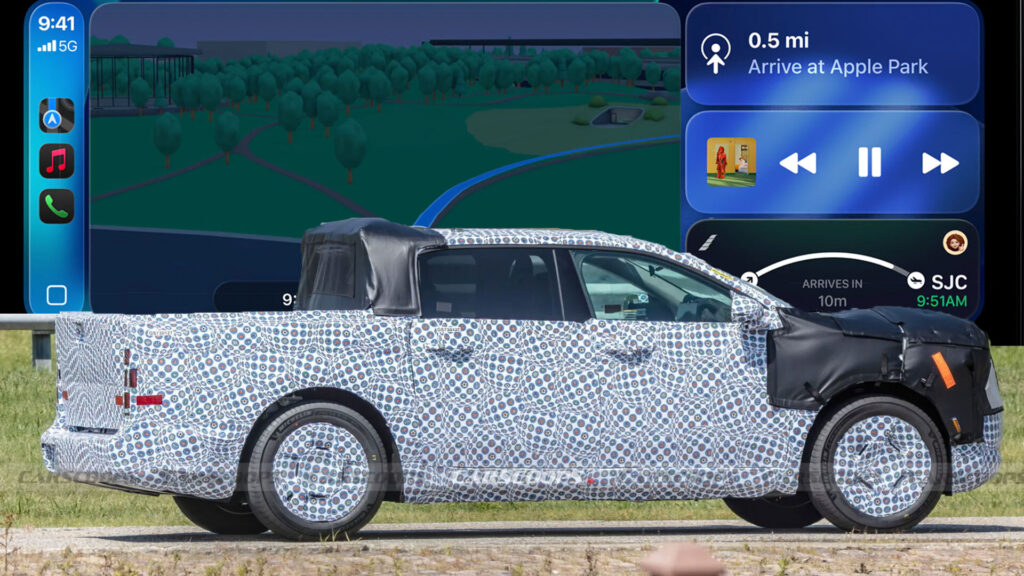
This new platform utilizes a "zonal architecture," a simplified electrical layout that reduces the amount of wiring and complexity within the vehicle. This architecture is what enables the deep integration of software like Apple’s MapKit. By decoupling the hardware from the software, Ford can push over-the-air (OTA) updates more effectively, ensuring the vehicle’s navigation and autonomous features improve over time.
Chronology of Ford’s Software Journey
- 2021: Ford announces a six-year partnership with Google to use Android Automotive OS across its fleet, starting in 2023.
- 2023: Ford launches the Mustang Mach-E and F-150 Lightning with Sync 4A, featuring enhanced Apple CarPlay integration, including EV routing.
- Early 2024: CEO Jim Farley announces a strategic shift toward smaller, more affordable EVs to combat the threat of low-cost imports.
- Late 2024: Reports emerge that Ford is reconsidering the extent of its Google integration in favor of a more flexible, multi-partner approach.
- July 2026 (Projected/Current Context): Ford officially announces the integration of Apple MapKit for its Universal Electric Vehicle Platform, marking a departure from the exclusive Google-centric path taken by many rivals.
Official Statements and Executive Perspectives
The collaboration has been hailed by leadership at both companies as a win for consumer choice and technological accessibility.
"Our new midsize electric vehicle will be priced around $30,000 and redefines what advanced technology can be—simple, useful, and truly attainable for more customers," said Ford CEO Jim Farley. "We’re proud to embed Apple Maps’ navigation and mapping technology directly into our Universal Electric Vehicle Platform, giving customers the ultimate navigation experience alongside our Ford app, a full suite of software, and next-generation BlueCruise, all enabled by a new zonal architecture."
Eddy Cue, Apple’s Senior Vice President of Services and Health, echoed these sentiments, highlighting the seamless nature of the integration. "With our new MapKit for Automotive SDK, we’re bringing Maps further into drivers’ daily lives, giving them an incredibly accurate and easy-to-use navigation system that is seamlessly integrated into Ford vehicles."

Analysis of Market Implications
Ford’s decision to prioritize Apple over Google is a calculated move in the "War for the Dashboard." While Google offers a turnkey solution with Android Automotive, some automakers fear that handing over the entire infotainment ecosystem to Google results in a loss of brand identity and valuable user data. By using Apple’s SDK, Ford retains more control over the "Ford app" and the broader software suite while still providing the high-end navigation experience that many iPhone users—who represent a significant portion of the U.S. market—demand.
This move also highlights a growing divide in the industry. General Motors recently made the controversial decision to eliminate Apple CarPlay and Android Auto entirely in its future EVs, forcing users into a subscription-based Google ecosystem. Ford, by contrast, is leaning into the Apple ecosystem, betting that "meeting the customer where they are" will lead to higher brand loyalty and sales.
For Apple, this is a major victory. After years of rumors regarding an "Apple Car" project, the company appears to have shifted its focus toward becoming a premier software and data supplier to the automotive industry. If the Ford integration is successful, it could serve as a blueprint for other manufacturers looking to provide a premium digital experience without surrendering their entire dashboard to Google.
Looking Ahead
The first vehicles utilizing the Apple-integrated Universal Electric Vehicle Platform are expected to hit the market in 2027. This $30,000 electric truck represents a "make or break" moment for Ford’s Model e division, which has faced significant financial losses as it scales up production. By combining an affordable price point with the prestige and usability of Apple’s software, Ford is positioning itself to capture the middle-market consumer that has so far been hesitant to make the jump to electric propulsion.

As the automotive industry continues its transition toward software-defined vehicles, the partnership between Ford and Apple will be closely watched as a potential alternative to the Google-dominated status quo. For the consumer, the result is a vehicle that promises to be as intuitive to use as a smartphone, while offering the rugged utility and advanced autonomy that have defined Ford’s recent engineering efforts.