Tech Giants and Consumer Brands Roll Out Massive Price Cuts on 2026 Flagship Devices Amid Expanding E-Commerce Competition

Major technology manufacturers and digital retailers have introduced a sweeping wave of aggressive price reductions across a broad spectrum of consumer electronics, ranging from high-end OLED televisions and foldable smartphones to compact action cameras and smart home security hardware. Curated by retail and technology analysts monitoring the e-commerce landscape, the latest round of promotions reflects a concerted industry effort to stimulate consumer demand ahead of the crucial fourth-quarter shopping period. By leveraging sophisticated price-tracking algorithms and historical market data, retail experts have vetted these offers to confirm their authenticity, separating genuine manufacturer markdowns from superficial promotional pricing. The discounts highlight an increasingly competitive market where hardware manufacturers are eager to accelerate inventory turnover, particularly for newly released models introduced during the first half of the year.

The timing of these comprehensive discounts coincides with a broader shift in consumer electronics retail dynamics. Throughout the opening quarters of the year, major consumer technology brands—including Samsung, Google, GoPro, and Hisense—have accelerated product release cycles to capture early-adopter market share. However, persistent economic pressures and shifting household expenditure patterns have prompted shoppers to exercise greater caution before committing to high-ticket purchases. In response, digital marketplaces and authorized electronic distributors have coordinated with manufacturers to introduce substantial price corrections. These adjustments are designed to lower the barrier of entry for premium technology, making advanced features like artificial intelligence image processing, dual-band satellite connectivity, and high-refresh-rate OLED panels accessible to a wider demographic of consumers.
Home Security and Smart Ecosystem Innovations Lead the Market

Among the most notable consumer entry points in the current promotional cycle is the smart home security sector, where robust monitoring solutions are experiencing unprecedented price compression. The Blink Outdoor 4 Floodlight Camera, a staple in modern residential surveillance, has seen its price slashed by sixty percent, dropping from a standard retail value of $99.99 down to $39.99. Industry analysts note that wire-free, motion-activated floodlight systems have rapidly evolved from luxury additions into essential residential infrastructure. The elimination of professional installation requirements and complex electrical wiring has democratized property surveillance, allowing homeowners to secure perimeter zones, dark driveways, and backyards with minimal technical expertise.
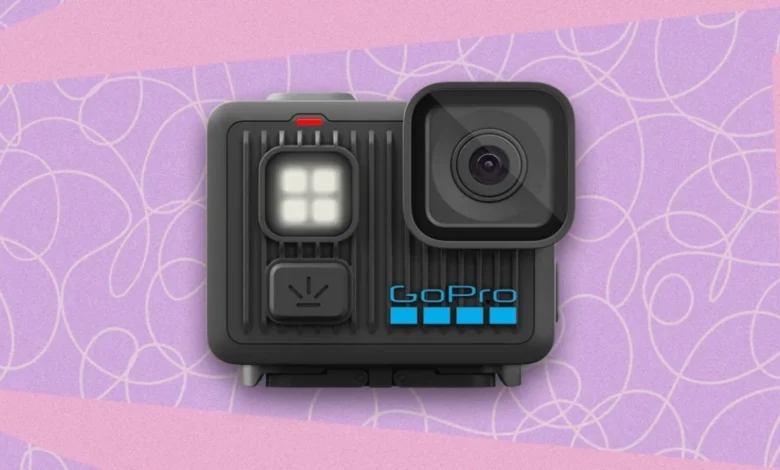
Concurrently, the action sports and mobile imaging segment has experienced significant downward price pressure. The GoPro Lit Hero, a lightweight, compact waterproof imaging device designed for high-mobility recording, has received a notable $65 reduction from its initial launch price of $270. Capable of capturing pristine 4K video at sixty frames per second alongside twelve-megapixel still photography, the device addresses consumer demand for rugged, high-performance recording tools that do not require bulky external protective housings. While industry reviewers have noted certain hardware limitations—such as a sealed battery architecture that precludes field swaps—the aggressive pricing strategy positions the camera as a compelling entry point for casual content creators and outdoor enthusiasts seeking professional-grade visual fidelity without the financial commitment of flagship action platforms.

Wearable Technology and Advanced Fitness Tracking Redefine Value
Wearable technology continues to serve as a primary battleground for major ecosystem developers, with Google taking aggressive steps to position its hardware portfolio competitively. The Google Pixel Watch 4, specifically the 41-millimeter LTE configuration in matte black, has experienced a historic price reduction of $120, bringing the device down to $329.99 from its original $449.99 MSRP. Although newer iterations continue to populate the upper echelon of Google’s roadmap, the Pixel Watch 4 remains a formidable contender in the smartwatch market, distinguished by its circular, high-nit display capable of reaching up to 3,000 nits of peak brightness for optimal outdoor legibility.

Beyond visual brightness, the integration of advanced safety infrastructure—such as satellite SOS messaging capabilities designed for users venturing outside traditional cellular coverage zones—underscores the shifting utility of modern wrist-wearable technology. Coupled with dual-band GPS architecture for enhanced spatial tracking accuracy in dense urban environments or remote terrain, the discounted smartwatch represents a strategic maneuver by Google to capture market share from competing ecosystem developers. Similarly, audio hardware manufacturers are capitalizing on consumer demand for portable acoustic solutions. The Ultimate Ears Miniroll, a puck-shaped, highly durable Bluetooth speaker equipped with a versatile mounting strap and an IP67 environmental protection rating, has been reduced by nearly fifty percent to $41.99. Despite its ultra-compact form factor, the device delivers high acoustic output and robust battery performance, illustrating how engineering advancements have successfully decoupled audio fidelity from physical scale.
The Evolution of Mobile Computing: Foldables and Paper-Like Displays

The tablet and mobile computing landscape has witnessed a fascinating divergence between traditional content consumption devices and cutting-edge productivity hardware. TCL’s NXTPAPER 14 Android tablet, featuring a massive 14.3-inch matte display engineered to emulate the tactile properties of physical paper, has been discounted by $120 to $349.98. By incorporating specialized viewing modes that seamlessly transition from monochrome ink paper for reading to full-color multimedia rendering, the device addresses long-standing consumer grievances regarding digital eye strain during prolonged screen-time sessions.
At the absolute apex of the mobile hardware market, the Samsung Galaxy Z Fold 8 with 512GB of internal storage has received a $250 price cut, lowering the cost of entry for premium foldable smartphones to $1,849.99. Introduced during Samsung’s mid-year Galaxy Unpacked hardware showcase, the Z Fold 8 features an optimized dimensional profile characterized by a shorter, wider exterior footprint. This architectural refinement significantly enhances the usability of the expansive 7.6-inch inner display for multimedia consumption, professional document editing, and multi-window multitasking. Industry observers note that while competition within the foldable sector has intensified following recent rival hardware announcements, Samsung’s willingness to introduce early promotional pricing for its flagship book-style foldable signals a proactive approach to maintaining market dominance amidst accelerating technological convergence.

Meanwhile, the budget-conscious segment of the tablet market continues to expand through high-volume offerings like the Amazon Fire HD 10. By reducing the retail price by fifty percent to a record low of $72.99, Amazon has solidified the device’s status as a premier value proposition for household media streaming, digital reading, and casual application utilization. Market analysts point out that while budget tablets do not compete with professional-grade processing units, their aggressive pricing models effectively capture price-sensitive demographics, driving continuous ecosystem engagement and digital service subscriptions.
High-Definition Visuals: MiniLED and OLED Display Dominance

Perhaps the most dramatic financial concessions in the current promotional landscape are concentrated within the home entertainment and high-performance computing display sectors. Hisense has introduced a monumental $650 price reduction on its 65-inch Class U7 QLED television, dropping the cost to $847.99 from its original $1,499.99 launch price. Released earlier in the year, the U7 series integrates cutting-edge MiniLED backlighting, comprehensive high dynamic range support—including Dolby Vision, HDR10+, and HDR10+ Adaptive—and advanced local dimming architecture. Furthermore, the incorporation of high-refresh-rate capabilities ranging from 120Hz to 144Hz, alongside FreeSync Premium Pro compatibility, underscores the blurring lines between high-end home cinema displays and competitive gaming monitors.
For consumers seeking uncompromising visual fidelity, Samsung’s S90H Series OLED televisions have received historic discounts across multiple size configurations. The flagship 65-inch model, powered by the advanced NQ4 AI Gen3 processor capable of sophisticated 4K artificial intelligence upscaling and glare-free panel technology, has been marked down by $1,000 to $1,697.99. Comparable promotional adjustments have been applied across the entire S90H lineup, spanning from compact 42-inch iterations up to massive 83-inch home theater displays. Industry analysts attribute these aggressive television discounts to the rapid maturation of OLED manufacturing processes and the competitive pressure exerted by rival display technologies, which have collectively accelerated the commodification of premium visual performance.

In the specialized realm of competitive PC gaming, the Acer Predator X27U OLED monitor has experienced a 43-percent price correction, bringing the retail cost down to $314.99 from $549.99. Featuring a lightning-fast 240Hz refresh rate, an instantaneous 0.03-millisecond response time, and WQHD 1440p resolution, the monitor addresses the rigorous demands of competitive esports athletes and enthusiasts. The inclusion of hardware-level ergonomic adjustments—spanning height, tilt, swivel, and pivot capabilities—highlights a broader industry recognition that physical comfort and visual performance are inextricably linked during extended operational sessions.
Broader Economic Implications and Consumer Strategy

The alignment of deep price cuts across disparate technology sectors highlights a strategic maturation in how hardware manufacturers manage product lifecycles and inventory logistics. By partnering with major digital retail platforms to deploy targeted promotions, brands can stimulate consistent demand, mitigate supply chain bottlenecks, and acquire valuable consumer base data ahead of upcoming generational hardware transitions. For the discerning consumer, the current market environment offers an optimal window for technology acquisition, provided purchases are vetted through independent price-tracking methodologies to ensure that advertised savings reflect true historical market lows. As e-commerce competition intensifies through the final fiscal quarters, industry experts anticipate that price volatility will remain high, rewarding proactive consumers who monitor market fluctuations and leverage verified promotional events.
Related posts: