The Rise of the Bionic Hiker: Testing the Hypershell X Ultra Exoskeleton in the Modern Wild

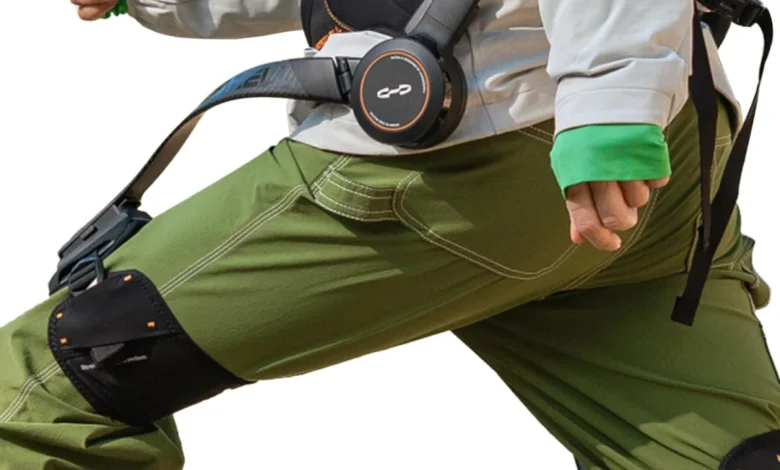
The integration of robotic augmentation into everyday fitness routines has officially transitioned from the realm of science fiction into the consumer marketplace. With the release of the Hypershell X Ultra, a portable, motorized exoskeleton designed for outdoor enthusiasts, the boundaries between biological capacity and mechanical assistance have blurred. This device, which retails for approximately $1,999, represents a significant shift in how wearable technology aims to enhance human performance, moving beyond simple tracking to active physical intervention.
Technical Anatomy and Mechanics
The Hypershell X Ultra is engineered to address the fundamental challenge of bipedal locomotion: the gravitational resistance encountered during movement. The system is comprised of a compact lumbar-mounted battery unit that serves as the device’s center of gravity, coupled with two motorized actuators positioned at the hip joints. These actuators connect to rigid, articulated braces that extend downward to the knee, providing a framework that mimics the human musculoskeletal structure.
The device operates via a proprietary sensor array that monitors the user’s gait in real-time. By analyzing hip rotation and foot-strike patterns, the integrated motor applies targeted torque at the precise moment of leg lift. This mechanical boost reduces the metabolic cost of walking, allowing the user to traverse uneven terrain with significantly less muscular exertion. Unlike previous iterations of exoskeleton technology—which were primarily developed for clinical rehabilitation, military logistics, or heavy industrial lifting—the X Ultra is scaled for the casual hiker, trail runner, or backpacker.
The Evolution of Exoskeleton Technology
The trajectory of exoskeleton development has been marked by a transition from static support to active, dynamic assistance. In the early 2000s, devices such as those developed by the Berkeley Robotics and Human Engineering Laboratory focused on heavy, tethered systems designed to assist individuals with severe mobility impairments. These early prototypes were bulky, required external power sources, and lacked the sophisticated AI-driven responsiveness found in modern commercial units.

By 2015, the focus shifted toward "soft" exosuits—textile-based systems that used cables to mimic muscle movement. While more comfortable, these often lacked the raw power output required for challenging inclines. The current generation, characterized by the Hypershell X Ultra, bridges this gap by utilizing high-torque, lightweight carbon-fiber or reinforced polymer structures that offer substantial power-to-weight ratios. Industry experts note that the current consumer-grade market is the result of nearly two decades of research into battery density, actuator miniaturization, and low-latency sensor feedback loops.
Performance Testing and User Experience
In field tests conducted across varied terrain—ranging from flat, groomed paths to high-incline rocky scrambles—the X Ultra demonstrates a clear capacity to alter the user’s metabolic demand. During ascents, the device provides a noticeable reduction in the effort required for vertical gain. By offloading the mechanical burden from the quadriceps and calves, the device allows the wearer to focus on balance and navigation rather than purely physical fatigue.
The device features multiple operational modes, including "Eco" for energy efficiency, "Hyper" for maximum assistance, and a unique "Fitness" mode. The latter is a notable inclusion, as it reverses the motor’s function to provide resistance, effectively turning a walk or hike into a high-intensity training session. This versatility suggests that the manufacturers are positioning the device not merely as a mobility aid, but as a dual-purpose tool for both performance enhancement and athletic conditioning.
Implications for the Outdoor Industry
The introduction of motorized assistance in hiking and trail running has prompted a broader discussion regarding the ethics of "mechanical doping" in outdoor recreation. Historically, the value proposition of hiking has been rooted in the physical struggle and the exertion required to summit or traverse a landscape. By removing a portion of that struggle, does the activity lose its inherent worth?
Industry analysts suggest that the primary target demographic for such devices may not be the traditional "purist" hiker, but rather an aging population that wishes to remain active despite joint degradation, or individuals recovering from minor injuries who seek to return to the trails sooner. According to recent data from the Outdoor Industry Association, a growing percentage of hikers are over the age of 50, a demographic that is increasingly looking for technological solutions to manage chronic pain and extend their athletic longevity.

From an economic perspective, the $2,000 price point places the Hypershell in the "luxury fitness" category, comparable to high-end e-bikes. This suggests that for the immediate future, adoption will be limited to affluent early adopters, though the history of consumer electronics suggests that prices typically decline as supply chains mature and patent competition increases.
Regulatory and Safety Considerations
As these devices become more common on public trails, questions regarding regulation and trail safety arise. Currently, there are no specific national park or municipal trail policies prohibiting the use of personal wearable exoskeletons. However, concerns regarding speed differentials between assisted and non-assisted hikers could lead to conflicts in high-traffic areas.
Furthermore, the mechanical reliance on a battery-powered system introduces a new failure mode for backcountry enthusiasts. Unlike a trekking pole, which has no failure point, an exoskeleton requires consistent power and software stability. If the device were to lose power during a technical climb, the sudden loss of assistance could create a destabilizing effect for a user who has grown accustomed to the machine’s corrective torque.
Future Outlook
The emergence of the Hypershell X Ultra signals a broader trend in human augmentation: the democratization of high-end mechanical support. As sensor accuracy improves and battery life continues to extend, the potential for these devices to become a standard component of outdoor gear is significant.
For the average user, the device effectively lowers the barrier to entry for more strenuous physical activity. While it may not replace the intrinsic reward of a traditional, unassisted hike for all, it provides a viable pathway for individuals who would otherwise be unable to navigate challenging topography. The long-term impact on the fitness industry will likely depend on how effectively these manufacturers can market the balance between "assistance" and "athletic integrity." As the technology matures, it will likely continue to shift our understanding of human physical limits, proving that for many, the future of fitness may involve a partnership between muscle and machine.