From Ballet Prodigy to Financial Titan: How Luana Lopes Lara Revolutionized Prediction Markets

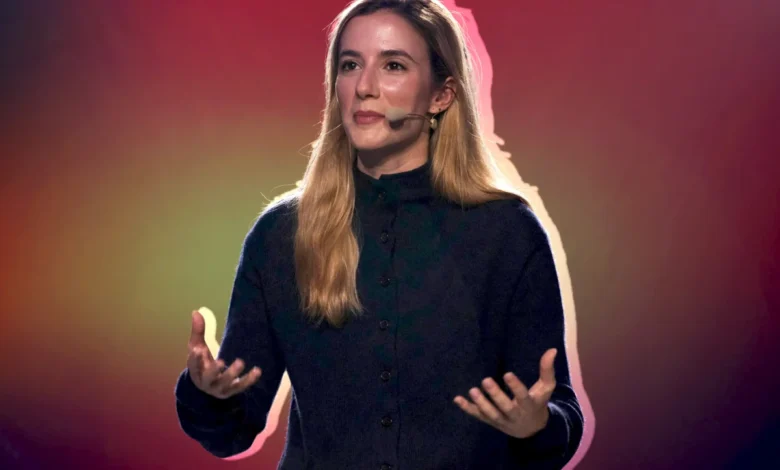
The trajectory of Luana Lopes Lara, the thirty-year-old co-founder of the federally regulated prediction market Kalshi, is defined by an unlikely intersection of elite performance arts and high-frequency finance. As of December 2025, Forbes confirmed her status as the world’s youngest self-made female billionaire, boasting a net worth of $2.6 billion. This milestone marks a significant shift in the landscape of venture-backed wealth, as Lopes Lara surpassed high-profile figures such as Taylor Swift and tech entrepreneur Lucy Guo to capture the title. Her ascent is not merely a story of rapid capital accumulation but a study in the application of extreme discipline, mathematical rigor, and the identification of latent market demands.
The Crucible of Competition: Early Life and Discipline
Long before the algorithmic complexities of prediction markets occupied her focus, Lopes Lara’s competitive edge was forged in the demanding environment of the Bolshoi Theater School in Brazil. The environment was notoriously cutthroat, characterized by intense psychological and physical pressures. Reports from the period describe a culture where rivals went to extreme lengths to undermine one another, including the placement of glass shards in pointe shoes—a stark initiation into the reality that high-stakes environments often breed aggressive competition.
Lopes Lara maintained a grueling schedule during her youth, balancing technical academic studies in the morning with professional ballet training that stretched from the afternoon into the late evening. This period of her life instilled a capacity for long-term focus and the ability to operate under intense pressure, qualities she would later translate into the volatile world of startup founding. Reflecting on this era during an appearance on the podcast Confession with Ali Partovi, she emphasized that her ambition to achieve significant, systemic change was present from a very early age.
The Genesis of Kalshi: From Gossip to Market Infrastructure
The intellectual foundation for Kalshi was laid during her tenure at the Massachusetts Institute of Technology (MIT), where she focused on computer science and mathematics. It was here that she met Tarek Mansour, her future co-founder. Their professional partnership began in the classroom, where Lopes Lara’s habit of sitting in the front row and her academic performance made her a standout peer. Mansour, recognizing her analytical prowess, began aligning his own coursework with hers, eventually cementing a partnership that would lead to the launch of their firm in 2018.
The specific catalyst for the business model, however, occurred during a summer internship at Five Rings, a quantitative trading firm based in New York. While observing the intersection of social media trends and public discourse, she noted a surge in speculative commentary regarding the pregnancy of entrepreneur and media personality Kylie Jenner. The observation was twofold: first, that millions of individuals possessed strong, conviction-based opinions about future events; and second, that there was a total lack of legitimate financial infrastructure for these individuals to formalize or profit from these beliefs.
Lopes Lara identified this as a systemic market failure. While traditional markets were optimized for commodities, equities, and derivatives, there was no regulatory-compliant venue for "event contracts." She and Mansour set out to fill this void, aiming to create a platform that would transform subjective speculation into an objective, data-driven asset class.
Regulatory Evolution and Market Maturity
Kalshi’s path to legitimacy was neither short nor straightforward. The United States regulatory environment regarding betting and prediction markets is historically fraught with legal hurdles and oversight from the Commodity Futures Trading Commission (CFTC). Kalshi distinguished itself early on by positioning its offerings not as traditional gambling, but as "event contracts"—financial instruments that allow users to hedge against or speculate on outcomes ranging from economic data releases and Federal Reserve interest rate decisions to geopolitical events and weather patterns.
By securing federal regulation, Kalshi achieved a milestone that many of its predecessors could not. This regulatory clearance allowed the company to attract institutional interest, moving the platform beyond the realm of niche hobbyists and into the domain of professional risk management. As of late 2026, the company’s valuation has reportedly surged to $22 billion, with secondary funding rounds pushing projections toward a $40 billion valuation as the company eyes a potential public offering.
Navigating the Psychological Trap of Probabilities
In her recent discourse on entrepreneurship, Lopes Lara has been vocal about the "probability trap" that often paralyzes early-stage founders. She argues that while data-driven analysis is essential, an over-obsession with the mathematical probability of failure can stifle innovation. According to her, the culture of a startup must balance analytical rigor with a bias toward action.
"You can psych yourself out of doing anything," she noted, highlighting that excessive risk management—when applied to the internal culture of a startup—leads to a stagnant environment where every piece of incoming information triggers a reactive, negative feedback loop. Instead, she advocates for a culture of "constructive optimism," where team members are encouraged to build and iterate rapidly rather than constantly calculating the odds of total project collapse. This philosophy mirrors her own transition from the binary, high-stakes world of classical dance to the fluid, predictive nature of market trading.
Broader Economic Implications and Future Trajectory
The rise of Kalshi and the subsequent wealth creation for its founders signal a broader trend in global financial markets: the increasing appetite for "information markets." By commodifying the future, firms like Kalshi are creating a real-time sentiment gauge that institutional investors are increasingly using to supplement traditional economic indicators.
The implications are far-reaching. If a market can accurately predict inflation rates, election outcomes, or climate events, it becomes a valuable tool for policy analysts, corporate strategists, and government entities. However, this growth also invites increased scrutiny regarding the ethics of "betting" on matters of public interest. Critics argue that such markets may introduce perverse incentives, while proponents maintain that they provide a more efficient mechanism for price discovery and risk hedging than traditional polling or expert surveys.
As the company prepares for its next stage of growth, industry analysts are watching closely to see if the platform can maintain its regulatory standing while expanding into more complex, global event contracts. For Luana Lopes Lara, the challenge remains to scale her firm without losing the agility that defined its early years.
Conclusion: A New Archetype of Success
Lopes Lara’s journey from a dance studio in Brazil to the upper echelons of the billionaire class represents a new archetype of the "self-made" entrepreneur. Her success is not rooted in traditional consumer goods or software-as-a-service (SaaS) models, but in the creation of a new financial asset class. Her ability to synthesize disparate experiences—the discipline of a ballerina, the academic rigor of an MIT computer scientist, and the market insights of a quant intern—has allowed her to build an organization that is currently reshaping how society interacts with the concept of the future.
Whether Kalshi will eventually become a foundational pillar of the global financial system remains to be seen, but the firm has already fundamentally changed the landscape for event-based trading. As Lopes Lara continues to lead the organization, her focus on fostering an optimistic, high-growth culture suggests that the company is prepared to navigate the complexities of a volatile global market, proving that her transition from the stage to the trading floor was not just a career change, but a calculated pivot into the next frontier of global finance.