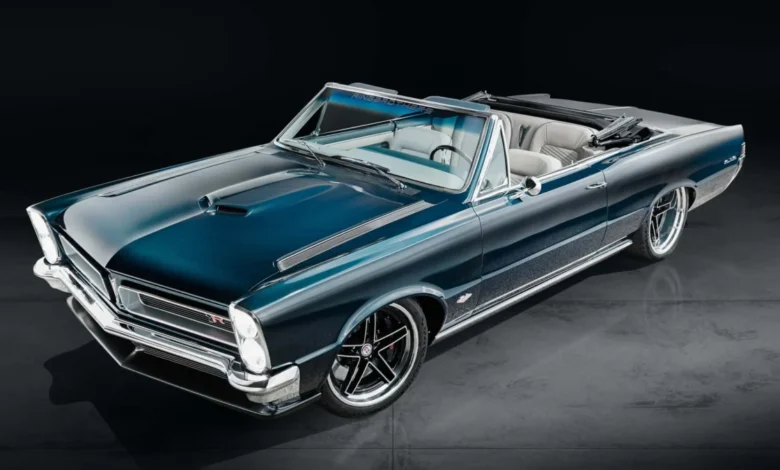
The annual Specialty Equipment Market Association (SEMA) Show in Las Vegas serves as the global epicenter for automotive innovation, custom fabrication, and high-performance engineering. Among the thousands of displays at the 2024 iteration of the event, the Ringbrothers workshop has once again captured the attention of the industry with their latest masterpiece: a heavily modified 1965 Pontiac GTO Convertible dubbed "Billie." While the vehicle retains the classic silhouette of the mid-60s muscle car era, it represents a complete structural and mechanical reimagining, blending vintage aesthetics with contemporary performance standards.
The Genesis of a Build
The project began as a standard 1965 Pontiac Tempest Convertible before undergoing an exhaustive transformation process. Based in Spring Green, Wisconsin, the Ringbrothers team—led by founders Jim and Mike Ring—dedicated more than 5,500 man-hours to the build. This timeline reflects the complexity of the engineering involved, as the team sought to modernize the vehicle’s footprint while preserving the iconic lines that define the 1965 GTO.
The most significant structural alteration is the widening of the body by five inches. Accomplishing this without distorting the car’s original proportions required a complete redesign of the exterior panels. The team meticulously reshaped the front fenders, lengthened the rocker panels, and widened the rear quarter panels. These modifications were designed to integrate seamlessly with the car’s factory-correct aesthetic, ensuring the added width appears as a natural evolution of the design rather than an aftermarket addition.
Architectural Precision and Material Innovation
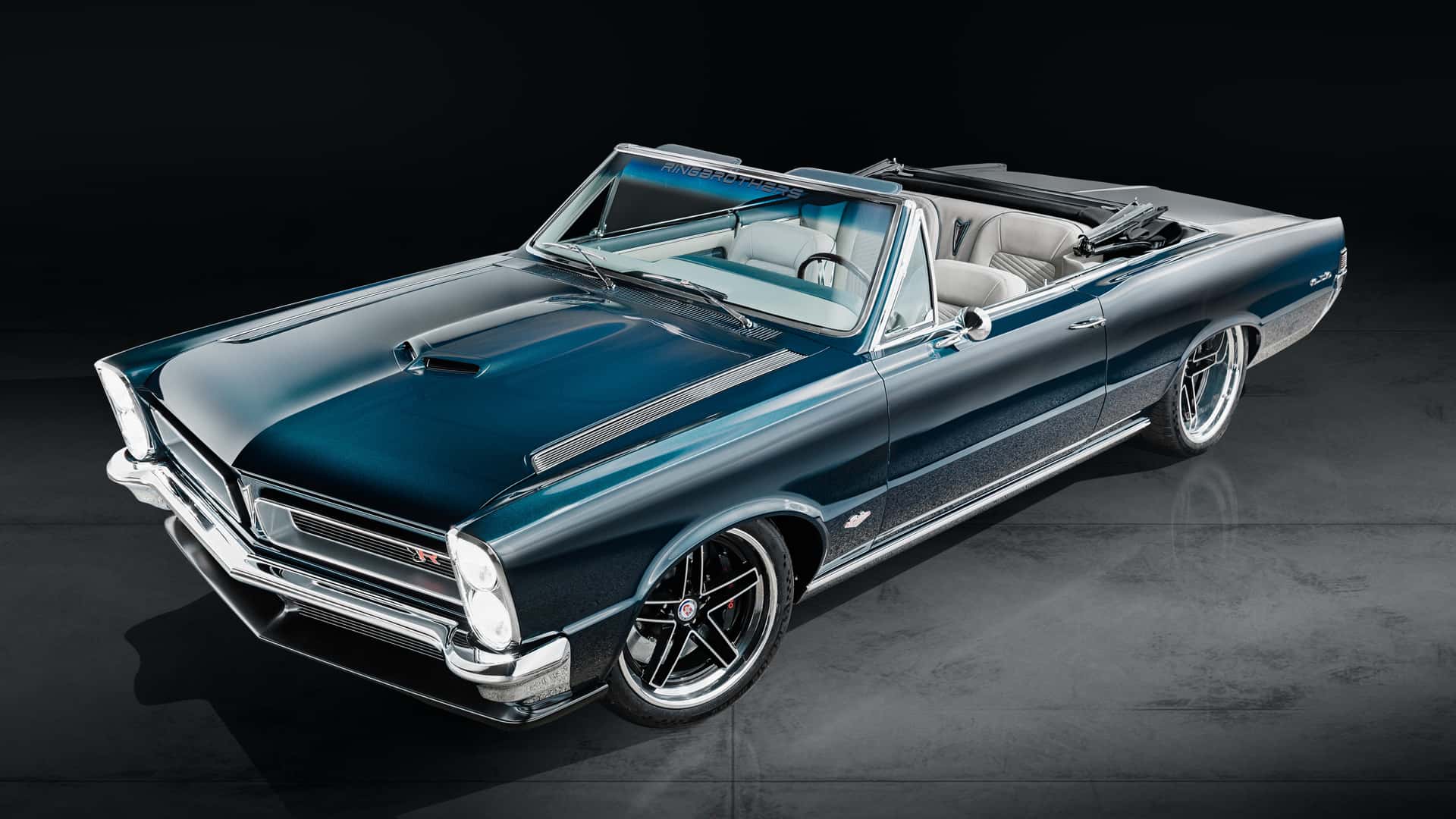
The integration of lightweight materials is a cornerstone of the Billie project. To offset the weight of the robust modern drivetrain and custom chassis, the Ringbrothers utilized carbon fiber extensively throughout the build. The hood, which features an enlarged scoop and functional ventilation to manage under-hood temperatures, is constructed entirely of this composite material. Furthermore, the front wheel tubs, the lower front valance, and the rear diffuser are crafted from carbon fiber, contributing to an improved power-to-weight ratio and enhanced structural rigidity.
The aesthetic finish of the car is defined by a custom paint color designated as "Billie Goat Blue." This hue is complemented by polished chrome accents and subtle black detailing, providing a sophisticated contrast that highlights the vehicle’s refined bodywork. The exterior is finalized with custom-fabricated bumpers, redesigned headlight surrounds, and a unique one-piece aluminum taillight panel, which serves as a testament to the custom metalwork capabilities of the shop.
Mechanical Specifications and Performance
At the heart of the GTO lies a high-performance 6.2-liter supercharged LT4 V8 engine, sourced from Wegner Motorsports. The LT4, which is the same powertrain found in modern high-performance vehicles like the Cadillac CT5-V Blackwing, provides a formidable output of 650 horsepower and 650 pound-feet of torque. This power is managed by a Bowler Performance 10-speed automatic transmission, ensuring that the engine’s output is efficiently transferred to the rear wheels.
To ensure the chassis can handle this substantial power increase, the vehicle is built upon a Fast Track Stage III chassis. The suspension system features Fox RS SV coilovers, which offer precise damping and handling characteristics suitable for both street and performance driving. Braking performance is handled by a heavy-duty Brembo system, utilizing six-piston calipers on both the front and rear axles. The vehicle rolls on staggered 19- and 20-inch HRE G-code wheels, wrapped in high-performance Michelin Pilot Sport Cup 2 tires, which provide the necessary grip for the car’s output. A custom exhaust system, incorporating Flowmaster components, rounds out the mechanical package, delivering the aggressive auditory profile expected of a modern muscle car.
Interior Ergonomics and Customization
The interior of Billie reflects a similar commitment to precision as the exterior. The dashboard was repositioned—moving four inches forward and two inches lower—to accommodate a modern driving position and updated climate control systems. The cabin features bespoke aluminum trim, Dakota Digital instrumentation, and a climate control unit from Vintage Air.
Despite the modern upgrades, the team maintained a link to the vehicle’s heritage by restoring the factory radio and integrating contemporary Bluetooth connectivity. A "Raised by Ringbrothers" plaque serves as the final touch on the dashboard, marking the identity of the build.
Insights from the Builders
Jim Ring, co-founder of Ringbrothers, emphasized the difficulty of balancing modernization with historical reverence during the project’s unveiling. "The challenge was widening the body five inches without losing the proportions that make a ’65 GTO so recognizable," Ring noted. "We spent countless hours massaging the factory lines, reshaping the fenders, and refining how every panel transitions into the next. There’s a massive amount of fabrication hidden beneath the subtle touches in the design. The goal was to make those changes feel completely natural and organic, as if Pontiac had built it this way."
This statement highlights the philosophy behind the build: to elevate the vehicle to modern standards without stripping it of its character. By focusing on "organic" modifications, the Ringbrothers have created a car that appeals to both purists who value the original GTO aesthetic and enthusiasts who demand modern reliability and performance.
Broader Implications for the Custom Automotive Industry
The unveiling of Billie at SEMA 2024 underscores a growing trend in the automotive aftermarket: the "restomod" movement. This segment of the industry is characterized by the intersection of vintage aesthetics and modern technology. As the availability of original components decreases and the demand for daily-drivable classics increases, shops like Ringbrothers are setting a benchmark for how these vehicles can be preserved and updated.
The utilization of 3D scanning, CAD software, and composite manufacturing—all of which were likely employed in the creation of Billie—indicates that the custom car scene is becoming increasingly professionalized. The ability to widen a body by five inches while maintaining the structural integrity and visual harmony of the original car is a feat of engineering that requires significant capital investment and technical expertise.
Furthermore, the choice of the LT4 engine reflects a broader shift toward "crate engine" swaps, where builders utilize factory-backed high-performance engines to ensure reliability and parts accessibility. By moving away from custom-built, temperamental racing engines in favor of mass-produced, high-output powerplants, builders are creating vehicles that are more sustainable for long-term ownership.
As the SEMA Show concludes, the impact of projects like the Billie GTO will continue to ripple through the industry. It serves as a case study for what is possible when traditional craftsmanship meets modern engineering, ensuring that the spirit of the muscle car era continues to thrive in the 21st century. Whether viewed as a piece of rolling art or a high-performance machine, the Billie GTO stands as a definitive statement from one of the industry’s most influential workshops.