Godzilla Minus Zero Stomps to the Top of the North American Box Office With Projected $30 Million Opening Weekend

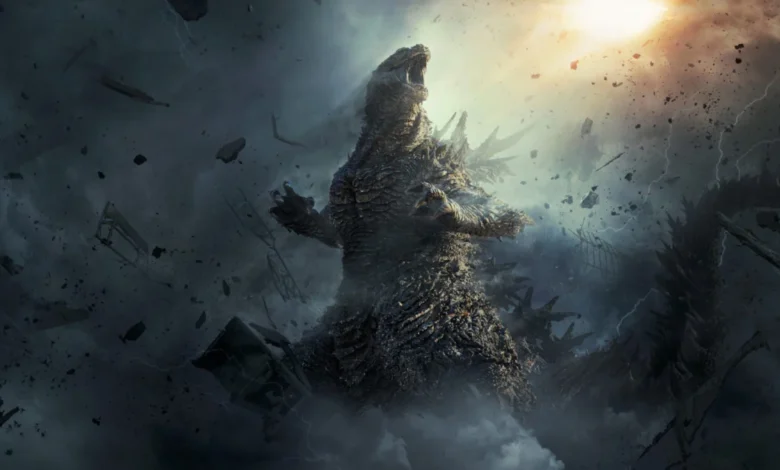
The global box office is bracing for a monumental weekend as Toho’s highly anticipated sci-fi epic Godzilla Minus Zero prepares to make landfall across North American theaters. Industry tracking and studio projections indicate that the Kaiju sequel is on a definitive trajectory to capture the number one spot at the box office, earning an estimated $30 million from 3,254 domestic venues during its opening weekend. This robust debut underscores the enduring and rapidly expanding mainstream appeal of Japan’s most iconic cinematic monster, building seamlessly upon the historic success of its predecessor.
Godzilla Minus Zero towers comfortably over a diverse slate of new releases entering the marketplace this weekend. Among the challengers are Warner Bros. Animation’s family-oriented feature The Cat in the Hat and Searchlight Pictures’ prestige dark buddy comedy Wild Horse Nine, directed by Martin McDonagh and starring celebrated actors John Malkovich and Sam Rockwell. Furthermore, the theatrical landscape welcomes the historic, wide North American release of the Indian epic Ramayana: Rise of a Legend. Despite this varied competition, Godzilla Minus Zero remains the undisputed heavyweight of the weekend, poised to dominate domestic theater chains and set a new benchmark for international genre filmmaking in the Western market.
Building on a Historic Precedent: The Legacy of Godzilla Minus One
The soaring expectations for Godzilla Minus Zero are directly tied to the unprecedented domestic and international triumph of 2023’s Godzilla Minus One. Directed, written, and with visual effects supervised by Takashi Yamazaki, the 2023 film became a cultural phenomenon upon its release in the United States and Canada. Despite arriving during a challenging period for the industry—debuting in the wake of the Hollywood actors’ and writers’ strikes with virtually no traditional promotional infrastructure—the film overindexed significantly with audiences.
Supported by glowing critical reviews and strong word-of-mouth, Godzilla Minus One grossed $11.4 million in its domestic opening weekend. It ultimately powered its way to an extraordinary $57 million in North America, cementing its status as the highest-grossing live-action Japanese film in box office history. Globally, the sci-fi epic amassed $113 million, a phenomenal return for a non-Hollywood production. The film’s cultural impact reached its zenith when it captured the Academy Award for Best Visual Effects, breaking a decades-long barrier for the franchise and proving that compelling storytelling and grounded human drama could elevate creature features to prestige cinema.
Premium Formats and Critical Reception for the Sequel
Toho and U.S. distributor GKids are capitalizing on this momentum with Godzilla Minus Zero. The sequel arrives with a distinct technological advantage, making history as the first Japanese production ever filmed specifically for IMAX formats. Consequently, industry analysts anticipate that the film will heavily overindex on premium large formats (PLF), driving higher per-screen averages and boosting overall ticket revenues.
Set two years after the harrowing events of the previous installment, Takashi Yamazaki’s new narrative sees Godzilla regenerate and resurface to combat a menacing new monster that threatens to dismantle the fragile recovery of postwar Japan. Early critical reception has been overwhelmingly positive. Variety’s chief film critic, Owen Gleiberman, praised the feature as an "even grander follow-up to ‘Godzilla Minus One,’" highlighting the director’s ability to balance visceral action set-pieces with profound emotional resonance regarding national trauma and resilience.
The Family Market: The Cat in the Hat Seeks Long-Term Stability
While Godzilla Minus Zero dominates the adult and genre demographics, Warner Bros. Animation’s The Cat in the Hat aims to capture the family audience, though initial tracking suggests a more modest opening than legendary Dr. Seuss adaptations of the past. The animated feature is projected to bring in $20 million to $25 million from approximately 4,000 domestic venues, targeting the second-place spot on the box office charts.
By historical comparison, previous Dr. Seuss adaptations generated significantly higher initial figures. In 2012, The Lorax opened to $70 million, while 2018’s The Grinch debuted to $67 million, unadjusted for inflation. However, studio executives note that the theatrical landscape for family entertainment has transformed dramatically in the post-pandemic era. Recent releases, such as Pixar’s original spring offering Hoppers, which debuted to $45 million, demonstrate shifting audience acquisition curves.
Animated films based on established intellectual property frequently rely on robust multiplier effects rather than explosive opening weekends. Sony’s 2024 adventure Garfield serves as a prime benchmark; it bowed to a modest $23 million domestically before leg-ging out to a stellar $91 million domestically and an impressive $257 million globally. To justify its $92 million production budget, The Cat in the Hat will similarly require strong international receipts and long-term theatrical staying power.
Fortunately for Warner Bros., the film benefits from favorable scheduling. The family demographic has experienced a notable drought of animated theatrical offerings since the release of Forgotten Island in September. Furthermore, The Cat in the Hat faces no direct animated competition until Walt Disney Animation Studios launches its original feature Hexed on November 25, leaving a clear runway for word-of-mouth growth.
This project marks the second cinematic adaptation of the iconic children’s book, following Universal Pictures’ 2003 live-action comedy starring Mike Myers. That live-action iteration opened to $38 million—similarly unadjusted for inflation—before exhausting its box office run at $134 million against a production budget exceeding $100 million, a result widely viewed as underwhelming. In the new animated adaptation, Bill Hader voices the mischievous titular character, sharing the screen with voice talents in a story directed by Alessandro Carloni and Erica Rivinoja. The plot follows the chaotic consequences of the Cat’s arrival as he attempts to cheer up two siblings navigating the challenges of moving to a new town.
Catering to Mature Audiences: Wild Horse Nine and the Prestige Market
On the specialty and prestige front, Searchlight Pictures is releasing Wild Horse Nine, a dark buddy comedy that targets older audiences—a demographic that has exhibited volatile box office performance in recent years. Directed by Martin McDonagh and starring critically acclaimed veterans John Malkovich and Sam Rockwell, the film follows two CIA officers dispatched from Santiago to Easter Island shortly before the outbreak of the Chilean military coup.
Searchlight has opted for a relatively wide initial footprint of approximately 1,000 screens. This represents a significantly larger rollout than McDonagh’s previous directorial effort, 2022’s acclaimed The Banshees of Inisherin. That film initially launched in limited release before expanding into a slow-burn box office success, ultimately accumulating $10.5 million domestically and $50 million globally while securing a prominent position in the Academy Award race. Wild Horse Nine enters the marketplace with similar awards-season aspirations, relying on strong reviews and adult demographic appeal to sustain its theatrical run.
Expanding Horizons: Ramayana: Rise of a Legend Sets Indian Cinema Precedent
Rounding out the weekend’s diverse theatrical offerings is the Indian epic Ramayana: Rise of a Legend. Distributed by Sony Pictures in 1,300 theaters, the film marks the widest North American release ever mounted for an Indian production. Industry projections place its four-day opening weekend gross at approximately $6 million.
This performance aligns closely with recent high-profile Telugu-language fantasy and action films released in 2024, such as Kalki 2898 AD ($5.6 million), Devara Part 1 ($5.6 million), and Pushpa: The Rule – Part 2 ($5 million). Like its predecessors, Ramayana: Rise of a Legend relies on a passionate diaspora audience and specialized event-ticket pricing to achieve strong per-screen metrics, demonstrating the increasing viability and commercial integration of South Asian cinema within the North American mainstream box office ecosystem.
Broader Implications and Industry Outlook
As the weekend unfolds, the box office performance of these diverse titles will offer crucial insights into current consumer behavior. The projected dominance of Godzilla Minus Zero reaffirms the commercial power of international intellectual property executed with high production values and distinct artistic vision. Simultaneously, the box office trajectories of The Cat in the Hat and Wild Horse Nine will test the resilience of family counter-programming and prestige adult cinema in an increasingly fragmented theatrical marketplace. With studios carefully balancing theatrical exclusivity windows against evolving audience preferences, this weekend’s results will undoubtedly shape exhibition strategies as the industry looks toward the competitive year-end holiday season.