Democrats seize control of Congress as live music industry faces incoming wave of federal oversight

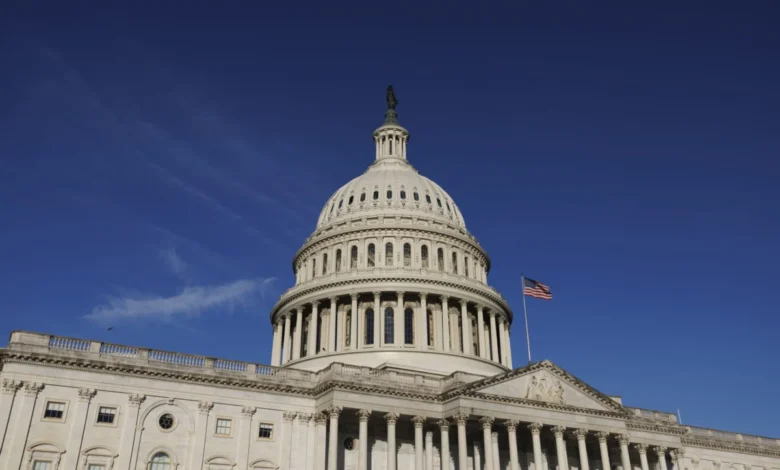
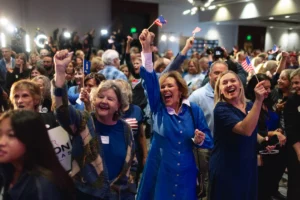
Following a historic midterm election victory on November 3, 2026, the Democratic Party has secured comfortable majorities in both the United States Senate and the House of Representatives. This sweeping shift in legislative power is poised to trigger a significant pivot in federal oversight, with the music industry—particularly the live entertainment sector—emerging as a primary target for congressional inquiry. As the new session approaches in January, industry stakeholders and federal regulators are bracing for a period of intensified scrutiny, with Democratic leadership signaling a focus on antitrust enforcement and corporate accountability.
The shift in power effectively grants Democratic lawmakers the authority to deploy the investigative tools they have long sought, including the issuance of subpoenas and the power to compel testimony. Central to this upcoming legislative agenda is the live music sector, which has been the subject of mounting public and political criticism regarding pricing, market dominance, and the influence of corporate conglomerates over the consumer experience.
A Chronology of Conflict: The Live Nation Antitrust Saga
The current tension between Congress and the live music industry is rooted in a protracted antitrust battle involving Live Nation Entertainment and its subsidiary, Ticketmaster. The controversy reached a boiling point earlier this year when the Department of Justice (DOJ), under the administration of President Donald Trump, reached an eleventh-hour settlement with Live Nation just one week into a high-stakes antitrust trial.
The timeline of this dispute underscores the divide between executive-level settlements and the more aggressive stance favored by legislative Democrats:
- May 2026: Congressional Democrats held a "shadow hearing" to express deep skepticism regarding the trajectory of the DOJ’s case against Live Nation. During these proceedings, Senator Richard Blumenthal (D-Conn.) and other key members of the Senate Permanent Subcommittee on Investigations indicated that they would pursue a full, formal inquiry once they held committee majorities.
- Late 2026: As the DOJ moved to settle with Live Nation, state attorneys general refused to acquiesce, continuing the trial to its conclusion. They successfully secured a full verdict regarding the company’s monopolistic practices.
- November 2026: Following the midterm elections, the incoming Democratic majority has vowed to revisit the "sweetheart deal" between the DOJ and the entertainment giant. The central question for the courts remains whether to accept the settlement or to heed the request from state attorneys general to initiate a forced divestiture of Ticketmaster.
The Legislative Push for Transparency and Competition
Democratic lawmakers, now empowered with the gavel in both chambers, are expected to utilize their oversight authority to scrutinize the mechanics of the ticketing market. Senator Richard Blumenthal, who has been a vocal critic of the current market structure, previously promised witnesses—including California Attorney General Rob Bonta and independent concert promoter Jerry Mickelson—that their concerns would be formally entered into the permanent congressional record.

The scope of these investigations is expected to extend beyond Live Nation. Rep. Robert Garcia (D-Calif.), ranking member of the House Oversight Committee, has been vocal about the relationship between StubHub and Andro Capital, a private investment fund managed by StubHub CEO Eric Baker. Earlier this year, reports surfaced suggesting that Andro Capital had generated more than $5 million in profits by reselling bulk inventory on the StubHub platform since 2022.
While Representative Garcia initiated an investigation into this potential conflict of interest in July, his efforts were previously stymied by a lack of subpoena power. With the legislative calendar shifting in January, the committee will be positioned to demand internal financial records, emails, and communications that could clarify whether the relationship between the platform and the CEO’s fund constitutes an unfair market practice.
Corporate Responses and Industry Defense
In response to the shifting political landscape, Live Nation has maintained a posture of compliance and cooperation. In a statement provided to the press on November 4, a company spokesperson emphasized that the current settlement offers "meaningful, enforceable solutions" to the competition issues identified by the government. The company further noted its willingness to engage with policymakers from both sides of the aisle to address concerns regarding ticket pricing and fan accessibility.
StubHub, similarly, has defended its business model, arguing that the relationship between its CEO and Andro Capital is transparent and represents a negligible portion of the company’s total revenue. The company maintains that all relevant disclosures regarding these investments were made in accordance with standard business regulations.
The Bipartisan Frontier: Where Policy Remains Consistent
Despite the looming threat of investigations, not every aspect of the music industry’s federal relationship is expected to change. The legislative agenda concerning intellectual property and emerging technology remains a rare area of bipartisan alignment.
Bills such as the American Music Fairness Act and the NO FAKES Act—the latter of which seeks to establish legal protections against unauthorized AI-generated voice cloning and deepfakes—continue to enjoy broad support across the political spectrum. Industry advocacy groups, most notably the Recording Industry Association of America (RIAA), have expressed confidence that these initiatives will remain a priority regardless of the change in leadership.

Mitch Glazier, CEO of the RIAA, noted in recent briefings that the industry is fortunate that its most critical legislative concerns are viewed as "completely bipartisan." According to Glazier, the current trajectory for the NO FAKES Act remains steady, with expectations for swift movement in the coming session. This suggests that while corporate business practices will be under the microscope, the legislative path for artist rights and technology regulation will likely remain largely undisturbed.
Implications for the Nashville Pipeline
The midterm elections have also reshaped the roster of congressional advocates for the music industry. The departure of Senator Marsha Blackburn (R-Tenn.), who has been a significant proponent of policies affecting the Nashville music scene, creates a leadership void. However, industry observers are pointing to a new generation of "rising champions" in Congress. Legislators such as Representatives Nathaniel Moran (R-Tex.), Becca Balint (D-Vt.), and Laura Friedman (D-Calif.) have been identified as key figures who are expected to fill the gap and maintain the industry’s influence in policy deliberations.
Analytical Outlook: The Path Forward
The convergence of a new congressional majority and the unresolved status of the Live Nation antitrust litigation suggests that the first quarter of 2027 will be a high-intensity period for the music business. The implications are twofold:
- Regulatory Enforcement: The transition to subpoena power gives the House Oversight Committee and the Senate Permanent Subcommittee on Investigations the ability to expose internal corporate data that has historically been shielded by non-disclosure agreements or legal settlements.
- Market Dynamics: If Congress successfully pressures the judiciary to reject the DOJ’s settlement with Live Nation, the industry could face a radical restructuring. A forced sale of Ticketmaster would be the most significant intervention in the live music market in decades, potentially altering the fee structures, exclusivity agreements, and concert distribution models that have defined the industry since the 2010 merger.
As the political landscape stabilizes following the midterm results, the music industry must prepare for a dual-track reality: one of continued collaboration on intellectual property and AI legislation, and one of adversarial scrutiny regarding the consolidation and financial practices that have fueled the live event economy for years. For artists, fans, and shareholders alike, the coming months in Washington will be decisive in determining the competitive structure of the entertainment landscape for the remainder of the decade.
Related posts: