It has been five and a half years since WandaVision premiered on Disney+, marking the formal inauguration of Marvel Studios’ ambitious expansion into episodic streaming television. At the time of its 2021 debut, the series served as a critical bridge between the conclusion of the Infinity Saga and the uncertain future of the Marvel Cinematic Universe (MCU) in a post-Endgame landscape. Now, the narrative thread that began in the suburbs of Westview is reaching its definitive resolution with the final episode of VisionQuest, a series that centers on the existential journey of the titular synthezoid.
The legacy of this storytelling arc is substantial. WandaVision, which received 23 Emmy nominations, set a high watermark for Marvel’s television efforts, blending genre-bending stylistic experimentation with deep character studies. Following the 2022 film Doctor Strange in the Multiverse of Madness and the 2024 spin-off series Agatha All Along, VisionQuest serves as the final installment in a thematic trilogy that explores the concepts of grief, identity, and artificial consciousness.
Thematic Foundations and Narrative Scope
VisionQuest picks up the mantle from the climactic events of WandaVision, specifically addressing the status of the "White Vision"—the rebooted, memory-less version of the character constructed by S.W.O.R.D. The narrative centers on the philosophical "Ship of Theseus" paradox, a concept introduced in the original series that questions whether an object remains fundamentally the same if all its components are replaced over time. By stripping the character of his memories and original personality, the show explores whether the essence of Vision—his morality, his love for Wanda Maximoff, and his unique sentience—can be reconstructed from the ground up.
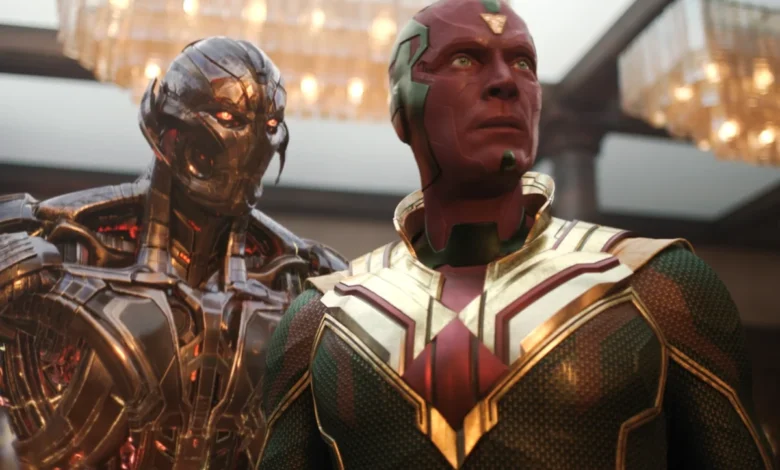
The series spans eight episodes, navigating a dual-layered narrative structure. Externally, the story tracks Vision’s journey through the world as he attempts to forge a new identity. Internally, the show utilizes a surrealist approach, manifesting various facets of Vision’s psyche through iconic manifestations of his programming history: J.A.R.V.I.S., F.R.I.D.A.Y., E.D.I.T.H., and the return of the formidable antagonist Ultron, voiced once again by James Spader. This internal conflict serves as a metaphor for the character’s struggle to reconcile his artificial origin with his aspirations toward humanity.
A pivotal element of the series is the introduction of a grown-up Tommy, the son of Vision and Wanda. His presence adds a layer of intergenerational conflict, as Vision—a creation of Ultron, and by extension Tony Stark and Bruce Banner—finds himself navigating the responsibilities of fatherhood. This mirrors the cycle of creation that has defined the character’s existence since his debut in Avengers: Age of Ultron.

Chronology and Episode Guide
The release strategy for VisionQuest has followed a traditional weekly cadence, designed to maintain audience engagement over the two-month rollout period. Below is the official record of the series’ debut schedule:
- Episode 1, "No Strings": October 13
- Episode 2, "Theseus": October 13
- Episode 3, "Reboot": October 20
- Episode 4, "Malware": October 20
- Episode 5, "Firewall": October 27
- Episode 6, "Deadlock": October 27
- Episode 7, "Immolation": November 3
- Episode 8, "Forever": November 10 (Series Finale)
The final installment, "Forever," is scheduled for release on November 10, marking the conclusion of a project that has been in development for several years.
Production and Creative Context
The success of the WandaVision brand has provided Marvel Studios with a reliable framework for character-centric storytelling. By focusing on smaller, more intimate stakes compared to the global-scale threats of the MCU’s feature films, these series have allowed for deeper exploration of legacy characters. Paul Bettany’s performance as Vision remains a cornerstone of this approach. Since his introduction as the voice of J.A.R.V.I.S. in 2008’s Iron Man, Bettany has been a fixture of the MCU, and VisionQuest represents the first time the actor has carried a solo project of this magnitude.
The return of James Spader as Ultron provides a narrative "bookend" to the character’s development. Ultron’s presence serves not only as a nostalgic callback but as a necessary catalyst for Vision to address his own programming. Throughout the series, the writing team has utilized these digital manifestations to explore the "ghosts in the machine," suggesting that while Vision may lack his original biological data, the remnants of his previous iterations remain embedded in his core code.
Broader Impact and Implications for the MCU
The conclusion of VisionQuest carries significant implications for the future of the MCU. As the franchise moves toward larger, multi-versal storylines, the resolution of these character-specific arcs provides a foundation for future narrative developments. The inclusion of Tommy, a character whose existence was solidified in Agatha All Along, signals a continued effort to integrate the younger generation of heroes—often referred to as the Young Avengers—into the primary timeline.
Furthermore, the show’s conclusion leaves open the question of Wanda Maximoff’s status. Following her apparent demise at the end of Multiverse of Madness, her absence in the physical world has cast a long shadow over both Agatha All Along and VisionQuest. While Marvel Studios has remained tight-lipped regarding her potential return, the series’ thematic focus on the "memory" of lost loved ones keeps the door ajar for future developments regarding her character.

Analysts have noted that this "trilogy" approach—WandaVision, Agatha All Along, and VisionQuest—represents a shift in Marvel’s television strategy. Rather than creating endless series, the studio has shown an increased willingness to limit stories to a specific number of episodes, prioritizing narrative density over long-term franchise expansion. This strategy has been largely well-received, as it allows for a cohesive viewing experience that appeals to both casual streamers and dedicated fans.
Examining the Technological and Ethical Themes
At its core, VisionQuest serves as a high-budget exploration of transhumanism. By positioning Vision as a "Ship of Theseus" entity, the writers are engaging with contemporary discussions regarding artificial intelligence, the nature of the soul, and the ethics of technological resurrection. The show posits that identity is not necessarily defined by the hardware—or in this case, the Vibranium body—but by the choices made and the connections formed.
The introduction of "malware" and "firewalls" as plot devices within Vision’s psyche is a clever, if literal, interpretation of his internal conflict. As Vision attempts to filter through the conflicting commands of his past, the audience is invited to consider whether a machine can achieve genuine autonomy, or if it is destined to repeat the patterns of its creators.
Conclusion and Future Outlook
As the release date for the final episode approaches, the anticipation centers on how the series will resolve the tension between Vision’s desire for independence and his historical programming. The title of the final episode, "Forever," suggests a definitive answer regarding his status within the MCU. Whether he will remain a solitary figure or return to the fold of the Avengers remains to be seen.
The conclusion of VisionQuest effectively closes the chapter on the post-WandaVision era. While the MCU will undoubtedly continue to expand, the impact of these eight episodes, and the broader trilogy they complete, will likely be felt in the development of future projects. Marvel Studios has successfully utilized the Disney+ platform to provide a nuanced, character-driven resolution to one of its most complex figures, proving that even in a universe defined by spectacle, the most compelling stories are often those rooted in the search for self-identity.
For viewers, the final episode on November 10 represents not just the end of a season, but the conclusion of a multi-year journey of discovery for a character who, despite being built, has always been searching for what it means to be alive. As the credits roll on the final installment, the legacy of the Westview incident will finally reach its resting place, clearing the path for the next generation of narratives within the expansive, interconnected Marvel cinematic landscape.