How a Casting Director Friend and a Massive HBO Search Saved Jordan Firstman’s Indie Film Club Kid

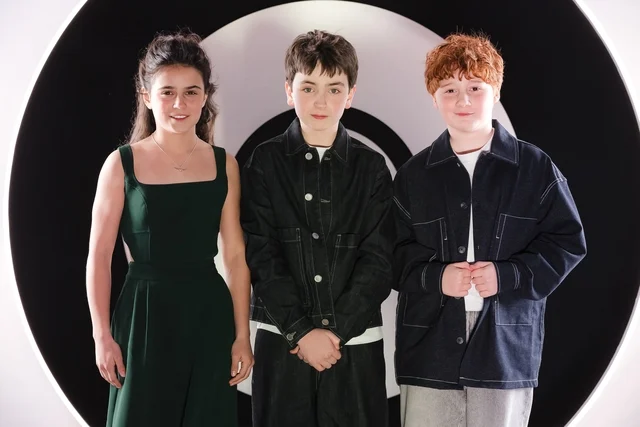
Finding the emotional and tonal anchor of an independent feature film is rarely a straightforward task, but for writer, director, and star Jordan Firstman, casting the pivotal role of Arlo in his feature film Club Kid proved to be an exceptionally high-stakes hurdle. The film, released by A24 and carrying an estimated production budget between $4 million and $6 million, required a rare combination of raw talent, effortless cool, and emotional depth in a preteen actor. The character of Arlo demands a delicate balance: a grieving British child whose mother has recently died by suicide, abruptly thrust into the bustling, high-octane environment of New York City to bond with his estranged, party-promoting father, Peter, played by Firstman.
The success of the narrative hinged entirely on whether this young actor could seamlessly integrate into Peter’s eclectic, hard-living LGBTQ+ social circle—a world defined by electronic music, late-night dancing, and the hedonistic realities of club culture. Firstman admitted during a recent appearance on the Filmmaker Toolkit Podcast that this exhaustive casting search was the most nerve-wracking phase of mounting the production. Fortunately, behind-the-scenes industry connections, a stroke
of serendipity involving a blockbuster television franchise, and an unorthodox approach to chemistry readings ultimately rescued the project from a logistical nightmare.
The Casting Dilemma: Tight Budgets and High Expectations

When Firstman sought a casting director for Club Kid, he enlisted Carmen Cuba, a veteran of the industry renowned for her uncanny ability to discover and nurture young talent. Cuba’s legendary track record includes assembling the iconic original ensemble for Netflix’s sci-fi phenomenon Stranger Things. However, Cuba quickly realized that casting Club Kid presented a vastly different set of logistical and financial constraints compared to her previous tentpole projects.
In major streaming productions like Stranger Things or high-budget studio features, casting directors routinely spend six months evaluating thousands of candidates, backed by ample time and substantial financial resources. Club Kid, by contrast, operated on a lean independent budget that could not accommodate an extended transatlantic search. The production lacked the financial flexibility to fly Cuba to London to oversee auditions in person alongside Firstman, leaving her to rely on a local UK casting team while working within strict fiscal boundaries.
The primary challenge was monumental: finding a British child actor of mixed heritage who possessed an innate, unforced coolness and could physically and emotionally mirror Firstman’s screen presence. Compounding the issue was the tight pre-production schedule, which threatened to compromise the quality of the search.
An Accidental Lifeline From the World of Harry Potter
As Cuba prepared to dive headfirst into the daunting project, she embarked on her annual vacation with a close-knit group of fellow casting directors. As the holiday drew to a close, Cuba found herself strategizing over her upcoming UK recruitment strategy and voicing her anxieties to her colleagues.

Among them was prominent British casting director Lucy Bevan, whose extensive major studio credits include Barbie, F1, and The Batman. More importantly, Bevan had just wrapped an exhaustive, six-month international search for the upcoming high-profile HBO series based on J.K. Rowling’s Harry Potter and the Philosopher’s Stone. That monumental television production, backed by a budget exceeding $200 million, required Bevan to sift through an astonishing pool of roughly 40,000 young British actors to find the definitive next generation of Harry, Hermione, Ron, and their Hogwarts classmates.
Recognizing the severity of Cuba’s timeline and budget constraints, Bevan made a remarkably generous gesture. In a testament to their professional relationship—one that would rarely cross over into a micro-budget indie feature—Bevan offered to share curated names and insights from the massive database of young talent she had just spent half a year cataloging.
Discovering Reggie Absolom
Among the names Bevan put forward was young British actor Reggie Absolom, whose fledgling resume already included appearances in television projects such as Silo and The Other Bennet Sister. When Firstman first laid eyes on a photograph of Absolom, the creative vision of his film suddenly clicked into place.
Firstman recalled that Absolom matched the precise physical and emotional profile he had envisioned during the writing process. Although the script originally featured a character with a slightly different mixed-heritage background—including a running joke about the protagonist’s mother and her favorite catchphrase—Bevan advised Firstman not to get bogged down by minor script details. Coincidentally, Absolom happened to be a quarter Indian, aligning remarkably well with the character’s conceptual roots. Firstman remarked that the young actor embodied every single attribute he had hoped to find.

Across the Atlantic, Bevan provided further invaluable assistance by hosting the crucial callback sessions in her London office, entirely gratis, bypassing the need for expensive international travel.
Unconventional Auditions and On-Set Chemistry
Realizing the traditional sterile environment of a casting office would stifle the organic energy required for the film, Firstman and Cuba decided to completely upend standard audition protocols. Refusing to stay indoors, Firstman instructed Bevan’s assistant to take the camera outside for a mobile, walk-and-talk style audition.
The resulting footage captured an instant, effortless rapport between the adult creator and the young actor. Firstman has often noted that his success in directing children stems from a simple philosophy: treating them with adult-level candor rather than talking down to them. By acknowledging the realities of internet culture and even welcoming playful ribbing, Firstman established a mutual trust that eliminated the awkward power dynamics typically found in adult-child acting partnerships.
This unorthodox methodology extended directly into the production phase. Traditional table reads and formal rehearsal sessions proved stiff and awkward for Absolom. Abandoning conventional preparation altogether, Firstman pivoted to a lifestyle-matching approach. The director and young actor spent their downtime sharing pizza, discussing music preferences, and swapping TikTok videos to solidify their bond organically.

Broader Implications for Independent Filmmaking
The casting journey of Club Kid highlights the vital, often unseen infrastructure of the entertainment industry—specifically, the collaborative networks shared by top-tier casting directors. In an era where independent cinema faces escalating financial pressures and shrinking production windows, the reliance on goodwill, cross-studio resource sharing, and creative improvisation has become increasingly critical.
By leveraging the collateral benefits of a massive corporate television search—HBO’s multi-million-dollar Harry Potter pipeline—a micro-budget A24 drama successfully bypassed months of administrative delays to secure its emotional core.
Club Kid is currently screening in select theaters across New York City and Los Angeles, with a broader theatrical rollout scheduled to expand nationwide. As audiences experience the lived-in, familial chemistry between Firstman and Absolom on screen, the unconventional genesis of their partnership stands as a masterclass in modern casting resourcefulness.
Related posts: