The Average New Vehicle Price in the United States Has Officially Topped $51,000 for the First Time in History

The American automotive landscape has reached a significant and sobering milestone as the average transaction price (ATP) for a new vehicle in the United States has officially surpassed the $51,000 threshold for the first time. According to the latest comprehensive data released by Kelley Blue Book, the average price paid for a new car hit $51,109 in October 2026. This figure marks a historic high, representing a $649 increase from September and a 2.1 percent climb compared to the same period in 2025. This surge underscores a sustained period of inflationary pressure on consumer wallets, complicating the purchasing landscape for the average household.
A Chronology of Rising Costs
To understand the current economic climate of the automotive industry, one must look at the trajectory of vehicle pricing over the last several years. The industry began seeing dramatic price inflation during the global supply chain disruptions of 2020 and 2021, when a severe shortage of semiconductor chips forced manufacturers to prioritize production for high-margin, high-content vehicles.
As production normalized, many analysts predicted that prices would stabilize or retreat as inventory levels recovered. However, that correction has failed to materialize in any meaningful way. Throughout 2025, prices hovered in the high $40,000 to low $50,000 range. By October 2026, the cumulative effect of rising labor costs, advanced safety technology requirements, and a shift toward electrification pushed the Average Manufacturer’s Suggested Retail Price (MSRP) to $52,933. This MSRP increase of 1.4 percent month-over-month serves as a leading indicator that retail pricing remains on an upward trend, offering little relief for consumers entering the market.
The Shift Toward Utility and Size
A primary driver of this record-breaking average is the evolving preference of American consumers. The market continues to migrate away from traditional sedans and compact hatchbacks toward larger, more feature-rich SUVs and pickup trucks. These vehicle segments command higher price points due to their sheer physical size, increased engineering complexity, and the higher profit margins they provide to automakers.
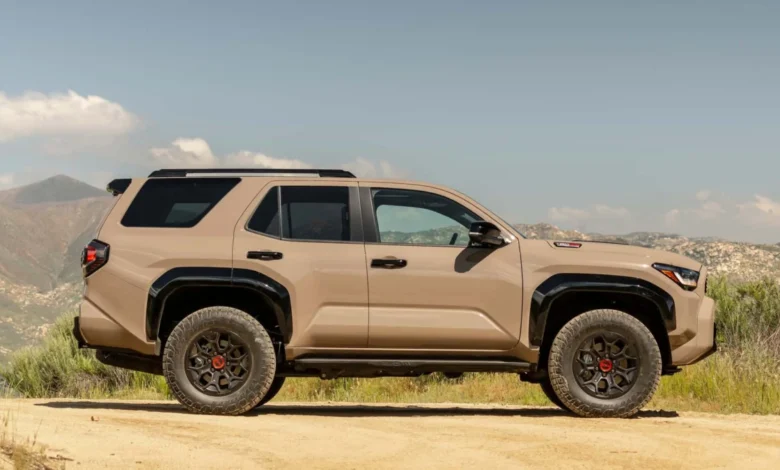
In October 2026, mid-size SUVs officially claimed the title of the highest-volume vehicle segment, eclipsing compact SUVs. The data is striking: sales volume for mid-size SUVs grew by nearly 10 percent year-over-year. As these vehicles have become the default choice for families, their average transaction prices have followed suit, reaching $50,570—a 1.9 percent increase from the previous year.
Full-size pickup trucks, long a staple of the American market, continue to represent the most significant capital investment for the average buyer. With an average transaction price of $67,912, these vehicles occupy a luxury-adjacent pricing tier. Even more budget-conscious segments are not immune to these inflationary pressures; compact SUVs now average $37,895, while even the most entry-level segment, compact cars, averaged $28,030 in October—a 3.4 percent jump from October 2025. When aggregated, these five segments—mid-size SUVs, compact SUVs, subcompact SUVs, full-size trucks, and compact cars—accounted for 64.4 percent of all new vehicle sales, effectively setting the baseline for the record-breaking industry average.
The Electric Vehicle Pricing Paradox
The narrative surrounding electric vehicles (EVs) offers a unique contrast to the broader market. While conventional gasoline-powered vehicles have seen consistent price growth, the EV sector has experienced a more volatile, though generally downward, price trajectory on a year-over-year basis. In October 2026, the average transaction price for a new EV stood at $56,220. While this represented a 1 percent increase from September, it remains 2.7 percent lower than the price levels recorded in October 2025.

This divergence is largely attributed to the aggressive incentive strategies employed by manufacturers looking to clear EV inventory and capture market share. In October, manufacturer discounts and government-backed incentives accounted for 11.3 percent of the total EV transaction price, nearly double the 6.8 percent incentive rate seen across the broader automotive industry.
Tesla, the market leader, saw its average transaction price reach $54,194. While this represents a slight decline from the previous month, it remains 1.2 percent higher than the previous year. The data reveals an interesting outlier in Tesla’s performance: the now-discontinued Cybertruck. Despite its limited production run and polarizing design, Tesla moved approximately 1,914 units in October—the highest monthly volume for the vehicle in over a year. With an average transaction price of $92,380 for the Cybertruck, the model’s strong sales performance acted as a mathematical weight, preventing Tesla’s overall average transaction price from dropping further.
Broader Economic Implications
The fact that the average new vehicle now costs over $51,000 carries profound implications for the U.S. economy and the automotive sector’s long-term health. The affordability crisis is not merely a matter of sticker price; it is compounded by interest rate environments and the rising cost of automotive insurance and maintenance.
For the average consumer, the path to vehicle ownership has become increasingly restricted to those with high credit scores and the ability to manage long-term debt. The proliferation of 72- and 84-month loan terms has become a necessity to keep monthly payments within reach, yet these extended terms keep consumers in negative equity positions for longer periods, potentially stifling future demand.
Industry analysts suggest that without a significant shift in manufacturing strategy—such as a renewed focus on entry-level models or a breakthrough in battery cost reduction for EVs—the average transaction price is unlikely to see a meaningful downward correction. Furthermore, as manufacturers lean into software-defined vehicles and advanced driver-assistance systems (ADAS), the cost of base models will likely continue to creep upward, further distancing the average new car from the reach of the median-income earner.
Future Outlook and Market Sentiment
As the industry looks toward the end of 2026 and into 2027, the sentiment among market observers is one of cautious concern. While automakers are clearly enjoying the revenue benefits of higher average prices, the long-term risk of market saturation and consumer alienation remains high.
The reliance on high-margin SUVs and trucks has shielded manufacturers from some of the volatility of the economy, but it has left a massive void in the sub-$25,000 market. With current incentive levels remaining relatively restrained and supply chains mostly stabilized, there is little pressure for dealers to engage in the heavy discounting that once characterized the end of the year.
Ultimately, the $51,000 milestone serves as a definitive marker of a new era in American transportation. It represents a fundamental shift in how vehicles are viewed—not just as tools for basic transit, but as high-cost, technology-heavy assets. For the automotive industry, the challenge will be to balance the pursuit of higher margins with the need to maintain an accessible entry point for the broader public. Until that balance is struck, the record-breaking prices observed in October 2026 may simply be the new baseline for a market that has permanently outgrown its previous pricing norms.