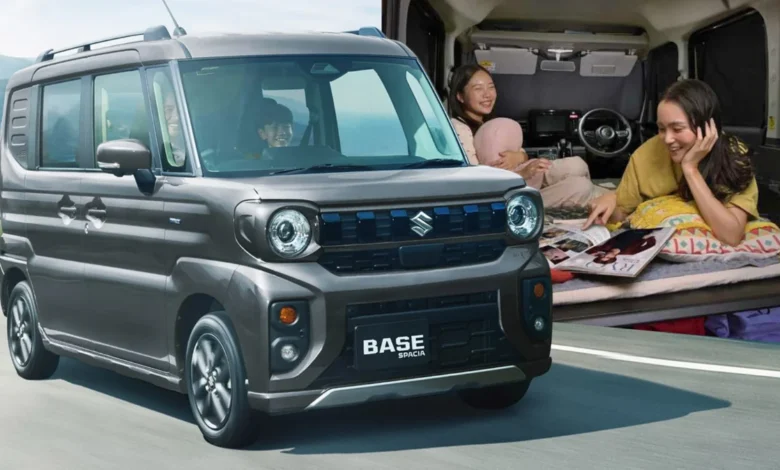
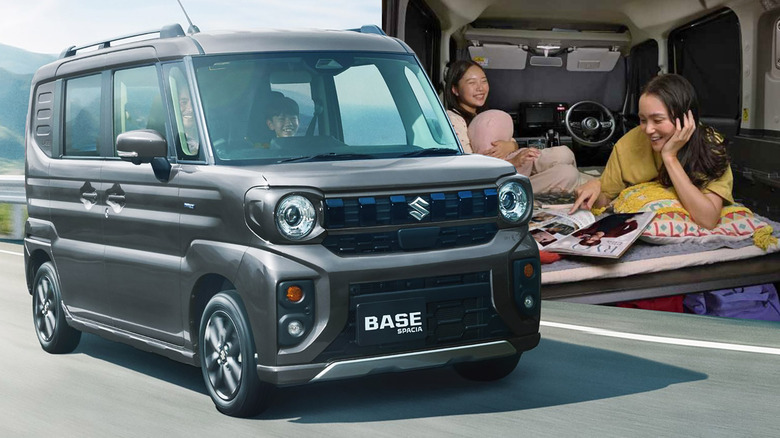
Suzuki Motor Corporation has officially unveiled the heavily updated Spacia Base in Japan, transforming its specialized commercial-grade kei van into a remarkably versatile and rugged mini-camper. Abandoning the aggressive, sports-oriented styling of its predecessor, the 2026 iteration adopts the tough, utilitarian design language pioneered by the passenger-focused Spacia Gear. This strategic realignment brings Suzuki’s micro-van division into the third-generation era, incorporating contemporary cabin technology, an upgraded mild-hybrid powertrain, and an intensely modular interior configuration explicitly tailored for the burgeoning solo camping and micro-adventure demographic.
The modernization of the Spacia Base bridges a notable generational gap within Suzuki’s domestic lineup. While the overarching Spacia nameplate debuted in 2013 and progressed into its second generation in 2017 and third in late 2023, the utilitarian Spacia Base variant had remained tethered to older styling cues, wearing the sharper, more angular fascia associated with the Spacia Custom line. By updating the vehicle’s aesthetic architecture and technological foundation for the 2026 model year, Suzuki has aligned the commercial camper derivative with the broader lineup’s current product cycle.
Rugged Exterior Redesign and Mechanical Specifications
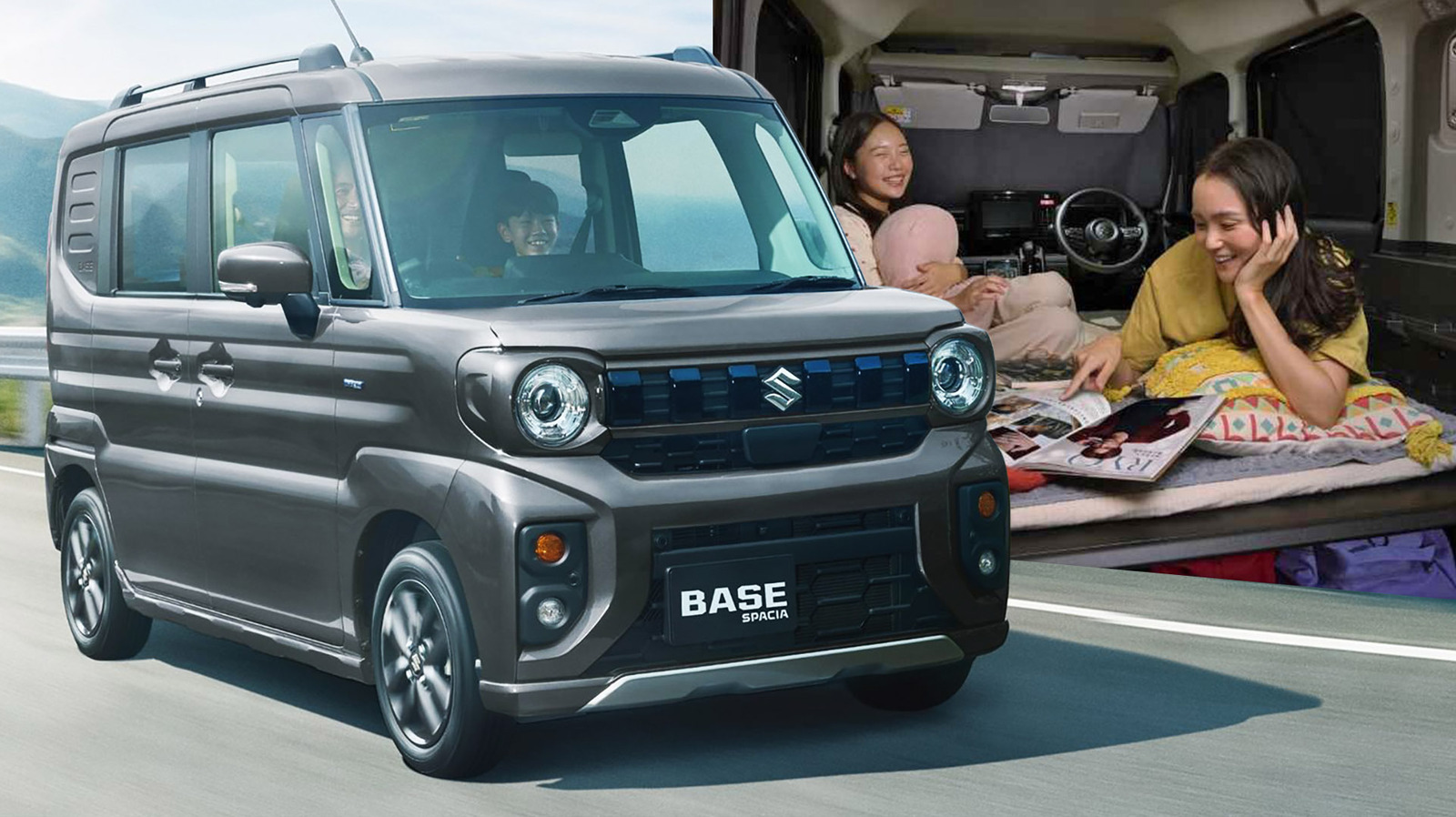
Visually, the new Spacia Base is a direct stylistic sibling to the rugged Spacia Gear. The front fascia is dominated by distinctive round LED headlights, a robust, Jimny-inspired mesh grille, and an aggressive X-shaped front bumper complete with an integrated skid plate to ward off trail debris. To distinguish the work-oriented Base model from its passenger-carrying counterparts, Suzuki designers implemented subtle yet purposeful modifications, including a utilitarian gray finish on the bumpers and headlight garnishes, a high-gloss black grille treatment, and body-colored solid covers replacing the rear quarter windows—a design choice that underscores the vehicle’s commercial compliance and secure cargo storage capability.
Prospective buyers in the Japanese domestic market will be able to select from a sophisticated palette of exterior paint finishes, comprising Dry Sand Khaki Metallic, Denim Blue Metallic, Soft Beige Metallic, Steel Silver Metallic, and Mineral Grey Metallic.
Underneath its boxy exterior, the Spacia Base adheres strictly to Japan’s strict kei car regulations, which dictate maximum physical dimensions and engine displacement. Measuring precisely 3,395 millimeters (133.7 inches) in length, the micro-van maximizes its interior volume through a highly efficient packaging layout. Power is sourced exclusively from a turbocharged 660-cubic-centimeter three-cylinder engine paired with Suzuki’s advanced mild-hybrid system. Output is capped at the regulatory ceiling of 63 horsepower (47 kilowatts / 64 metric horsepower). Power is routed to either the front wheels or an advanced all-wheel-drive system via a continuously variable transmission (CVT), ensuring optimal traction on slippery outdoor surfaces, forest service roads, and snowy winter tracks.
A Masterclass in Interior Versatility: The Multi-Board System
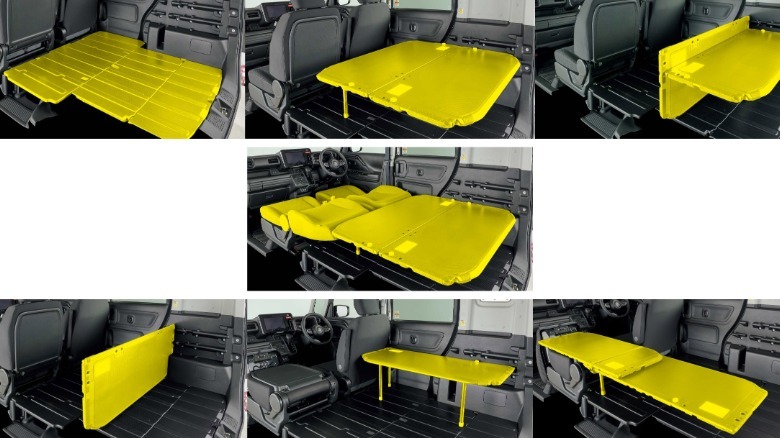
Despite its micro-mini footprint, the interior of the Spacia Base is an exercise in space management. Suzuki has eliminated the traditional rear passenger bench entirely, leaving a wide, open cargo bay that serves as a blank canvas for customization. The defining feature of this cabin is the upgraded Multi-Board system, a modular shelving and partitioning framework that allows the rear compartment to be configured in seven distinct ways.
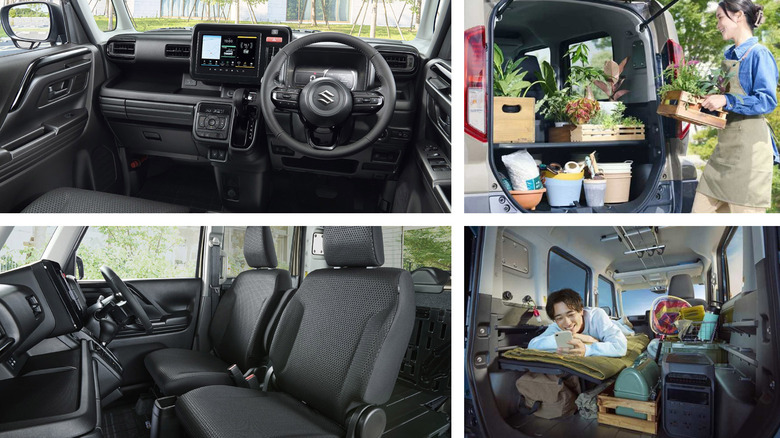
Depending on the user’s immediate needs, the Multi-Board can function as a flat floor, an impromptu workspace table, a single or double bed frame, or one of three discrete cargo-management dividers. In its primary solo camping configuration, the driver’s seat can be folded completely flat, merging with the rear platform to create a comfortable single bed while reserving the remaining cabin space for secure gear storage, cooking equipment, or luggage. For tandem travel, both front seats can be reclined, and two Multi-Boards can be joined to form a solid double bed platform, leaving ample vertical clearance underneath for personal belongings, camping gear, and portable power stations.
Up front, the dashboard is lifted directly from the standard third-generation Spacia passenger car. It features an available high-definition 9-inch infotainment display, a practical upper storage shelf on the passenger side for quick-access items, and durable, water-repellent fabric upholstery designed to withstand the rigors of outdoor use, wet weather gear, and mud. Furthermore, Suzuki has elevated safety and convenience by incorporating an electronic parking brake with auto-hold functionality and an upgraded Advanced Driver Assistance Systems (ADAS) suite, bringing modern crash-mitigation technology to the micro-van segment.
Market Positioning, Pricing, and Competitive Landscape
The updated Suzuki Spacia Base is scheduled to arrive at authorized dealerships across Japan. While official manufacturer-suggested retail pricing has not been universally finalized in all prefectures, prominent local automotive publications, including Creative Trend, report that the entry-level front-wheel-drive variant will start at approximately ¥1,992,000, which translates to roughly $12,600 USD at current exchange rates. This aggressive pricing strategy positions the vehicle as an exceptionally cost-effective entry point into the lifestyle camper market.
In the highly competitive Japanese kei car and micro-van segment, the Spacia Base faces stiff competition from established rivals such as the Honda N-Van, the Daihatsu Hijet Cargo, and Suzuki’s own venerable Every Wagon. However, industry analysts note that the Spacia Base carves out a unique niche by deliberately bypassing traditional multi-passenger utility in favor of dedicated, lifestyle-oriented solo and duo camping configurations right out of the factory.
Broader Industry Implications and the Micro-Camper Trend
The launch of the updated Spacia Base reflects a profound cultural and economic shift within the Japanese automotive landscape, where the demand for downsized, highly efficient recreational vehicles has surged following structural changes in work habits and leisure preferences. Urban dwellers and outdoor enthusiasts alike are increasingly gravitating toward "solo camp" (sorokyampu) culture—a movement emphasizing minimalism, self-reliance, and escape from densely populated metropolitan areas without the immense financial and logistical burdens associated with full-sized RVs or traditional motorhomes.
From an environmental and economic perspective, vehicles like the Spacia Base highlight the viability of kei-class platforms in modern micro-mobility strategies. By leveraging lightweight construction, highly efficient mild-hybrid powertrains, and small-displacement forced-induction engines, Suzuki achieves exceptional fuel economy figures while maintaining practical utility. This approach minimizes carbon footprints without sacrificing the adventurous spirit demanded by modern consumers.
As automotive markets globally grapple with rising vehicle acquisition costs and space constraints in urban environments, the evolution of the Japanese kei camper offers a compelling blueprint for compact recreational transport. While regulations regarding vehicle width and engine displacement limit the export of unmodified kei cars to Western markets, the core engineering ethos—maximizing internal volume, modular interior architecture, and affordable outdoor accessibility—serves as an influential benchmark for global automakers looking to capture the growing adventure-lifestyle demographic.