The Strained Economics of Global Biodiversity: A Closer Look at the Tensions at COP17 in Armenia

The 2026 U.N. biodiversity summit, known as COP17, concluded in Yerevan, Armenia, on October 30, leaving behind a complex legacy defined by a recurring, unresolved friction: the massive chasm between global conservation ambitions and the financial reality required to achieve them. While the summit sought to advance the Kunming-Montreal Global Biodiversity Framework—the ambitious international roadmap designed to halt and reverse nature loss by 2030—discussions were frequently paralyzed by debates over "biodiversity finance." At the heart of these tense negotiations was the Democratic Republic of the Congo (DRC), a nation that serves as a critical guardian of the world’s second-largest rainforest, the Congo Basin.

Represented by Daniel Mukubi, head of the climate change division at the Congolese Ministry of the Environment, the DRC emerged as a vocal critic of the current funding landscape. For developing nations rich in biodiversity but constrained by economic pressures, the global financial mechanisms for conservation are not merely insufficient; they are structurally flawed. As the international community attempts to reconcile the $700 billion annual funding gap for nature, the disagreements at COP17 highlight a deeper geopolitical divide regarding responsibility, sovereignty, and the efficacy of existing aid systems.

A Legacy of Financial Unmet Commitments
The tensions at COP17 were a direct continuation of the unresolved grievances from COP15 in Montreal four years prior. During the Montreal summit, the international community narrowly avoided a collapse in negotiations when the DRC and several other developing nations threatened to abandon the framework over concerns that the funding pledges were too low. The resulting compromise was a tiered financial goal: $20 billion annually by 2025 and $30 billion annually by 2030.

However, a new global assessment released during the Yerevan summit suggests that these interim targets have likely not been met. This failure has fueled significant frustration among developing nations. According to Mukubi, the bottleneck is not a lack of available global capital, but a lack of political will in the Global North. While developed nations have historically benefited from the intensive exploitation of natural resources to fuel their own industrialization, they have been reluctant to meet their formal obligations under the Convention on Biological Diversity (CBD) to provide adequate resources for global conservation.

Instead of increasing their own contributions, several developed nations at COP17 advocated for broadening the donor base to include emerging economies and nations in the Gulf, a move that the DRC and other developing states viewed as an attempt to evade historical responsibilities. Mukubi noted that out of 25 developed countries identified as expected contributors, fewer than half participated in the ninth replenishment of the Global Environment Facility (GEF-9), the primary institution managing these funds.

The Structural Inefficiency of Current Mechanisms
Beyond the raw volume of funding, the mechanisms for distributing that money are under fire. The DRC has been a consistent proponent of creating a dedicated, independent financial mechanism under the CBD. Currently, most international biodiversity funding is funneled through the Global Environment Facility, which the DRC argues is inefficient, burdened by excessive administrative and transaction costs, and difficult for local communities to access.

For the DRC, the administrative hurdles are not abstract inconveniences. Mukubi cited a project approved in August 2025 that remains unfunded more than a year later. "We have been unable to access this funding for over a year now," he stated, illustrating the disconnect between political approval and field-level implementation. Furthermore, the requirement for co-financing—whereby developing nations must contribute their own limited resources to unlock international grants—acts as a barrier for countries already grappling with debt crises and economic instability.

The Conflict Between Development and Conservation
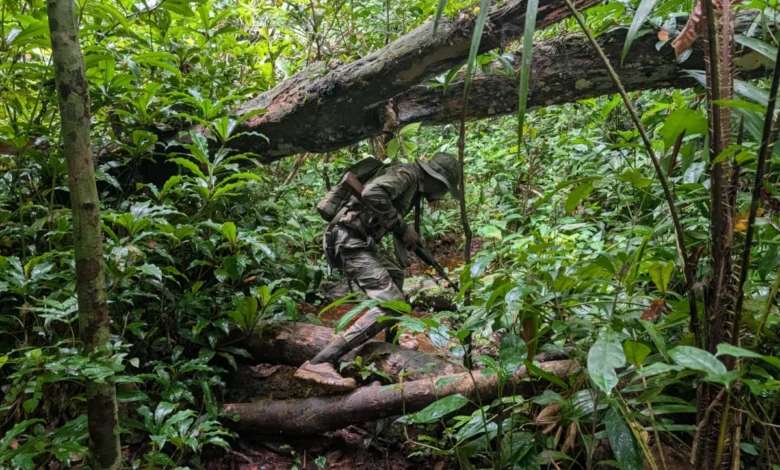
The pressure to protect the Congo Basin, which holds immense significance for global carbon sequestration and biodiversity, often conflicts with the domestic needs of the Congolese people. With over 155 million hectares of forest, the DRC has committed to ambitious conservation targets, including the protection of 30% of its land by 2030. However, meeting these targets requires the government to offer viable, sustainable alternatives to the populations whose livelihoods depend on forest products.

When international activists and organizations pressure the DRC to tighten conservation regulations, the government views these interventions with skepticism. "National sovereignty means that the government sets the priorities," Mukubi argued. The view from Kinshasa is that international pressure often ignores the economic realities on the ground. If the global community expects the DRC to forego the exploitation of its resources—such as oil or timber—it must be prepared to provide the financial mechanisms to support the people who would otherwise rely on those resources for survival.

The Role of Private Sector and New Initiatives
Recognizing the limitations of international public funding, the summit also explored the role of private sector investment, philanthropic contributions, and domestic revenue mobilization. However, there is widespread agreement among developing nations that private capital remains a supplement rather than a substitute for public financing.

One point of contention was the Cali Fund, established in 2022 to facilitate the sharing of benefits arising from digital sequencing information (DSI) on genetic resources. The fund relies on voluntary contributions from industries like pharmaceuticals and cosmetics. Since its inception, the fund has failed to mobilize significant capital, with Mukubi noting it had raised less than $10,000—a figure he described as an indictment of the voluntary approach.

In contrast, regional initiatives such as the Tropical Forest Forever Facility (TFFF) have generated cautious optimism. By fostering South-South cooperation, such mechanisms are seen as more aligned with the realities of tropical forest nations. Several African ministers at COP17 even proposed the creation of an African Biodiversity Fund to ensure more direct control over resources and a more efficient allocation process.

Scientific Integrity and Political Neutrality
A recurring theme during the Yerevan negotiations was the politicization of environmental diplomacy. During a working group session, the European Union expressed reluctance to include language that would facilitate "equitable access" for all eligible parties to certain funding streams. The DRC strongly opposed this, arguing that excluding specific parties for political reasons undermines the "whole-of-government and whole-of-society" approach mandated by the Global Biodiversity Framework.

Mukubi emphasized that biodiversity loss is a planetary crisis that transcends political maneuvering. "If the entire world cannot mobilize, we will have nothing left but our tears," he cautioned. The DRC’s position is that scientific evidence, rather than political preference, must dictate the flow of resources. The government has already demonstrated this commitment by halting oil exploration contracts in areas like Virunga National Park after studies proved that the park’s sustained natural capital was more valuable than its short-term exploitation.

Looking Ahead to COP18 and Beyond
The road to 2030 is narrow. Decision 16/34, established at the 2024 conference in Colombia, provides a roadmap for a new financial mechanism to be operational by COP19 in 2030. The interim steps involve deciding whether to create an entirely new institution or designate an existing one to serve as the permanent, authoritative body for biodiversity finance.

For the DRC, the stakes could not be higher. The country is currently utilizing the BIOFIN initiative to conduct a comprehensive assessment of biodiversity expenditures, hoping to create a national financing plan that reduces dependence on erratic international funding. By streamlining domestic revenue mobilization and integrating biodiversity metrics into mining, agriculture, and hydrocarbon sectors, the government hopes to build a more resilient financial foundation.

However, the fundamental truth remains that the Congo Basin’s ability to survive the coming decades as a primary carbon sink and biodiversity hotspot depends on global cooperation. The closing sessions in Yerevan served as a stark reminder that while the Kunming-Montreal framework provides the goals, the mechanism to pay for them remains the missing link. As the world moves toward COP18, the international community faces a choice: continue with a fragmented, inefficient, and often exclusionary funding model, or pivot toward a structure that acknowledges the financial responsibilities of the Global North and the sovereign needs of the Global South. For the DRC, the path forward is clear—a transition from symbolic pledges to the establishment of a functional, transparent, and equitable global financial system for nature.