Museum Specimens Reveal Pathogen Behind Decades-Old Mystery of Disappearing Brazilian Frogs

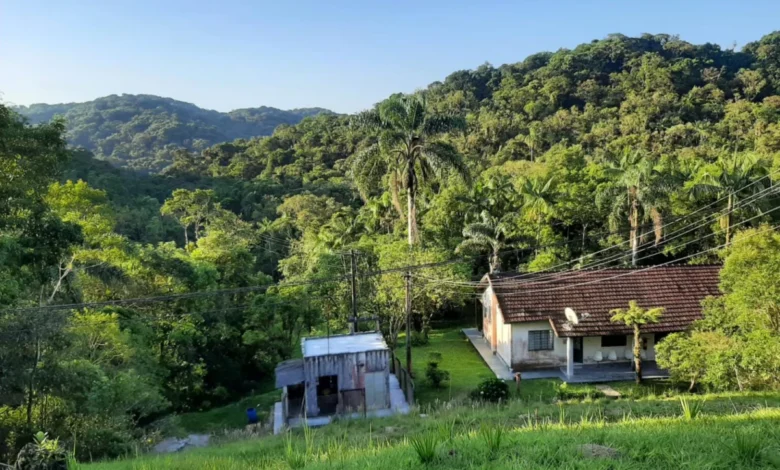
For over four decades, the Atlantic Forest of Brazil has been the site of a lingering ecological mystery. In the 1970s and 1980s, amphibian populations across the region began to vanish with alarming speed. For years, the scientific community struggled to identify the primary driver of this silent extinction, positing theories ranging from extreme weather events and severe cold snaps to the encroaching effects of acid rain. However, a landmark study recently published in the journal Molecular Ecology has finally provided a definitive explanation, pointing to a microscopic, highly contagious pathogen as the culprit: the chytrid fungus, Batrachochytrium dendrobatidis (Bd).
The study, led by researchers from the Smithsonian and Pennsylvania State University, utilizes a unique methodology that bridges the gap between historical field observations and modern genetic analysis. By examining preserved frog specimens collected from the Boracéia research station, scientists have reconstructed the timeline of an invisible invasion that has since decimated more than 500 amphibian species globally.
A Biological Time Capsule
The foundation of this discovery lies in the foresight of biologist William Ronald Heyer. During the 1970s and 1980s, while serving as a curator at the Smithsonian, Heyer meticulously collected and preserved 370 frogs representing 17 different species from the Atlantic Forest. His collection served as a frozen snapshot of biodiversity before the height of the crisis.

Crucially, there was a significant gap in collection efforts between 1979 and 1982—the precise period when the most drastic population declines were observed. This "detection lag" has historically made it difficult for scientists to prove exactly when and how the pathogen arrived. Jack Boyette, the study’s lead author and a Ph.D. candidate at Penn State, emphasized the value of these archives. "We have this really amazing temporal collection before and after the decline," Boyette stated. By analyzing these specimens, the team was able to determine that the fungus was entirely absent in 1978, yet by 1983, it had become widespread, confirming a rapid and devastating expansion of the disease through the local ecosystem.
The Pathogen and Its Mechanism
Batrachochytrium dendrobatidis (Bd) is a virulent pathogen that causes chytridiomycosis, an infectious skin disease. Amphibians are uniquely vulnerable to this fungus because they rely on their skin for vital physiological functions, including the absorption of oxygen and the regulation of essential electrolytes like water, salt, and minerals.
When a frog is infected, the fungus attacks the keratinized layers of its skin, leading to severe damage. Symptoms observed in affected species include reddening, excessive shedding, and the formation of deep ulcers. Beyond the physical deterioration, the disease induces neurological and behavioral changes that render the animals less capable of surviving in their natural habitats. Because the pathogen was not formally described and named until 1999, its role in the declines of the 1970s and 80s was obscured by a lack of contemporary diagnostic tools.
Methodology: Cracking the Cold Case
To validate their findings, the research team developed a robust protocol designed to minimize the risk of false positives while maximizing the accuracy of historical DNA recovery. Because the specimens had been stored for decades in formalin and ethanol—chemicals known to degrade DNA—the team had to employ specialized molecular analysis to ensure the integrity of their samples.

The researchers performed PCR (polymerase chain reaction) tests to detect the presence of fungal DNA within the skin tissue. They also genotyped the pathogen to determine its strain. The analysis revealed a two-wave infection pattern: the populations were first struck by a global, highly virulent strain known as Bd-GPL, followed by the introduction of a second, less-virulent strain identified as Bd-Brazil. To eliminate the possibility of laboratory contamination, the team swabbed the original glass jars containing the specimens, confirming that no free-floating fungal DNA was present.
Conflicting Perspectives on Causality
While the study provides a compelling temporal link between the presence of the pathogen and the decline of the frogs, the academic community remains engaged in a broader discussion regarding the complexity of extinction events.
Lucas Ferrante, a researcher at the University of São Paulo, has expressed reservations regarding the conclusion that Bd was the sole or primary driver of the declines. In his assessment, while the data confirms an increase in fungal prevalence, it does not definitively prove that the fungus was the proximate cause of the mass mortality. Ferrante argues that Bd may function as an "opportunistic" pathogen, suggesting that the root cause of the declines was likely environmental stress—specifically, climate change and extreme weather anomalies that weakened the immune systems of the amphibians, making them susceptible to the fungus. This perspective highlights the ongoing debate in ecology between "pathogen-driven" and "climate-driven" extinction models.
Resilience and Recovery in the Atlantic Forest
Despite the grim historical findings, the researchers discovered a surprising narrative of recovery when they returned to the Boracéia research station for field studies in 2022 and 2024. Observations indicate that several species, which had suffered significant declines in the 1980s, have demonstrated remarkable resilience and are once again among the most abundant in the region.

However, this recovery is not uniform. The study noted that up to five of the 17 species originally documented by Heyer have likely vanished from the area permanently, including the Rio spinythumb frog (Crossodactylus dispar) and the flattened waterfall frog (Cycloramphus boraceiensis). This dichotomy between recovery and permanent loss underscores the unpredictable nature of disease-driven biodiversity crises.
Broader Implications for Global Conservation
The implications of this research extend far beyond the Brazilian Atlantic Forest. As global trade and climate change continue to facilitate the spread of fungal pathogens, understanding the history of past outbreaks is vital for future prevention.
A primary concern for the international scientific community is the arrival of Batrachochytrium salamandrivorans (Bsal), a related chytrid fungus that poses an existential threat to salamanders and newts. Often referred to as the "salamander plague," Bsal has already devastated populations in Europe. The fear that it may cross the Atlantic to North America is high, and the lessons learned from the Boracéia case study provide a roadmap for monitoring, detection, and mitigation.
"Understanding the past… helps us understand how these fungi spread, how these pathogens spread, and how they behave in communities," Boyette explained. By analyzing museum collections, scientists can "reconstruct these early, undetectable stages of wildlife disease emergence."

The team is currently applying their methodology to other museum collections, including specimens from Costa Rica that predate declines in the Monteverde region. These efforts to "fill in the gaps" of historical data are increasingly viewed as essential for conservationists attempting to manage biodiversity in an era defined by rapid environmental change.
The Role of Natural History Museums
The study serves as a poignant reminder of the enduring value of natural history collections. Often dismissed as relics of the past, these repositories are now recognized as "biological time capsules" that hold the key to understanding modern ecological crises.
Amadeus Plewnia, a biogeographer and ecologist at Ghent University, noted that while historical data can rarely provide the absolute proof of causality that a controlled experiment might, the evidence presented in this study makes the link between Bd and the declines "extremely likely."
As the world faces an accelerating rate of species loss, the ability to look back at historical samples allows scientists to differentiate between natural population fluctuations and the catastrophic impacts of anthropogenic and disease-driven events. For the frogs of Brazil, the mystery of the 1970s may finally be solved, but the work of protecting the survivors continues. The findings underscore the critical necessity of maintaining biodiversity archives, not merely for the sake of taxonomy, but as a proactive tool in the ongoing battle to prevent future wildlife extinctions.

As the researchers prepare for further testing on recent samples, the focus remains on monitoring the "pristine" tropical forests that were once thought to be immune to such devastating outbreaks. The case of the Boracéia frogs proves that no ecosystem is entirely isolated from the microscopic threats that define the modern era of conservation.