The protracted and devastating conflict in Sudan has entered a grim new phase marked by the relentless proliferation of unmanned aerial vehicles. What began as isolated deployments of rudimentary explosive devices has transformed into a sophisticated, high-altitude campaign utilizing long-range precision strikes. According to recent reports from the United Nations Children’s Fund (UNICEF), this technological escalation is disproportionately affecting the nation’s most vulnerable populations, specifically children, while dismantling what remains of Sudan’s critical civilian infrastructure.
The ongoing war, pitting the Sudanese Armed Forces (SAF) against the paramilitary Rapid Support Forces (RSF), has plunged the East African nation into one of the worst humanitarian catastrophes of the 21st century. As frontlines blur and technologies advance, the nature of the violence has shifted from conventional ground skirmishes to indiscriminate aerial bombardments that reach deep into areas previously considered safe havens for displaced families and humanitarian operations.
The Changing Face of Warfare: From Suicide Drones to Long-Range Strikes
The tactical evolution of the Sudanese conflict underscores a dangerous trend observed in modern warfare: the democratization and miniaturization of air power. Humanitarian officials note that the conflict initially saw the sporadic deployment of localized suicide drones—crude, terror-inducing devices meant to target specific enemy encampments or command posts. However, the past year has witnessed a quantum leap in capabilities.
Military analysts and UN representatives have tracked the deployment of advanced, long-range drones capable of traversing distances up to 1,500 kilometers. These machines possess extended loiter times and sophisticated guidance systems, allowing them to bypass traditional air defenses and strike strategic targets far from active frontlines.
This technological leap was starkly illustrated during the final week of October, a period that UNICEF spokesperson James Elder described as an assault unlike anything the country has witnessed in modern history. Data gathered by humanitarian agencies reveals that not a single day passed during that week without at least one drone strike hitting a critical power station. By the close of October, approximately 15 energy facilities had been severely damaged or destroyed.
The origin of these specific long-range strikes remains murky, complicating accountability and exacerbating the fog of war. Humanitarian organizations like UNICEF have found it impossible to definitively attribute the October energy grid attacks to either the SAF or the RSF. Analysts point out that destroying the country’s already fragile power infrastructure appears to offer no strategic advantage to the recognized government forces, leading to profound questions regarding the command, control, and proliferation of these advanced unmanned systems among third-party actors or splintering factions.
A Humanitarian Crisis Deepened: The Destruction of Essential Infrastructure
The systematic targeting of basic infrastructure has created a cascading humanitarian disaster, cutting off millions of civilians from access to electricity, clean water, healthcare, and education. Unlike in other conflict zones, such as Ukraine, where international aid and local engineering teams often manage to effect rapid repairs on damaged power grids, Sudanese infrastructure remains shattered and neglected.
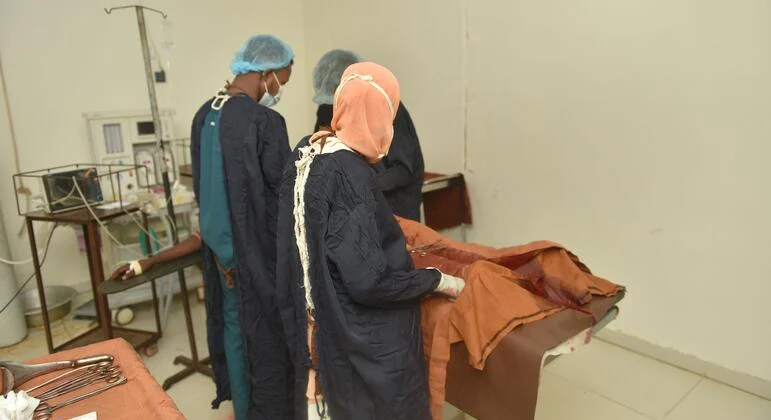
When a Sudanese power station is struck, the immediate consequence is the shutdown of municipal water pumps and purification plants. Deprived of reliable municipal water supplies, families are forced to turn to expensive, unregulated, and frequently unsafe alternatives, igniting a public health crisis. The UN has already identified alarming pockets of cholera across various regions, while the cold chain necessary for preserving vaccines and essential medicines hangs by a thread.
The agricultural sector has absorbed a devastating blow. Farmers attempting to irrigate their crops rely heavily on electrical pumps or fuel-powered generators. Due to crippling fuel shortages and hyperinflation, operating these generators has become financially prohibitive. Consequently, agricultural yields have plummeted, food prices have skyrocketed, and basic nutrition has slipped beyond the purchasing power of average households.
This economic and logistical strangulation directly feeds a catastrophic malnutrition crisis. UNICEF estimates that approximately 825,000 children under the age of five will suffer from severe acute malnutrition—the deadliest form of the condition—in Sudan this year alone.
The Human Toll: Voices from the Ground
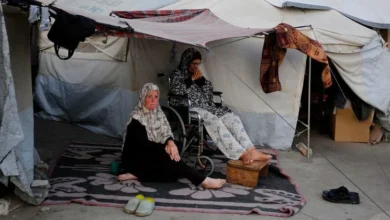
Behind the grim statistics lie the shattered lives of individual civilians, particularly children, who make up a staggering proportion of the casualties. UNICEF reports that two out of every three child casualties recorded this year were victims of armed drone attacks. These weapons have effectively erased the concept of safety, bringing the frontlines directly into residential neighborhoods, displacement camps, and bustling markets.
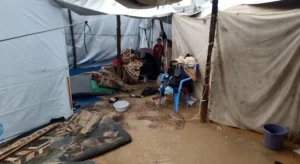
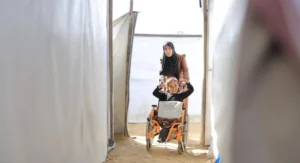
Mr. Elder shared the harrowing account of Buri, a teenager hailing from the contested city of El Obeid—a location where UN Human Rights Council investigators have repeatedly warned that civilians live in perpetual terror of aerial assaults. Buri lost both of his hands to an explosive blast. Despite living in a makeshift tent and facing permanent physical impairment, the young man displays a heartbreaking resilience, spending his mornings engaging in remote online learning and his afternoons gathering fodder for livestock, gripping the grass with his bandaged stumps. His survival relies heavily on the solidarity of his peers, a testament to the enduring community spirit of the Sudanese people amidst overwhelming cruelty.
Historical Context and Chronology of the Conflict
To understand the current deployment of advanced drone technology in Sudan, one must examine the origins and trajectory of the civil war.
- April 2023: Long-standing political tensions between the Sudanese Armed Forces, led by General Abdel Fattah al-Burhan, and the Rapid Support Forces, commanded by Mohamed Hamdan Dagalo (commonly known as Hemedti), erupt into open warfare in the capital of Khartoum and rapidly spread across the country. The two generals, who had previously orchestrated joint military coups in 2019 and 2021, experience an irreparable falling out over the proposed integration of the RSF into the regular armed forces.
- Late 2023 to Early 2024: The conflict evolves from urban street combat into a war of attrition. Both factions seek external patrons and military hardware, leading to an influx of sophisticated weaponry, including foreign-supplied drones and electronic warfare equipment.
- Mid 2024: The strategic balance shifts as both the SAF and RSF incorporate unmanned aerial systems into their core doctrines. The use of commercial drones modified for combat gives way to dedicated military-grade hardware capable of long-range reconnaissance and targeted munitions delivery.
- October 2024: The escalation peaks with the sustained campaign targeting power grids, water stations, and civilian infrastructure, prompting urgent international warnings from the United Nations regarding violations of international humanitarian law and the deliberate deprivation of civilian survival means.
International Response, Funding Deficits, and the Path Forward
As the security situation deteriorates, the broader humanitarian response is hampered by persistent access restrictions, active combat, and a severe lack of financial resources. Over 15 million people across Sudan currently require emergency shelter, while humanitarian corridors remain compromised by ongoing hostilities.
Despite these immense challenges, international agencies have mobilized substantial relief efforts. UNICEF and its local partners have successfully treated hundreds of thousands of children suffering from severe acute malnutrition, delivered essential healthcare services to over 2.5 million individuals, and vaccinated millions of children against preventable, deadly diseases. Furthermore, engineering teams have worked tirelessly to repair municipal water systems and transition them to solar power, helping to maintain safe drinking water access for nearly eight million people.
However, aid workers warn that these interventions are merely a stopgap against an overwhelming tide. Senior UN officials have cautioned that agency operations in Sudan are severely underfunded, operating on roughly one-third of the required budget.
"With so many crises happening at once, everything, everything is at breaking point," Mr. Elder emphasized, noting that humanitarian resilience cannot be sustained on goodwill and volunteerism alone. Without an immediate cessation of hostilities, strict adherence to international humanitarian law regarding the protection of civilian infrastructure, and a massive influx of international donor funding, Sudan faces the total collapse of its social fabric and a generation-defining humanitarian catastrophe.