Mercedes dominance at the Qatar Grand Prix sparks mystery among rivals as Kimi Antonelli and George Russell seize control of practice sessions

The 2026 Formula 1 season, which has been defined by a razor-thin margin between the top four constructors, saw a seismic shift in performance hierarchy at the Lusail International Circuit this Friday. Mercedes, led by the unexpected pace of Kimi Antonelli, produced a dominant display that has left the paddock searching for answers. As the sun set over the Qatari desert, the Silver Arrows occupied the top two spots in both practice sessions, leaving Ferrari, McLaren, and Red Bull scrambling to decode the sudden surge in engineering efficiency.
An Unexpected Performance Delta
The statistics from Friday’s running provide a sobering reality for the rest of the grid. Mercedes maintained a cushion of nearly half a second over their nearest rivals, a figure that appears even more daunting when accounting for the fact that neither Antonelli nor George Russell optimized their low-fuel soft-tyre runs. In a season where the difference between pole position and fourth place is often measured in hundredths of a second, a four-tenths-of-a-second advantage represents a "massive" gulf in the current technical landscape.
For the remainder of the field, the sight of the Mercedes W17 navigating the high-speed, flowing corners of the Lusail layout with such ease was an ominous signal. As teams prepare for Saturday’s all-important qualifying session, the consensus among competitors is that Mercedes has uncovered a performance "outlier"—a specific configuration or setup characteristic that has unlocked a hidden layer of downforce or mechanical grip.
A Frustrating Friday for Ferrari
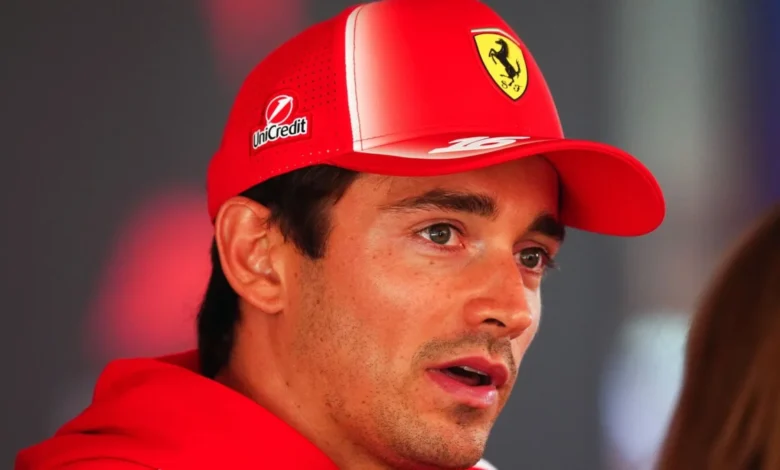
While Mercedes thrived, Ferrari endured a day of technical regression and misfortune. The Scuderia, which has been a primary contender for race wins throughout the second half of the 2026 campaign, appeared significantly off the pace. Charles Leclerc, currently navigating a difficult chapter of his season, struggled to extract performance from his car, ultimately losing control and spinning during the second practice session.
The damage sustained during the incident further compromised the team’s data-gathering efforts. Simultaneously, Lewis Hamilton suffered a debilitating engine issue that brought his car to a standstill, forcing the team to pivot from performance testing to emergency repairs. Reflecting on the day’s events, a visibly frustrated Leclerc noted that the team failed to make progress across multiple tire compounds, including the medium and soft rubber.
"Honestly, it has been a very difficult day," Leclerc said. "We could not improve our lap time on the mediums, and even on the new softs, I couldn’t find the grip I needed. The feeling is difficult to get right, and even on high fuel, we lacked the pace we expected. For some reason, Mercedes are so much faster than everyone expected. There is an outlier there, and we need to find it."
The McLaren Perspective and the "Different Category"
McLaren, widely expected to be the class of the field in Qatar due to the circuit’s high-speed profile, found themselves unable to bridge the gap to the front-runners. Lando Norris, who has been a consistent podium threat, was blunt in his assessment of the current pecking order. Despite plans to implement a new floor upgrade, which the team trialled briefly in Las Vegas, expectations for a miraculous turnaround remain low.
"I don’t know how much the new floor will help around here compared to Vegas," Norris remarked. "We are probably seven tenths off the Mercedes per lap, so it is not even worth thinking about them at this stage. They are in a different category right now. Relative to the rest, we seem to be in a decent place, but we have a mountain to climb to catch the Silver Arrows."
The frustration from the Woking-based team is palpable. Having spent the year fighting for the Constructors’ Championship, the prospect of being outpaced by such a significant margin in the final rounds of the season is a blow to their strategic momentum.
Red Bull and the Struggle for Balance
Max Verstappen, the four-time world champion, faced his own set of challenges. The Red Bull RB22, which has been the benchmark for stability, appeared disconnected from the tarmac at the Lusail International Circuit. Verstappen noted that the car’s balance was fundamentally flawed, a trait that in the past would have been mitigated by the driver’s skill but is now proving to be a critical handicap.
"The all-round balance is just not there at the moment," Verstappen explained. "It is costing us quite a bit of lap time, both in the short runs and the long-distance simulations. Mercedes looks quite far ahead. We have to go back to the drawing board and see how much of that gap we can close before qualifying."
Technical Implications and the "Outlier" Theory
The term "outlier" used by Leclerc suggests that the paddock is suspicious of an innovative technical solution or an extreme setup window that Mercedes may have stumbled upon. In modern F1, where regulations are tightly constrained, such leaps in performance are rarely the result of a single component. Instead, they are usually the byproduct of a symbiotic relationship between tire management, suspension geometry, and aerodynamic efficiency.
The Lusail International Circuit is notoriously demanding on tires due to its high-speed corners and abrasive surface. If Mercedes has managed to maintain a high-downforce setup without compromising their straight-line speed, they will be virtually unbeatable in the race. Analysts are currently looking at the team’s ride-height behavior and potential thermal management of the tires as the likely culprits for their sudden advantage.
Chronology of the Weekend
The Qatar Grand Prix weekend is condensed, placing extra pressure on the engineers. Friday’s sessions were crucial for setting the base setup for the entire weekend.
- Friday, November 27:
- FP1: Mercedes sets the pace, establishing a clear gap over the field.
- FP2: Despite a spin by Leclerc and an engine failure for Hamilton, Mercedes remains the fastest, while Red Bull and Ferrari struggle with car balance.
- Saturday, November 28:
- 2:15 PM: Final Practice session, the last opportunity to refine car setups.
- 6:00 PM: Qualifying session under the floodlights, where the true pecking order will finally be revealed.
- Sunday, November 29:
- 4:00 PM: The Qatar Grand Prix. A race of endurance and strategy that will likely be decided by tire degradation.
Strategic Outlook
As the teams head into the final hours before qualifying, the focus shifts to data analysis. Ferrari, McLaren, and Red Bull will be pouring over telemetry data to determine if the Mercedes advantage is a result of a one-off performance peak—perhaps related to track temperature or wind conditions—or a genuine step forward in car development.
For Mercedes, the challenge will be to replicate this performance under the pressure of a competitive qualifying session. History has shown that a dominant Friday does not always guarantee a pole position, especially when rivals are pushed to the brink of their technical limits.
The Qatar Grand Prix remains one of the most physically and mentally taxing events on the calendar. With the championship narrative still unfolding, the events of this weekend are set to play a pivotal role in the final standings. Whether Mercedes can maintain their current trajectory or if the rest of the field can close the gap will define the narrative of this high-stakes weekend in the Middle East. Fans worldwide are tuning in, eager to see if the "outlier" is a permanent shift in power or merely a temporary flash of brilliance from the Brackley-based squad.