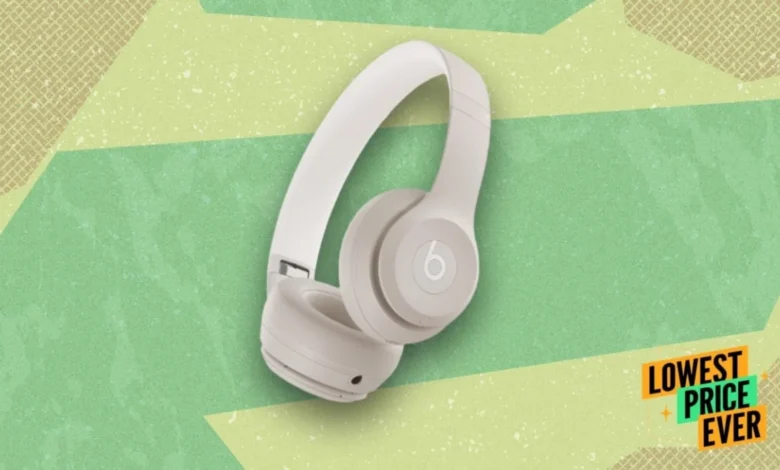
As the retail industry enters the peak of the holiday shopping season, major electronics manufacturers and big-box retailers are rolling out aggressive promotions to capture consumer interest. Among the standout audio deals currently dominating the market is a steep discount on the recently released Beats Solo 4 on-ear headphones. Walmart has slashed the price of the popular wireless device by more than 50 percent, bringing the cost down from its standard retail price of $199.95 to just $99.95. The promotion applies to multiple colorways, including classic black, vibrant pink, and sleek slate blue, marking one of the most substantial price drops for a current-generation Beats product ahead of the traditional holiday shopping weekend.
The timing of this discount aligns with an increasingly competitive consumer electronics landscape where audio brands must balance premium features with aggressive pricing strategies. While the Beats Solo 4 launch earlier in the product lifecycle targeted consumers willing to pay top dollar for ecosystem integration and aesthetic appeal, the mid-tier market has become heavily saturated with alternatives offering advanced features such as active noise cancellation (ANC). By cutting the price in half, retailers and manufacturers are positioning these headphones as an accessible entry point for everyday listeners, students, and Apple ecosystem users who prioritize battery longevity and brand styling over high-end acoustic engineering.
Evolution of the Beats Solo Lineup and Design Philosophy
The Beats Solo series has long occupied a distinct niche in the personal audio market. Originally established under the leadership of music industry figures Jimmy Iovine and Dr. Dre, and later acquired by Apple Inc. in 2014, the brand revolutionized how consumers view headphones—shifting them from utilitarian studio gear to high-fashion lifestyle accessories. Over successive generations, the engineering teams have worked to refine the acoustic profile, shedding the overwhelming, muddy bass response that characterized early models in favor of a more balanced, sculpted sound signature characterized by accentuated highs and a tighter low end.
The introduction of the Beats Solo 4 represents a notable step forward in the product family’s engineering trajectory. Unlike its predecessor, the Solo 3, which relied heavily on legacy micro-USB connectivity and older Bluetooth standards, the Solo 4 embraces modern connectivity frameworks. The inclusion of Bluetooth 5.3 ensures a more stable wireless connection, reduced latency, and improved energy efficiency. Furthermore, the adoption of universal USB-C connectivity for both charging and lossless wired audio playback reflects a broader industry shift toward standardized ports, a move accelerated by global regulatory changes and consumer demand for cable consolidation.
Comprehensive Feature Set and Technical Specifications
Despite the aggressive discount bringing the headphones into a lower price bracket, the Beats Solo 4 retain the core hardware and software capabilities that define the product line. One of the most significant engineering achievements in this generation is the dramatic improvement in power management. The Solo 4 deliver an estimated 50 hours of continuous playback on a single charge, representing a substantial 10-hour increase over the previous generation. This efficiency is paired with Fast Fuel charging technology, which provides approximately five hours of playback from a mere 10-minute charge using a standard USB-C power source, with a full recharge cycle taking roughly two hours.
Acoustically, the headphones are built around custom 40mm transducers designed to minimize electronic distortion and latency. According to technical evaluations by independent audio publications such as PCMag, the sound profile remains distinctly "Beats"—tuned for modern pop, hip-hop, and electronic genres with an energetic presentation. However, industry analysts note notable omissions that prospective buyers must weigh against the discounted price. Most prominently, the Solo 4 do not feature Active Noise Cancellation (ANC), relying instead on passive noise isolation provided by the on-ear cushion design and clamping force. Additionally, the headphones lack an adjustable software equalizer, meaning users cannot easily tailor the frequency response without relying on third-party source device settings.

Ecosystem Integration and Usability for Apple and Android Users
A core value proposition of the Beats brand under Apple ownership is seamless integration with the iOS ecosystem, though the hardware maintains cross-platform compatibility. For Apple users, the Solo 4 support one-touch pairing, automatic iCloud syncing across devices, and hands-free activation of the Siri voice assistant, courtesy of Apple’s proprietary ecosystem chips. Audio sharing capabilities also allow two sets of Beats or Apple AirPods to stream audio simultaneously from a single iPhone, iPad, or Mac.
Conversely, Android users are not entirely left behind, though they miss out on some proprietary ecosystem shortcuts. The headphones support Google Fast Pair for quick device discovery and setup, and users can access advanced product controls, battery status updates, and firmware updates via the dedicated Beats companion application for Android. Furthermore, the inclusion of support for standard AAC and SBC Bluetooth codecs ensures broad compatibility with virtually any modern smartphone, tablet, or personal computer. For users seeking traditional wired connectivity, the headphones support both 3.5mm analog audio cables and USB-C digital audio input, enabling high-resolution lossless playback directly from compatible host devices.
Retail Dynamics and Black Friday Market Implications
The decision by major retailers like Walmart to discount premium consumer electronics by half during promotional windows highlights shifting inventory management practices and aggressive customer acquisition tactics. Consumer electronics analysts observe that holiday sales periods no longer serve merely as a mechanism to clear out obsolete or discontinued stock; instead, brands frequently utilize steep temporary price reductions on current-generation flagship and mid-tier products to capture market share from competitors and drive high-volume digital and in-store traffic.
For consumers, the $99.95 price point fundamentally alters the value proposition of the Beats Solo 4. At the original $199.95 retail price, prospective buyers frequently scrutinized the absence of Active Noise Cancellation and multi-device Bluetooth multipoint connectivity when compared directly to competing products from Sony, Bose, and Sennheiser. At half off, however, the calculus shifts significantly. The device competes more directly with budget-tier headphones while offering superior battery life, premium build materials, iconic styling, and robust ecosystem integration.
Broader Industry Trends in Personal Audio
The aggressive discounting of the Beats Solo 4 reflects broader macroeconomic and technological trends within the global personal audio market. As smartphone manufacturers continue to omit headphone jacks and bundle fewer accessories with their devices, consumer reliance on wireless audio solutions has reached saturation levels. Consequently, hardware manufacturers face intense pressure to differentiate their products through proprietary features, extended battery longevity, and brand partnerships.
At the same time, the market for over-ear and on-ear headphones has bifurcated. On one end, audiophiles and frequent travelers drive demand for premium, noise-canceling units priced well north of $300. On the other end, casual listeners prioritize portability, durability, and brand aesthetics at accessible price points. Promotions such as the Walmart Black Friday sale demonstrate how legacy audio brands leverage deep retail partnerships to capture the value-conscious segment of this market, ensuring high unit sales volume during the most lucrative retail window of the calendar year. As inventory levels fluctuate and seasonal promotions progress, industry observers will closely monitor whether competitor brands respond with counter-discounts to protect their respective market share in the sub-$100 personal audio category.