Male pattern baldness, medically known as androgenetic alopecia, remains one of the most prevalent aesthetic concerns for men worldwide. According to the American Hair Loss Association, by the age of 35, approximately two-thirds of American men will experience some degree of appreciable hair loss, and by age 50, that number jumps to 85 percent. As the demand for effective solutions grows, the marketplace has become saturated with everything from FDA-approved pharmaceuticals to emerging stem-cell-based serums and high-tech hardware. Navigating these options requires a clear understanding of the science behind hair follicle health and the distinction between corrective treatments and preventative maintenance.

The Science of Hair Loss and Current Clinical Standards
The biological mechanism behind male pattern hair loss is primarily linked to dihydrotestosterone (DHT), a derivative of the hormone testosterone. In genetically susceptible individuals, DHT binds to androgen receptors in the hair follicles, causing them to shrink—a process known as miniaturization. Over time, these follicles produce thinner, shorter, and eventually invisible hairs, leading to the appearance of baldness.
Dermatologists and clinical experts have long maintained that the most effective, evidence-based approach to combating this process involves 5 percent minoxidil. Originally developed as a blood pressure medication, minoxidil was found to have the side effect of hypertrichosis (excessive hair growth). It is now the gold standard for over-the-counter treatment. Minoxidil works by widening blood vessels in the scalp, increasing the delivery of oxygen, blood, and nutrients to the hair follicles, and effectively extending the growth phase of the hair cycle.

The Efficacy of Topical Minoxidil: Rogaine and Hims
Among the leading topical solutions, Rogaine’s 5 percent Minoxidil Foam remains the benchmark for efficacy. FDA-approved and clinically proven to stop shedding and stimulate regrowth, the foam delivery system offers distinct advantages over traditional liquids. Dermatologists note that the foam is easier to control, minimizing the risk of the product dripping onto the forehead or face, where it could cause unwanted hair growth. Furthermore, the foam formulation typically excludes propylene glycol, a common ingredient in liquid minoxidil solutions that is known to cause contact dermatitis and scalp irritation in many users.
Clinical testing indicates that consistent, twice-daily application is the critical factor for success. Users often experience an initial “shedding phase”—a temporary period where weak, miniaturized hairs fall out to make way for new, thicker growth—typically within the first two to four weeks. While this phase can be daunting, it is a clinical marker that the treatment is successfully accelerating the hair cycle.

Hims provides an alternative that mirrors the chemical efficacy of Rogaine but distinguishes itself through its business model. By offering virtual consultations with licensed healthcare professionals, Hims creates a digital safety net for users who may feel overwhelmed by the prospect of starting a lifelong hair growth regimen. While the formula is nearly identical to other 5 percent minoxidil foams, the integrated support system can be a decisive factor for men who require guidance on application consistency or who have concerns about potential side effects.
Emerging Technologies and Scalp Health
While minoxidil addresses the growth cycle directly, other products focus on creating an environment conducive to hair retention. The Patricks RD1 Hair Loss Spray, for instance, represents a shift toward dual-purpose grooming. It incorporates ingredients like Capixyl and acetyl tetrapeptide-3, which act as DHT blockers, alongside cosmetic ingredients like caffeine and biotin. Unlike pure pharmaceuticals, the RD1 spray functions as a styling agent that provides immediate volume, making it an attractive option for men in the early stages of thinning who are not yet prepared to commit to a strict twice-daily medical regimen.

Similarly, the Act + Acre Cold Pressed Apple Stem Cell Serum focuses on scalp health as the foundation for hair longevity. Utilizing apple stem cell technology, the serum is designed to extend the anagen (growth) phase of the hair follicle. While it is not a direct substitute for minoxidil in terms of aggressive regrowth, it acts as a critical maintenance tool, reducing inflammation and balancing the scalp microbiome. For men who struggle with product buildup or scalp sensitivity, such serums provide a necessary, albeit less potent, layer of support.
The Role of Technology: Laser Therapy Helmets
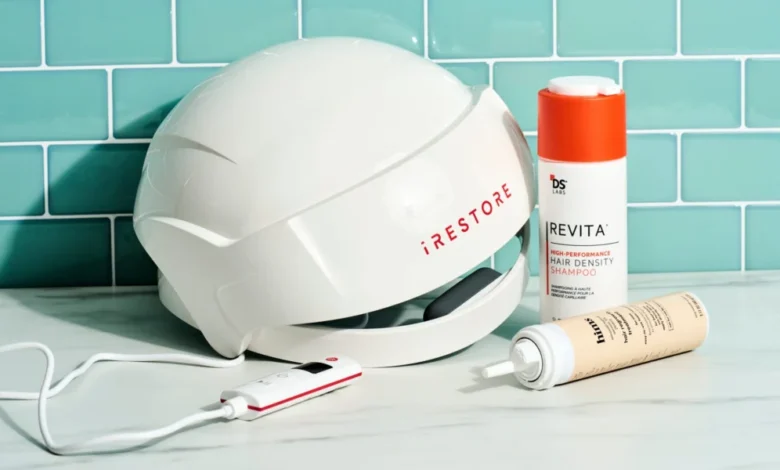
Beyond topicals, the iRestore Laser Therapy Hair Growth System highlights the growing intersection of medical technology and consumer wellness. This device utilizes low-level light therapy (LLLT) to stimulate cellular metabolism within the hair follicles. The science behind LLLT suggests that red light exposure increases ATP (adenosine triphosphate) production, which powers the hair follicle cells, thereby reducing inflammation and encouraging blood flow.

The primary advantage of the helmet system—as opposed to handheld laser combs—is user compliance. The device allows for a “hands-off” approach, requiring 25-minute sessions every other day. Because the process is entirely non-invasive and free from the potential side effects associated with topical chemicals, it serves as a popular adjunct therapy for those already using minoxidil. The market implication of these devices is significant: they represent a long-term investment in hair health, shifting the narrative from a daily chemical chore to a routine maintenance habit.
Maintenance and the Commitment Factor
One of the most vital takeaways from the current landscape of hair loss treatment is the necessity of consistency. Hair loss is a chronic condition; therefore, treatment must be viewed as a lifelong commitment. Research consistently shows that if a user stops using products like minoxidil, any hair that was regrown or maintained as a result of the treatment will typically shed within three to six months as the follicles revert to their genetically programmed miniaturization.

Supporting products, such as the Nutrafol Build-Up Blocker Exfoliating Scalp Mask, play a secondary but crucial role in this ongoing cycle. By using AHA fruit acids to clear oil and residue from the scalp, such products ensure that active treatments can penetrate the skin effectively. Without proper scalp hygiene, the efficacy of even the most potent medication can be compromised by physical barriers on the skin.
Conclusion and Future Outlook
The landscape of men’s hair loss treatment has evolved from a "one-size-fits-all" approach to a nuanced ecosystem of solutions. While clinical evidence remains strongest for minoxidil-based therapies, the integration of scalp-healthy serums, volume-boosting sprays, and light-therapy devices allows for a more personalized strategy.

For men entering this space, the advice from industry experts remains consistent: early intervention is the most effective strategy. As the hair follicle becomes more miniaturized over time, it becomes increasingly difficult to reverse the damage. Whether through a straightforward foam application or a comprehensive routine including exfoliation and laser therapy, the modern approach to hair loss is defined by a commitment to consistency, a focus on scalp health, and a realistic understanding of the biological factors at play. As advancements in biotechnology and dermatology continue to emerge, the options for maintaining density and hair health will only become more refined, offering a higher probability of success for the millions of men managing this common condition.