Journey to the Rock: Navigating Canada’s Eastern Maritime Frontiers and the Resilient Spirit of Newfoundland

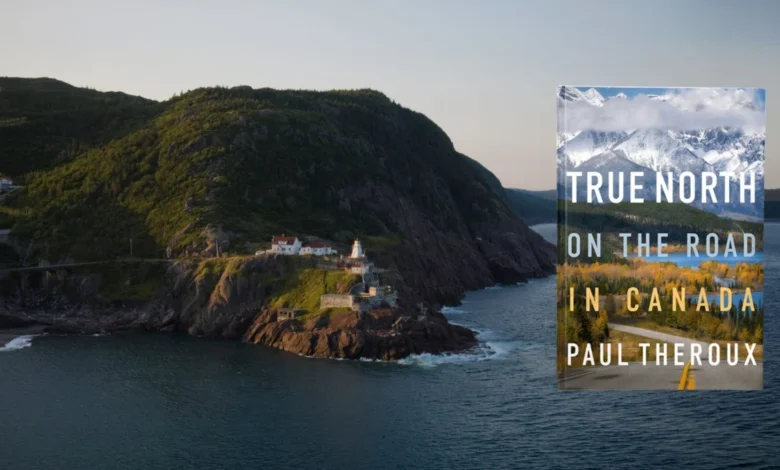
The massive, ten-deck-high car ferry Ala’suinu—whose Mi’kmaw name translates simply to "Traveler"—cuts a steady daily path across the unforgiving 110-mile channel at the mouth of the Saint Lawrence River. Operating between the Marine Atlantic terminal in North Sydney, Nova Scotia, and the southwestern port town of Port-aux-Basques, Newfoundland, this vital marine link braves some of the most volatile coastal waters in North America. For travelers heading eastward, the crossing begins under brooding skies, buffeted by stiff winds and torrential rain, symbolizing the transition from the Canadian mainland to an island defined by distinct geographic isolation and rugged endurance.
Geographic Isolation and Historical Context
For centuries, Newfoundland has occupied a singular place in the North American imagination. Known historically for its rich maritime heritage, dense folklore, eccentric coastal communities, and an economy historically anchored by the cod fishery, the island remains geographically distinct. On a map, Newfoundland appears as a vast, asymmetrical landmass deeply cloven by jagged bays and inlets. Its granite face bears the unmistakable striations, grooves, and gouges left behind by ancient glaciers that scraped across the terrain during the last ice age.
Despite its proximity to the Canadian maritime provinces, the island has maintained a cultural and physical separation that shapes its daily life. While regions like New Brunswick and Nova Scotia enjoy steady streams of continental tourism, Newfoundland often remains a secondary destination for mainland Canadians, many of whom frequently travel further afield to international destinations or southern resorts rather than tackling the demanding maritime journey to the Rock.
The logistical realities of reaching the island contribute to this persistent separation. Travelers driving to the eastern edge of Nova Scotia encounter the gritty, utilitarian backdrop of the North Sydney port infrastructure. Security checks, vehicle staging lanes, and ticket procurement processes demand patience, echoing the bureaucratic hurdles of international travel. Yet, compared to global transit hubs fraught with security risks or infrastructure failures, Canada’s eastern ferry system offers an orderly, albeit lengthy, passage.
The Maritime Transit Experience
Operations at the North Sydney terminal reflect the practical demands of regional commerce. With evening departures often scheduled late into the night—frequently around 11:15 PM—passengers arriving in daylight face hours of waiting. Many travelers utilize local establishments, such as nearby coffee shops, to pass the time before entering the terminal queue.
Once summoned by terminal staff, vehicles navigate the steep ramps into the subterranean cargo decks of the vessel. Unlike luxury cruise liners, the Ala’suinu prioritizes utilitarian transport. The passenger experience for the eight-hour overnight crossing typically involves reclining airline-style seats within large, communal saloons. Accommodating families, pets, and weary travelers, these spaces foster a shared atmosphere of endurance. Passengers wrap themselves in coats against the chill, surrounded by the ambient noise of a diverse manifest that includes long-haul truckers, industrial workers, students, and local residents returning home.
Beneath the passenger decks, the vessel carries the lifeblood of Newfoundland’s economy: heavy-duty commercial freight, construction supplies, and contractor vans. A route map displayed in the upper passenger lounges illustrates the expanse of the Saint Lawrence estuary, highlighting how the island sits at the threshold of the North Atlantic, appearing on nautical charts as if perpetually on the verge of drifting out to open sea.
Upon arrival in the gray light of morning, bilingual announcements prompt passengers to return to their vehicles. Disembarking at Port-aux-Basques marks the formal entry into a province whose modern integration into the Canadian confederation is relatively recent. Having remained a distinct British colony until its historic entry into Canada in 1949, Newfoundland retains cultural memory of British governance, alongside unique linguistic dialects that vary visibly from district to district.
Recovery and Resilience: The Aftermath of Hurricane Fiona
Upon driving off the ferry ramp into Port-aux-Basques, visitors are immediately confronted with the physical reminders of recent environmental trauma. The coastal landscape bears the indelible scars of Hurricane Fiona, which made landfall in September 2022. Meteorological records confirm that Fiona was the most severe tropical storm ever to impact Canadian soil, delivering catastrophic storm surges and hurricane-force winds to the southwestern coast of Newfoundland.
Local infrastructure continues to reflect the magnitude of that event. In Port-aux-Basques alone, the storm destroyed approximately 130 homes, obliterating entire neighborhoods of traditional saltbox houses and white-framed coastal bungalows. Stripped trees and exposed granite headlands mark the perimeter of the hardest-hit zones, where the fury of the Atlantic met the shoreline with unprecedented force.
Despite the scale of the destruction, local civic leaders emphasize a deep-rooted cultural resilience. Cathy Lomond, owner and general manager of the Hotel Port aux Basques, notes that the community’s survival depends on collective action and generational experience with harsh weather systems.
"We’re used to storms," Lomond observes, reflecting on the community’s response to the disaster. "That was a bad one, but we got through it. Port aux Basques has community spirit; we know how to rebuild."
Beyond her role in the hospitality sector, Lomond exemplifies the multifaceted lifestyle characteristic of rural Newfoundland. As an active hunter participating in the province’s regulated big game lottery system, which manages permits for black bears, caribou, and moose, she reflects a culture deeply intertwined with the surrounding wilderness. Traditional regional cuisine mirrors this connection to the land, featuring wild game such as slow-cooked moose meat, a staple praised by historical naturalists like Henry David Thoreau for its rich flavor profile.
Ecological and Cultural Distinction
Newfoundland’s ecological profile further underscores its unique status within Canada. The island’s geographic isolation has limited the introduction of certain mainland fauna. Raccoons, skunks, and porcupines are entirely absent from the local ecosystem, and native snake populations are limited to harmless garter snakes, contrasting sharply with the diverse reptile populations found across the rest of the country. Furthermore, species such as red squirrels were not established on the island until deliberate introductions in the mid-20th century, and native deer populations do not exist on the island.
This biological singularity mirrors the province’s human demographics. Descendants of generations of fishermen, loggers, and merchants have fostered a distinct societal identity characterized by self-reliance, specialized folklore, and tight-knit community structures. While neighboring Atlantic provinces share maritime traditions, Newfoundlanders navigated a distinct historical trajectory marked by profound geographic isolation prior to mid-century confederation.
As infrastructure projects continue to mend the physical damage left by extreme weather events like Hurricane Fiona, the island persists as a distinct cultural and geographical frontier. For the modern traveler willing to brave the nocturnal transit across the Saint Lawrence channel, Newfoundland offers an encounter with a landscape and a population shaped by the unforgiving yet compelling realities of the North Atlantic.
Related posts: