The Ultimate 2026 Smartwatch Gift Guide: Matching the Best Wearables to Every Ecosystem and Lifestyle

Navigating the consumer electronics market to find the ideal smartwatch gift can be a daunting task. With dozens of competing manufacturers, conflicting claims of superiority, and a constant rollout of iterative updates, choosing the right wearable requires looking beyond raw specifications. Unlike smartphones or laptops, smartwatches function primarily as extensions of a user’s existing digital ecosystem. The optimal purchasing decision is inextricably linked to the smartphone brand the recipient already carries, alongside their specific lifestyle demands—whether they are casual fitness enthusiasts, endurance athletes, or individuals seeking seamless daily productivity.
As the technology sector matures in 2026, manufacturers have refined their product stacks to emphasize value and targeted capability rather than sweeping, revolutionary redesigns. For holiday shoppers and gift-givers, this trend yields a distinct advantage: choosing a previous-generation flagship or a well-equipped mid-tier device often provides 90 percent of the performance of a brand-new release at a significantly reduced price point. Below is an exhaustive breakdown of the top smartwatch recommendations for 2026, categorized by ecosystem compatibility and intended user profile.
The Apple Watch Landscape: Balancing Value and Extreme Performance
For iPhone users, the Apple Watch remains the undisputed standard. However, Apple’s broad product architecture—spanning the budget-friendly SE line, the mainstream Series models, and the ultra-rugged Ultra series—demands careful consideration of the recipient’s daily habits.
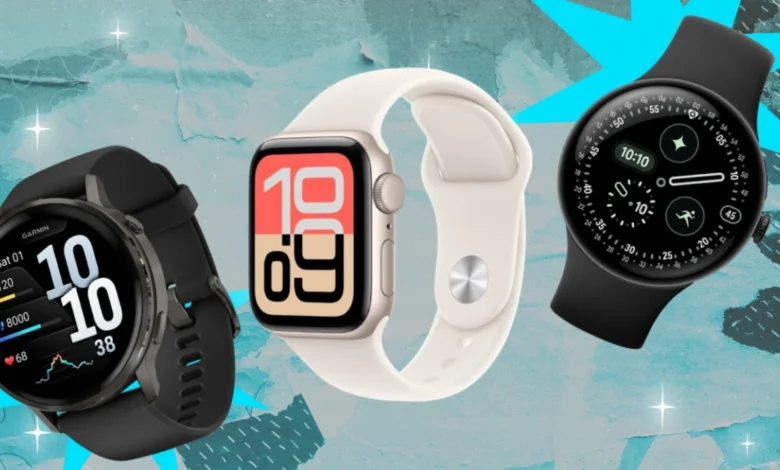
Best Apple Watch Gift for Most People: Apple Watch SE 3
While Apple’s latest flagship releases, such as the Series 12 and Ultra 4, boast cutting-edge silicon and advanced health sensors, the vast majority of consumers do not require bleeding-edge specifications for standard daily tasks. For standard use cases—tracking workouts, monitoring sleep quality, managing notifications, and handling quick voice replies—the Apple Watch SE 3 emerges as the most pragmatic and cost-effective gift choice.
Priced accessibly while maintaining robust build quality, the SE 3 is available in 40mm and 44mm aluminum chassis options. It features a bright Always-On OLED display capable of reaching up to 1,000 nits of peak brightness. Under the hood, it is powered by the S10 processor—only one generation behind Apple’s latest custom silicon. This chip provides more than enough computational overhead to run Apple Intelligence features and advanced Siri integrations introduced in recent iterations of watchOS.
Battery performance remains stable at roughly 18 hours under standard usage, extendable up to 32 hours using Low Power Mode. Fast-charging capabilities allow the device to climb from 0 to 80 percent battery capacity in approximately 45 minutes, delivering roughly eight hours of use from a 15-minute charge.
While the SE 3 omits high-end sensors found on the Series 12 and Ultra 4—such as high-frequency background heart rate tracking, dedicated ECG and hypertension alerts, the Blood Oxygen monitoring application, and specialized depth and water-temperature gauges for diving—these omissions rarely impact the average user. For standard fitness tracking and daily connectivity, the Apple Watch SE 3 offers exceptional value.
Best Apple Watch Gift for Athletes: Apple Watch Ultra 4
For recipients engaged in extreme sports, rigorous endurance training, or demanding outdoor adventures, standard aluminum and lightweight smartwatches often fall short in durability and battery endurance. For these users, Apple’s specialized rugged tier, exemplified by the Apple Watch Ultra 4, is the appropriate choice.
The Ultra 4 builds upon the foundation of its predecessors by incorporating the new S11 processor, an enhanced heart-sensing architecture, and an expanded battery capable of delivering up to 50 hours of continuous runtime under normal conditions. Furthermore, its OLED display scales up to a blinding 3,000 nits of peak brightness, ensuring optimal legibility under direct sunlight.
From a structural and safety perspective, the Ultra 4 features a 100-meter water resistance rating, a certified ocean depth gauge capable of measuring down to 40 meters, built-in cellular connectivity as a standard feature, and advanced safety tools including Emergency SOS, fall detection, and an audible siren. The inclusion of the "Readiness" app helps athletes gauge training intensity and recovery needs, positioning the Ultra 4 as a comprehensive physiological monitoring tool for high-performance training.
Google Pixel Ecosystem: Maximizing Value with the Pixel Watch 4
Android device fragmentation requires buyers to align their smartwatch purchases closely with the specific manufacturer of the recipient’s smartphone. For users deeply embedded in Google’s hardware ecosystem—specifically owners of Google Pixel smartphones—the optimal hardware pairing is Google’s proprietary wearable line.

Best Smartwatch for Pixel Users: Google Pixel Watch 4
Although Google’s product catalog includes newer iterations like the Pixel Watch 5, the Pixel Watch 4 currently represents the superior overall value for gift-givers. The performance delta between the fourth and fifth generations is remarkably narrow, with the newer model offering only incremental upgrades such as a slightly accelerated processor variant and marginally improved GPS tracking accuracy.
The Pixel Watch 4 is offered in 41mm and 45mm configurations, housing a vibrant AMOLED display capable of 3,000 nits peak brightness. Sensor suites include comprehensive heart-rate monitoring, ECG readings, skin temperature tracking, and IP68 dust and water resistance. Powered by the Snapdragon W5 Gen 2 chip paired with 2GB of RAM and 32GB of internal storage, the device delivers robust daily performance. Battery longevity is rated at approximately 30 hours for the smaller model and 40 hours for the larger 45mm variant, supported by rapid charging speeds.
Crucially, the Pixel Watch 4 fully integrates Google’s suite of software tools, including native Gemini AI integration, Google Health Coach, Loss of Pulse Detection, and automated recovery readiness scoring. Because core health analytics are shared across both the Pixel 4 and Pixel 5 generations via software updates, purchasing the Pixel Watch 4 allows consumers to secure high-end Google wearable technology at a more attractive price point.
Samsung Galaxy Ecosystem: The Practical Case for the Galaxy Watch 8
Samsung remains a dominant force in the Android smartphone market. For recipients who rely on a Samsung Galaxy smartphone, utilizing a matching Samsung Galaxy Watch ensures complete compatibility with proprietary health features and seamless notification management.
Best Smartwatch for Samsung Galaxy Users: Galaxy Watch 8
Similar to the pricing and generation dynamics observed in the Google ecosystem, the Samsung Galaxy Watch 8 presents a more compelling financial proposition than its direct successor, the Galaxy Watch 9.
The Galaxy Watch 8 runs on Samsung’s Exynos W1000 processor, coupled with 2GB of RAM and 32GB of storage. Available in standard 40mm and 44mm sizes—alongside a traditional 46mm "Classic" rotating bezel variant—the watch features high-nit AMOLED displays, IP68 environmental sealing, and robust safety suites including emergency SOS and fall detection.
Samsung equips the Galaxy Watch 8 with its flagship wellness platform, featuring comprehensive sleep coaching, sleep apnea detection, Running Coach, stress monitoring, and an aggregated "Energy Score" that calculates physical readiness based on sleep and activity data. While the device supports Google Gemini for general assistant tasks, it functions at peak efficiency when paired natively with a Samsung Galaxy smartphone, making it the definitive choice for loyal brand users.
Dedicated Fitness Dominance: Garmin Venu 4
While mainstream technology giants like Apple, Google, and Samsung offer robust wellness tracking, their primary focus remains general-purpose smart-connectivity. For dedicated runners, triathletes, and fitness enthusiasts who prioritize physiological data accuracy and multi-day battery life above all else, traditional tech brands often take a back seat to specialized fitness manufacturers like Garmin.
Best Android Smartwatch for Fitness: Garmin Venu 4
Garmin’s hardware philosophy centers on maximizing battery longevity and providing deep, granular sports analytics. While high-end smartwatches from competitors struggle to exceed two days of continuous use, the Garmin Venu 4 delivers up to four days of battery life with the Always-On OLED display enabled, and up to 12 days of operation when the Always-On feature is disabled.
Available in 41mm and 45mm sizes, the Venu 4 is packed with professional-grade sensors. Its continuous heart-rate monitor polls data every second, accompanied by advanced sleep coaching, nap detection, automated daily workout suggestions, and specific training programs for running, cycling, and strength training. Metrics such as heart rate zones, estimated caloric burn, recovery time calculations, and VO2 max tracking provide athletes with actionable data to optimize their physical conditioning.
Platform compatibility is broad, supporting both Android and iOS. However, ecosystem limitations apply: while Android users can respond directly to text messages and view image notifications from the wrist, iOS restrictions prevent iPhone users from utilizing direct messaging functionalities on the Venu 4. Nevertheless, both user bases benefit immensely from Garmin’s unmatched athletic tracking architecture and battery performance, cementing its status as a premier gift for fitness-minded individuals in 2026.