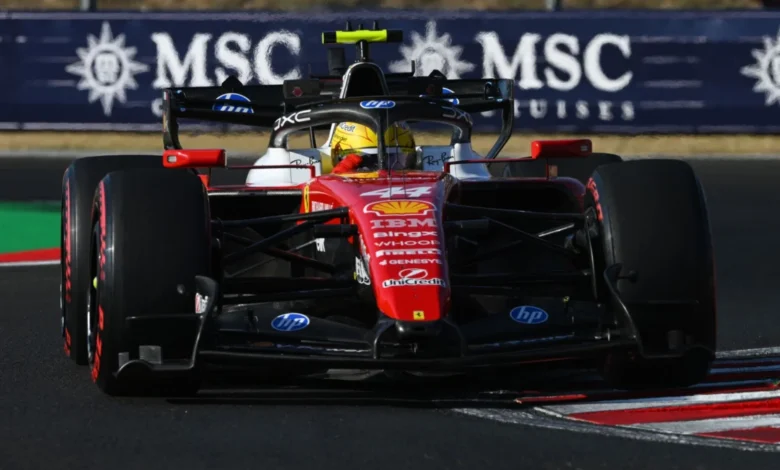
Saturday 25 July 2026 11:19, UK – The paddock at the Hungaroring is buzzing with anticipation as Saturday dawns on the penultimate weekend of the Formula 1 season. Today marks a crucial juncture in the 2026 championship battle, with qualifying sessions set to define the starting grid for Sunday’s Hungarian Grand Prix. Fans worldwide can follow all the live updates, qualifying analysis, and the best video highlights exclusively on Sky Sports F1. The tight confines of the Hungaroring, often dubbed "Monaco without the walls," present a unique challenge for drivers and teams, demanding precision, strategic brilliance, and unwavering concentration. With championship contenders poised to go head-to-head, the stakes are exceptionally high.
Qualifying Showdown: Setting the Stage for Sunday’s Race
The primary focus of Saturday’s proceedings is the all-important qualifying session. This is where drivers will battle for track position, aiming to secure the highest possible starting grid slot for the main Grand Prix. The Hungaroring, with its demanding sequence of corners and limited overtaking opportunities, notoriously rewards those who can nail their qualifying laps. A strong performance here can significantly influence the outcome of Sunday’s race, potentially dictating race strategy and the ability to defend or attack.
Key Considerations for Qualifying:
- Tyre Strategy: Pirelli’s tyre compounds for the Hungarian Grand Prix are typically the hardest in their range, reflecting the abrasive nature of the tarmac and the high temperatures often experienced in Budapest. Teams will be meticulously analysing tyre degradation data from Friday practice sessions to inform their qualifying strategies. The choice of tyres for Q1, Q2, and Q3 can be critical, with teams aiming to find the optimal balance between peak performance and tyre preservation for the race.
- Track Evolution: The Hungaroring is known for its significant track evolution throughout a Grand Prix weekend. As more rubber is laid down, grip levels generally increase, leading to faster lap times. Drivers who can adapt to these changes and exploit the improving conditions will gain a significant advantage. This also means that the times set in the early stages of qualifying might not be representative of the final pole position.
- Driver Skill: The Hungaroring’s technical layout, with its undulating straights and tight, twisty corners, is a true test of driver skill. Corners like Turn 1, the rapid Turn 4, and the challenging sequence through Turns 11, 12, and 13 demand immense precision and commitment. A single mistake can cost valuable tenths of a second, or even lead to a crash, ending a driver’s qualifying hopes prematurely.
- Engine Performance: While aerodynamic efficiency is paramount at the Hungaroring, engine power still plays a role, particularly on the short straights. Teams with superior power units will be looking to leverage this advantage to gain crucial metres and defend their positions.
Background and Context: The Hungarian Grand Prix’s Significance
The Hungarian Grand Prix, held annually at the Hungaroring circuit near Mogyoród, has been a staple of the Formula 1 calendar since 1986. Nestled in a valley, the circuit offers a unique amphitheatre-like setting for spectators, though its compact nature can make it challenging for overtaking. Despite this, the race has often delivered thrilling encounters and has been a crucial turning point in several championship battles over the years.
Historical Significance:
- First Eastern Bloc Grand Prix: The 1986 Hungarian Grand Prix marked a historic moment as the first Formula 1 race to be held behind the Iron Curtain. Its inclusion on the calendar was a significant geopolitical event, reflecting the changing landscape of the late 1980s.
- Classic Battles: The Hungaroring has witnessed some legendary duels, most notably Ayrton Senna and Nigel Mansell’s epic battle for victory in 1988, a testament to the circuit’s ability to produce close racing. More recently, the track has been the stage for decisive championship moments, with drivers often needing to overcome significant challenges to secure victory.
- Championship Deciders: The relatively short lap length and the difficulty of overtaking mean that qualifying performance is often amplified. This has led to races where pole position has been a significant factor in determining the championship outcome.
The 2026 Championship Landscape
As of Saturday, July 25th, 2026, the 2026 Formula 1 World Championship is reaching its climax. With only a few races remaining, the points standings are incredibly tight, and every session carries immense weight. The performance of the leading teams and drivers in qualifying today will have a direct impact on the championship narrative heading into the final races.
Potential Championship Scenarios:
- Front-runner Dominance: If a particular driver or team has established a significant points lead, Saturday’s qualifying could see them employing a more conservative strategy, focusing on securing a strong grid position without taking excessive risks.
- Close Battles: Conversely, if the championship is a close-run affair, Saturday will be an all-out war. Drivers will be pushing the limits of their machinery and their own capabilities to gain any advantage, however small, for Sunday’s race. This could lead to daring overtakes on track during qualifying and a fierce battle for pole position.
- Team Orders and Strategy: With championship implications at play, team orders could become a factor, even in qualifying. Teams might strategically position their drivers to maximize their championship points haul, potentially sacrificing one driver’s optimal grid slot for the benefit of another.
Live Updates from the Hungaroring: Saturday’s Action Unfolds
The live blog, powered by Live center, will provide real-time updates throughout Saturday’s crucial sessions. This includes practice session reports, qualifying analysis, driver interviews, and behind-the-scenes insights from the Sky Sports F1 commentary team.
Key Moments to Watch:
- FP3 Session: The final free practice session (FP3) is vital for teams to fine-tune their car setups and simulate qualifying runs. Observing which drivers and teams show strong pace here can offer valuable clues about potential qualifying contenders.
- Qualifying Session 1 (Q1): The initial phase of qualifying often sees a large performance spread. Drivers at the bottom of the order will be fighting desperately to avoid elimination, while the front-runners will be looking to set clean laps and conserve tyres.
- Qualifying Session 2 (Q2): This session intensifies the competition, with the field narrowing down. Drivers who made it through Q1 will be aiming to secure their place in the top 10 shootout, while those on the bubble will be pushing harder than ever.
- Qualifying Session 3 (Q3): The climax of Saturday’s action, where the fastest 10 drivers will battle for pole position. This is where the true gladiators of Formula 1 showcase their ultimate pace and nerve.
Expert Analysis and Predictions
Sky Sports F1’s renowned team of experts will be on hand to provide in-depth analysis of the qualifying performances. Expect insights into car performance, driver technique, strategic decisions, and the potential implications for Sunday’s race. Their commentary will enrich the viewing experience, offering a deeper understanding of the intricate world of Formula 1.
Areas of Focus for Analysis:
- Aerodynamic Efficiency: How teams have optimized their aerodynamic packages for the Hungaroring’s unique demands.
- Engine Power and Deployment: The role of hybrid systems and engine performance in extracting maximum lap time.
- Driver Performance: Individual driver strengths and weaknesses on this specific circuit.
- Tyre Management: Strategies employed for qualifying laps and implications for race tyre wear.
- Team Strategies: How teams are balancing immediate qualifying success with long-term race strategy and championship goals.
Video Highlights and Fan Engagement
Beyond the live updates, Sky Sports F1 will be showcasing the most exciting moments of Saturday’s action through a curated selection of video highlights. This will include spectacular laps, crucial overtakes (if any occur during qualifying), and the raw emotion of the drivers and teams as they navigate the pressures of a qualifying session. Fans are encouraged to engage with the coverage, with opportunities for interactive polls and discussions on social media platforms.
The Road to Sunday: Implications of Saturday’s Results
The outcome of Saturday’s qualifying session will have profound implications for the Hungarian Grand Prix. A pole position at the Hungaroring is a significant advantage, but it is by no means a guarantee of victory. The race strategy, tyre management, and the ability of drivers to maintain focus under pressure will all play a crucial role in determining the final podium.
Fact-Based Analysis:
- Overtaking Challenges: The Hungaroring’s narrow nature means that starting further down the grid can be a significant handicap. Drivers starting in the top five often have a much higher probability of finishing in the points.
- Tyre Degradation: The abrasive track surface and high ambient temperatures can lead to substantial tyre wear. Teams that can manage their tyres effectively throughout the race will gain a considerable advantage.
- Safety Car Impact: As with most Formula 1 races, the deployment of a Safety Car can dramatically alter the race dynamics. Teams will have contingency plans in place to react to such events, potentially benefiting those who are strategically positioned.
- Championship Impact: For the championship contenders, Saturday’s qualifying is not just about securing a good grid slot; it’s about maximizing their points potential for the weekend. A strong qualifying performance can build momentum and psychological advantage heading into the final races of the season.
As the day progresses, the tension at the Hungaroring will undoubtedly escalate. Fans are urged to stay tuned to Sky Sports F1 for comprehensive coverage, expert analysis, and all the thrilling action from this pivotal Saturday at the Hungarian Grand Prix. The stage is set for a captivating display of motorsport excellence, with the championship battle reaching its critical phase.