A Vision of Contemporary Heritage in the Heart of Rome Ludovica Malago and Gaia Rebecchini Restore a Historic 1927 Atelier in Prati

The Eternal City is currently experiencing a quiet but profound cultural shift, as a new generation of creative professionals seeks to reconcile Rome’s monumental history with the demands of modern aesthetics and functionality. At the forefront of this movement is Ludovica Malagò, a Roman designer who, alongside her partner Gaia Rebecchini at Studio Malià, has recently completed the comprehensive restoration of a historic apartment in the Prati neighborhood. This project, which serves as both a residential space and a testament to the city’s enduring artistic legacy, offers a sophisticated blueprint for how 20th-century architectural heritage can be revitalized through contemporary design.

Located within a building affectionately dubbed the "artists’ condominium" by local residents, the apartment carries a pedigree that dates back to 1927. It was originally conceptualized by the renowned architect Mario De Renzi, a figure synonymous with the evolution of Roman urbanism during the interwar period. For decades, the space functioned as a high-profile atelier, serving as the professional home of esteemed Italian architect Cesare Rovatti. Its halls were once a frequent meeting point for the city’s painters and sculptors, creating an atmosphere of creative ferment that Malagò and Rebecchini were determined to preserve and amplify.

Historical Provenance and the Artists Condominium
The Prati district, where the apartment is situated, is one of Rome’s most distinctive neighborhoods. Developed in the late 19th and early 20th centuries, it is characterized by its wide, regular boulevards and high-end residential architecture that stands in contrast to the winding, medieval streets of the historic center. The building itself is a prime example of the eclectic and sophisticated style of the late 1920s, featuring a façade embellished with elegant rustication, classical frescoes, and expansive stained-glass windows that reflect the era’s transition toward modernism.

When Studio Malià first encountered the property in January 2023, it had been effectively abandoned for several years. Despite its dilapidated state, the intrinsic character of the atelier remained palpable. "It left us speechless, even though it had been technically abandoned for years," Gaia Rebecchini recalls. The acquisition process was as much about architectural stewardship as it was a real estate transaction. Cesare Rovatti, the previous owner, reportedly agreed to sell the property only after reviewing Malagò and Rebecchini’s detailed vision for its transformation. The designers committed to restoring the space to its original purpose: a sanctuary for artistic creativity.

A Chronology of Restoration and Discovery
The restoration process, which began in early 2023, was characterized by a meticulous "uncovering" of the home’s original features. As the design team stripped away layers of previous, less sympathetic renovations, they discovered a wealth of hidden historical details. Among the most significant finds were floral wall moldings that had been concealed behind layers of dated wallpaper for decades. The team also restored a hidden spiral staircase that leads to a secluded loft and study area, reinforcing the verticality and complexity of the original layout.

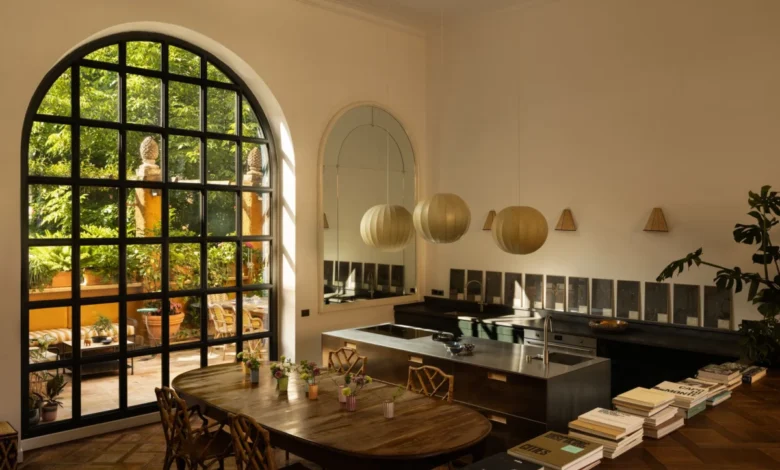
One of the most technically demanding aspects of the renovation involved the windows. To honor the building’s 1927 design, Rebecchini and Malagò consulted the historical archives of the City of Rome. They used original blueprints to commission new iron-paned windows that replicated the aesthetic of De Renzi’s initial vision. These windows now serve as a primary architectural feature, framing views of the Prati neighborhood and flooding the interior with the soft, golden light for which Rome is famous.

Architectural Innovations and Spatial Fluidity
The apartment spans two levels, with a layout that balances public entertaining areas with intimate private quarters. The lower floor adheres to a more traditional Roman residential structure, while the upper floor provides a sense of sanctuary. The heart of the home is a vast, open-plan space that integrates the kitchen and living room, though the two functions are physically separated by a subtle change in elevation.

The living area is situated on a platform raised a few feet higher than the kitchen. This split-level design creates a natural hierarchy of space without the need for restrictive walls. The living room is anchored by a vintage French wooden chest of drawers, above which hangs a striking photograph by Massimo Vitali depicting the Scala dei Turchi in Sicily. The furniture selection reflects a deep appreciation for mid-century modernism, including a pair of 1960s SZ01 armchairs in iron and straw designed by Martin Visser, which face a bespoke sofa upholstered in neutral, calming tones.

In the kitchen, the aesthetic shifts toward a more industrial and functionalist sensibility. A stainless-steel island by Boffi stands as a centerpiece of modern engineering, contrasted against a 19th-century Piedmontese wooden dining table. Lighting plays a crucial role in defining the space, with three vintage spheres designed by Achille Castiglioni hanging from the ceiling like a planetary alignment, and an Uchiwa wall sconce by Ingo Maurer providing sculptural illumination.

The Palette of Prati: Color and Materiality
A defining characteristic of Studio Malià’s work is the bold and unapologetic use of color. This is perhaps most evident in the apartment’s entryway, which the designers transformed from a dark, enclosed corridor into a vibrant "celebration of joy." To counteract the lack of natural light in the vestibule, Malagò installed a custom sunburst mosaic floor featuring twelve distinct colors arranged in a pinwheel pattern.

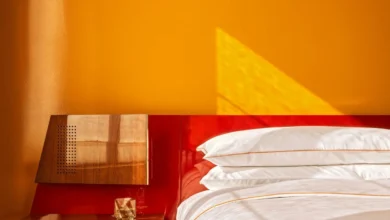
This chromatic bravery continues throughout the home. A long corridor features a dramatic red ceiling, while the hallway leading to the bedrooms is finished with grape-colored carpeting and a mirrored ceiling to create an immersive, iridescent effect. "The entryway used to be dark, wedged between load-bearing walls," Malagò explains. "It needed more light—we chose to brighten the space with colors."

The materiality of the project is a blend of high-tech modernism and traditional craftsmanship. The designers collaborated extensively with local carpenters, blacksmiths, and stoneworkers to create custom pieces that respond specifically to the apartment’s dimensions. Materials like straw, raffia, and bamboo—traditionally associated with Mediterranean vernacular design—are used alongside cold-rolled steel and Murano glass. This juxtaposition is best seen in the en suite bathroom, where green cement tiles by Emery & Cie with botanical motifs are paired with a custom cabinet made of bamboo and raffia.

The Terrace: An Urban Oasis
Extending from the kitchen through a large iron-and-glass arched window is a lush terrace that functions as an outdoor living room. The landscaping was meticulously planned to integrate the apartment into Rome’s urban fabric while providing a sense of seclusion. The terrace features a diverse array of flora, including climbing plants, Japanese maples, and various tropical species housed in an eclectic collection of pots.

The outdoor furnishings include pieces by Unopiù, upholstered in high-performance fabrics from Loro Piana and Rubelli. The dining area on the terrace is outfitted with rattan chairs from Maison Drucker, the oldest artisanal manufacturer of such furniture in France. This "green oasis" serves to bridge the gap between the interior’s historical motifs and the natural world, reinforcing the theme of the home as a "magical pastoral world" in the center of the city.

Broader Implications for Roman Design and Preservation
The completion of the Studio Malià project comes at a time when Rome is grappling with its identity as a living city versus a museum. The "artists’ condominium" restoration suggests that preservation does not require a static adherence to the past. Instead, it demonstrates that historical spaces can be "refreshed" with a contemporary spirit that respects original architectural intent while introducing modern comfort and bold artistic expression.

By reusing discarded antiques and integrating them with state-of-the-art kitchen systems and custom art installations—including triptychs by Eliseo Mattiacci and Japanese-inspired paintings by Malagò herself—the designers have created a space that feels both timeless and current. This project reinforces the idea that Rome’s creative future lies in the hands of those who can read its history and translate it for a new generation.

The restoration of this Prati atelier stands as a significant contribution to the city’s architectural landscape. It proves that even after decades of abandonment, Rome’s historic spaces possess a resilience and a capacity for reinvention that continues to attract and inspire the world’s most talented designers. Through the vision of Ludovica Malagò and Gaia Rebecchini, the "artists’ condominium" has once again become a beacon of creativity, ensuring that the legacy of Mario De Renzi and the spirit of the Roman atelier live on in the 21st century.