Bruno Guimaraes seals crucial Arsenal victory at Sunderland to move top of the Premier League table

The landscape of the Premier League title race shifted decisively on Saturday as Arsenal secured a hard-fought 2-0 victory over Sunderland at the Stadium of Light. In a match defined by a whirlwind 121-second sequence that swung the momentum from a potential home lead to an Arsenal breakthrough, Mikel Arteta’s side demonstrated the clinical resilience of genuine title contenders. With this result, the Gunners move three points clear of Manchester City at the summit of the league table, applying immediate pressure on the reigning champions ahead of their high-stakes Manchester derby on Sunday.
The fixture, marked by high intensity and tactical friction, saw Arsenal extend their winning streak to four consecutive league matches and six across all competitions. While the scoreline suggests a comfortable outing, the reality on the pitch was far more volatile, featuring a pivotal penalty save from David Raya, a stunning debut goal from Bruno Guimaraes, and a heated post-match confrontation regarding officiating standards from the Arsenal manager.
A Tale of Two Minutes: The Turning Point
The contest remained deadlocked for much of the opening hour, with both sides struggling to break down disciplined defensive structures. Sunderland, buoyed by a vociferous home crowd, found their opening in the second half when refereeing officials identified a foul by Arsenal defender Ezri Konsa. The defender was penalized for holding Dan Ballard during a set-piece delivery, resulting in a penalty kick for the Black Cats.
The atmosphere reached a fever pitch as Enzo Le Fee stepped up to the spot. However, David Raya—who has become a cornerstone of Arsenal’s defensive stability—produced a world-class save, diving low to tip the ball onto the post. The psychological blow to the hosts was immediate, but the physical consequence followed with devastating speed.
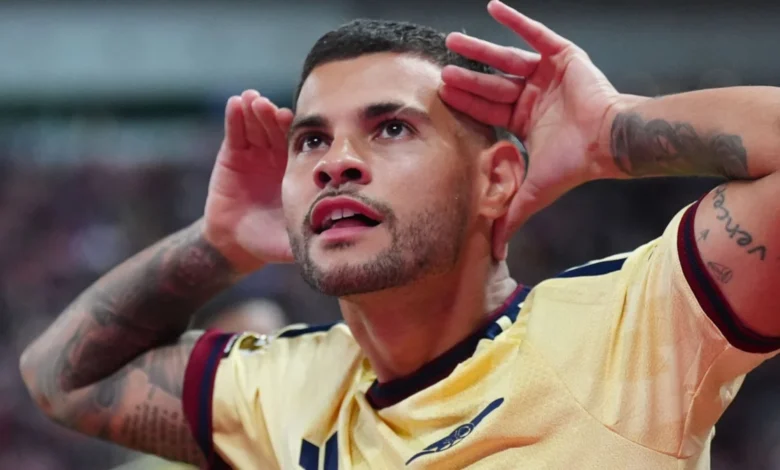
Just 121 seconds after the reprieve, Bruno Guimaraes silenced the hostile Sunderland supporters. The Brazilian midfielder, whose history with Newcastle United made him a focal point for the home crowd’s derision, silenced the jeers with a strike of immense quality. Receiving the ball outside the penalty area, Guimaraes unleashed a powerful, curling effort that rattled the underside of the crossbar before nestling into the net. It marked his first goal for the North London club, an arrival moment that underscored his tactical importance to Arteta’s system.
Defensive Fortitude and the Closing Stages
Following the opening goal, Sunderland launched a spirited response, testing Arsenal’s defensive resolve. The Gunners were forced to absorb significant pressure, with Nordi Mukiele forcing another sharp save from Raya as the home side sought an equalizer.
As the clock ticked into stoppage time, the game’s physical intensity boiled over. Bukayo Saka, a persistent threat throughout the afternoon, exploited space on the counter-attack, forcing Reinildo Mandava into a desperate foul. The challenge resulted in Mandava receiving a second yellow card and his subsequent dismissal. Saka duly converted the resulting penalty, putting the game beyond reach and securing the three points for the visitors.
Analytical Overview: The Statistical Context
Arsenal’s rise to the top of the table is built upon a foundation of defensive efficiency and a ruthless ability to convert high-leverage moments. With this victory, the Gunners have now kept clean sheets in four of their last six matches, a statistic that highlights the improved communication between Raya and his backline.
The significance of the result is magnified by the current league standing. By moving three points ahead of Manchester City, Arsenal has effectively shifted the narrative burden onto the Etihad Stadium. Should Manchester United secure a positive result against City on Sunday, the gap at the top will remain, but the momentum currently resides firmly with the red half of North London.
For Sunderland, the defeat leaves them stalled on four points. While the performance against the league leaders will provide manager and fans with encouragement regarding their tactical execution, the lack of clinical finishing—exemplified by the missed penalty—remains an area of concern that must be addressed to climb the table.
Post-Match Reaction: Tensions and Triumphs
The aftermath of the match was characterized by a distinct contrast in tone between the players and the management. Bruno Guimaraes, speaking to TNT Sports, expressed a sense of catharsis regarding his move to London. "It’s unbelievable. I feel very good," the midfielder remarked. "Everyone knows I had a difficult start with injuries in a short time, but I’m glad to be back. I had an amazing history at Newcastle, but now I’m trying to create a new history here, and I’ve started in the right way."
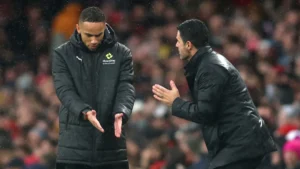
Conversely, Mikel Arteta was visibly agitated during his post-match press conference, directing his frustration toward the officiating decision that awarded Sunderland their second-half penalty. "It’s a huge win, but it could have been something very different," Arteta stated. "I’m so upset. It’s unacceptable. This can change the course of a season, the championship, and it’s not acceptable."
Arteta went on to characterize the incident involving Konsa and Ballard as a "judo move" rather than a legitimate foul, emphasizing that he had reviewed the footage multiple times. His comments reflect the ongoing pressure on Premier League managers to navigate the complexities of VAR and refereeing consistency, an issue that continues to dominate discussions surrounding the sport’s integrity.
Looking Ahead: The Road to the Title
As the Premier League season approaches its midway point, the implications of this result are far-reaching. Arsenal’s ability to win matches in which they are not necessarily the dominant side for 90 minutes suggests a level of maturity that was arguably lacking in previous campaigns. The team has shown an aptitude for weathering storms, executing set-piece defense, and relying on individual brilliance to break deadlocks.
For Sunderland, the focus now shifts to the bottom-table scrap. The team has demonstrated that they can compete with elite opposition, but the transition from competitive performance to consistent points accumulation remains the primary objective for the coming weeks.
As for Arsenal, the focus turns to the midweek fixture list. The squad will likely rotate to manage the heavy workload associated with concurrent European and domestic commitments. However, with the squad currently functioning with high levels of cohesion, Arteta will be pleased to have his primary creative outlets—including the increasingly clinical Saka and the revitalized Guimaraes—firing on all cylinders.
The victory at the Stadium of Light will be remembered as a character-defining win for Arsenal. By successfully navigating a hostile environment and overcoming a contentious officiating decision, they have sent a clear signal to their title rivals that they are prepared for the rigors of a long, arduous season. Whether they can maintain this trajectory will be the defining story of the winter months, but for now, the league table reflects a team in form and in control of its own destiny.
Related posts: