The Evolution of the Chevrolet Corvette ZR1: Tracing the Most Powerful Badge in American Automotive History from 1970 to the Present Day

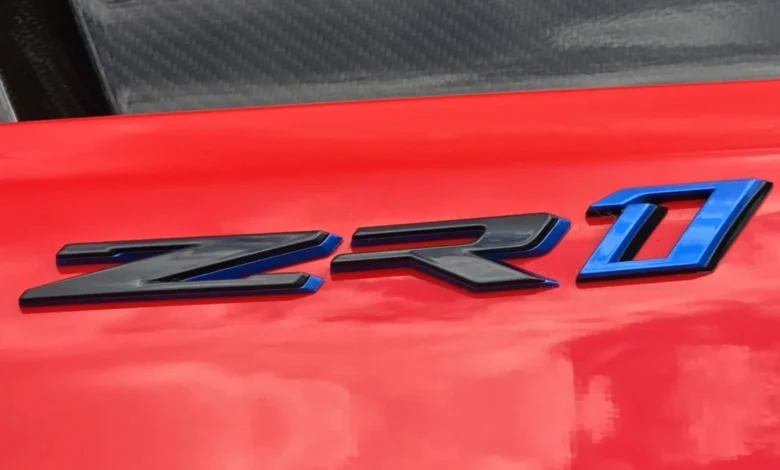
Few insignia in the pantheon of American high-performance automobiles carry the historical weight or evoke the immediate reverence of the Chevrolet Corvette ZR1. Spanning five distinct generations over more than half a century, the ZR1 designation has consistently served as the technological vanguard for America’s quintessential sports car. From its modest, homologation-special roots in the early 1970s to the staggering, 1,064-horsepower twin-turbocharged marvel of the current mid-engine era, the ZR1 has continuously redefined the boundaries of factory performance, aerodynamics, and powertrain engineering.
To examine the lineage of the ZR1 is to trace the evolution of the American performance car itself. While the badge has been applied sparingly—skipping entire generations such as the C5—each successive iteration has raised the performance benchmark, often encroaching upon the territory of exotic European supercars costing three to four times as much. Whether spelled with a hyphen as a nod to its fourth-generation nomenclature or without, the ZR1 designation remains a universal symbol of uncompromised speed.
The Genesis: The C3 ZR1 and the Dawn of a Legacy (1970–1972)
The ZR1 story began in 1970 as a specialized, low-volume regular production option (RPO) designed for racing enthusiasts and homologation purposes. Offered exclusively through the 1972 model year, the original C3 ZR1 was a purist’s machine built for the track rather than the boulevard. Chevrolet produced a mere 53 units across its three-year run, making genuine C3 ZR1s among the rarest and most coveted collectibles in Corvette history.
Every C3 ZR1 was equipped with the legendary 350-cubic-inch (5.7-liter) LT-1 small-block V8 engine, featuring solid lifters, a high-performance aluminum intake manifold, and a Holley four-barrel carburetor. Power was routed exclusively through a heavy-duty Muncie M22 "Rock Crusher" four-speed manual transmission. True to its competition-oriented pedigree, the ZR1 package omitted comfort and convenience features entirely. Buyers could not order a radio, power steering, or air conditioning; instead, the money went toward heavy-duty suspension components, upgraded brakes, a specialized aluminum radiator, and a transistorized ignition system.
Evaluating the power output of the C3 ZR1 requires historical context regarding how horsepower was measured during the era. In 1970, the LT-1 was officially rated at 370 horsepower using the SAE gross standard, a testing method that evaluated bare engines on an engine dyno without accessories like alternators, water pumps, or restrictive exhaust systems. By 1971, tightening emissions regulations and a drop in compression ratio from 11.0:1 to 9.0:1 reduced the gross rating to 330 horsepower. For the final year of the C3 ZR1 in 1972, the industry transitioned to the SAE net rating system—the modern standard that measures power with all accessories and factory exhaust systems installed. Consequently, the exact same engine was officially rated at just 255 horsepower. While the paper figures suggested a catastrophic loss of power, the real-world performance delta between the 1971 and 1972 models was negligible, yet the confusion cemented the C3 ZR1 as a fascinating anomaly of Detroit’s horsepower-era twilight.
The Technological Leap: The C4 ZR-1 and the Lotus Connection (1990–1995)
Following the discontinuation of the C3 configuration, the ZR1 badge vanished for nearly two decades. It returned with a vengeance for the 1990 model year, uniquely punctuated by a hyphen as the C4 ZR-1. This iteration marked a radical departure from its predecessor, transforming from a stripped-down track special into a sophisticated, highly engineered technological showcase that many automotive historians regard as America’s first true modern supercar.
General Motors spared no expense in developing the C4 ZR-1, colloquially known within enthusiast circles as the "King of the Hill." At its heart was the aluminum 5.7-liter dual-overhead-cam (DOHC) LT5 V8 engine. Designed in collaboration with British engineering firm Lotus and hand-assembled by marine engine manufacturer Mercury Marine in Stillwater, Oklahoma, the LT5 featured 32 valves, four camshafts, and a unique dual-stage intake manifold that manipulated runner lengths to optimize low-end torque and high-rpm breathing. Paired exclusively to a ZF six-speed manual transmission, the initial 1990–1992 models produced 375 horsepower, though contemporary road tests frequently suggested the engine was under-rated from the factory.
The C4 ZR-1 was visually distinguished from the base Corvette by a significantly wider rear fascia, a convex rear bumper, and wider 35-millimeter rear tires, a styling cue that would become a signature of future high-performance Corvettes. Performance figures were staggering for the era, enabling the ZR-1 to accelerate from zero to 60 mph in under five seconds and achieve a top speed approaching 180 mph—comfortably outperforming many European exotics twice its price.
In 1993, Chevrolet implemented a series of engine refinements, including ported and polished cylinder heads, updated valvetrain components, and four-bolt main bearing caps, which elevated output to 405 horsepower. This rating remained unchanged through the end of the C4 ZR-1’s production run in 1995. Following this, the ZR1 nameplate entered another extended hiatus, with General Motors notably omitting the high-performance trim from the subsequent C5 generation as engineers focused on developing the standard architecture and the high-performance Z06 variant.
Forced Induction and the "Blue Devil": The C6 ZR1 Era (2009–2013)
When the ZR1 badge returned for the 2009 model year on the C6 generation, it dropped the hyphen and introduced a monumental engineering shift: forced induction. Built around an all-aluminum chassis derived from the Corvette racing program, the C6 ZR1 was engineered to dominate both the drag strip and the road course.
Beneath its carbon-fiber hood—which featured a distinctive polycarbonate window allowing onlookers to view the Eaton twin-roots supercharger nestled inside—lay a hand-built 6.2-liter LS9 V8 engine. Bolstered by forced induction and an integrated intercooler, the LS9 pumped out a phenomenal 638 horsepower and 604 lb-ft of torque. Power was channeled through a rear-mounted six-speed manual transaxle, as automatic transmissions were deemed incapable of handling the immense torque output at the time.
Coded internally during its development as the "Blue Devil," the C6 ZR1 utilized an aggressive aerodynamic package, carbon-ceramic brake rotors borrowed from aerospace applications, and Magnetic Selective Ride Control. These technologies propelled the car from zero to 60 mph in just 3.4 seconds and enabled a top speed in excess of 200 mph during period testing by automotive publications like Car and Driver. With a production run of fewer than 5,000 units over four years, the C6 ZR1 bridged the gap between traditional muscle cars and hyper-exclusive European machinery, establishing a new paradigm for American performance value.
Pushing the Front-Engine Limit: The C7 ZR1 (2019)
Offered exclusively for the 2019 model year, the C7 ZR1 represented the absolute zenith of the traditional front-engine, rear-wheel-drive Corvette layout before Chevrolet pivoted to a mid-engine architecture. Engineers took the foundational architecture of the Z06 and pushed it to its absolute structural and thermal limits.
Under the C7 ZR1’s hood sat a supercharged 6.2-liter LT5 V8 engine—sharing a designation with the C4 engine but carrying entirely different architecture—fed by a massive 2.6-liter Eaton supercharger. The resulting output reached an astonishing 755 horsepower and 715 lb-ft of torque, representing a 117-horsepower increase over the preceding C6 ZR1. Cooling was managed by an intricate network of 13 radiators and heat exchangers, addressing thermal management challenges that had affected earlier high-output forced-induction Corvettes.
For buyers seeking maximum circuit performance, the optional ZTK Performance Package added a massive, adjustable high-output rear wing, carbon-fiber front splitter end caps, stiffer springs, and Michelin Pilot Sport Cup 2 tires. Together, these aerodynamic enhancements generated up to 950 pounds of downforce. In testing conducted by Motor Trend, the C7 ZR1 sprinted from zero to 60 mph in 2.85 seconds when equipped with the optional eight-speed automatic transmission, on its way to a claimed top speed of 212 mph. It was a thunderous, uncompromised finale for the front-engine Corvette era.
The Mid-Engine Revolution: The C8 ZR1 (2025–Present)
The introduction of the C8 generation Corvette brought a radical architectural shift to a mid-engine layout, fundamentally altering the performance envelope of America’s sports car. When Chevrolet pulled the covers off the C8 ZR1, the automotive world was left reeling by its specifications, which effectively rendered every previous generation of the badge a historical stepping stone.
At the core of the C8 ZR1 is the LT7, a newly developed 5.5-liter flat-plane crank V8 featuring twin turbochargers. Borrowing heavily from motorsport engineering, the flat-plane crankshaft allows the engine to rev with exceptional freedom, producing an earth-shattering 1,064 horsepower and 828 lb-ft of torque. This makes the LT7 the most powerful factory V8 engine ever produced by an American automotive manufacturer.
The performance metrics defy conventional logic. Independent track testing, including Car and Driver’s rigorous annual Lightning Lap competition, demonstrated that the C8 ZR1 was capable of posting lap times that defeated dedicated track hypercars, besting elite machinery like the McLaren Senna. Equipped with extensive aerodynamic elements—including aggressive front tunneling, a massive rear wing, and underbody diffusers—the C8 ZR1 generates up to 1,200 pounds of downforce at high speeds, eclipsing any production Corvette in history.
Acceleration from zero to 60 mph occurs in approximately 2.5 seconds, while the car’s top speed reaches an estimated 230 mph. Crucially, the horsepower delta between a base C8 Stingray and the ZR1 sits at an unprecedented 117 percent, illustrating the vast technological gulf that Chevrolet has engineered into its modern flagship.
Broader Impact and Industry Implications
The continuous evolution of the Corvette ZR1 reflects a broader shift within the global automotive industry, proving that American manufacturers can compete directly with—and frequently outperform—legacy European supercar manufacturers at a fraction of the cost. By successfully transitioning the platform from a rudimentary homologation special into a sophisticated, twin-turbocharged mid-engine titan, General Motors has redefined consumer expectations regarding supercar performance, accessibility, and engineering pedigree. As the automotive landscape steers increasingly toward electrification, the C8 ZR1 stands as a monumental internal-combustion achievement, cementing the ZR1 badge as one of the most enduring and formidable legacies in automotive history.