Luca Guadagnino and Stefano Baisi Unveil Expansive Zara Home Collection Bridging Cinematic Vision and Interior Design

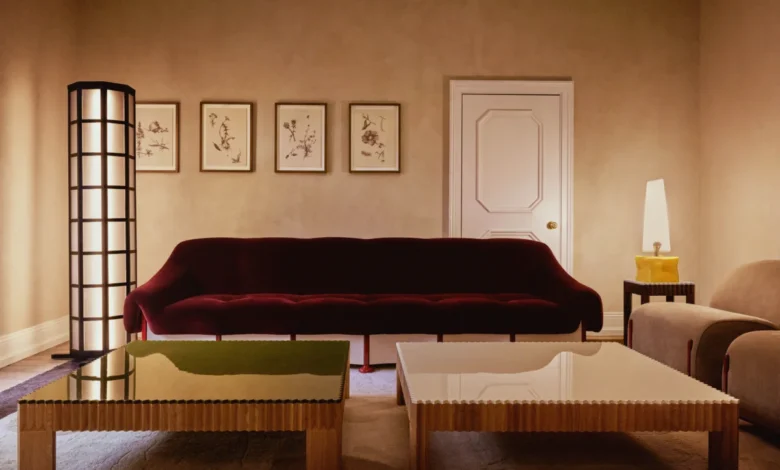
The collaborative relationship between acclaimed filmmaker Luca Guadagnino and architect Stefano Baisi has reached a new commercial milestone with the launch of an extensive furniture and decor collection for Zara Home. Spanning over 200 individual pieces, ranging from minimalist home accessories to bespoke furniture and a ready-to-wear clothing line, the collection marks a significant expansion for the retail giant and a high-profile design venture for the creative duo. The partnership, which officially debuted in late September 2024, represents the culmination of nearly a decade of professional synergy between the two, transitioning their expertise from the silver screen and high-fashion runways to the accessible luxury of residential living.
A Decade of Creative Synergy
Since 2017, when Guadagnino appointed Baisi to lead his interior architecture firm, Studio Luca Guadagnino, the pair has curated a portfolio defined by its cinematic rigor and historical awareness. Their work has consistently blurred the lines between set design and structural architecture. Notable previous commissions include the conceptual design for a Dior runway show, which famously featured a recreation of the Louvre’s iconic glass pyramid in the Jardin des Tuileries, and the immersive, surrealist interiors crafted for Guadagnino’s 2024 feature film, Queer.
The transition to a mass-market collaboration with Zara Home reflects a strategic shift toward democratizing the "Guadagnino aesthetic"—a style characterized by its intellectual depth, structural precision, and profound engagement with art history. According to the designers, the project originated from an exhaustive research phase, during which they synthesized a vast archive of saved digital imagery, fine art references, and historical movements into a cohesive design language.

Design Philosophy and Historical Influences
The collection is anchored in a deep appreciation for the Vienna Secession, a movement that flourished at the turn of the 20th century. Guadagnino has specifically cited the work of Koloman Moser, a founding member of the Vienna Secession, as a primary catalyst for the collection’s development. The influence is evident in the geometric, often rigid, forms of the furniture and the sophisticated interplay of materials.
Beyond the Viennese influence, observers have noted clear echoes of French Art Deco, the fluid forms of Brazilian modernism, and the provocative spirit of Italian Radical design. By blending these distinct, and at times contradictory, schools of thought, Baisi and Guadagnino have created a "shared stylistic code." This approach attempts to honor historical tradition while establishing a contemporary identity that feels both timeless and forward-looking.
The resulting pieces are notably sharp and angular, mirroring the precision found in high-end tailoring. The collection features a variety of materials, including stainless steel, high-gloss lacquered oak, sycamore, and velvet. Notable items include the "Elsewhere" table lamp, which utilizes a thin, arching steel neck to evoke a space-age aesthetic, and the "Bretonita" sofa, which balances comfort with a structured, scalloped silhouette finished in hunter-green flannel with burgundy piping.
Chronology of the Collaboration
The journey toward this launch began years prior to the 2024 public unveiling, rooted in the foundational work of Studio Luca Guadagnino.

- 2017: Stefano Baisi is tapped by Luca Guadagnino to lead Studio Luca Guadagnino, formalizing their architectural partnership.
- 2017–2023: The pair executes a series of high-profile projects, including boutique hotel renovations and exhibition design, establishing a signature visual language.
- Early 2024: Preliminary research and development for the Zara Home collection begin, focusing on the synthesis of 20th-century design movements.
- September 2024: Official launch of the 200-piece collection, accompanied by a promotional short film directed by Guadagnino and written by Scott Z. Burns.
- September 26–27, 2024: A public pop-up event is held at La Pelota in Milan, coinciding with the broader Milan Fashion Week calendar to maximize industry exposure.
Market Positioning and Economic Impact
The collection, with price points ranging from $16.90 to $18,400, occupies a unique segment of the market. By offering both small, accessible decorative objects and high-end, bespoke-style furniture, Zara Home and the designers are targeting a broad demographic—from younger design enthusiasts to established collectors.
This pricing strategy is indicative of a broader trend in the home furnishings sector where "designer collaborations" serve to elevate brand perception while maintaining volume-driven retail models. For Zara Home, the partnership is a calculated move to align itself with high-culture cachet. For Guadagnino and Baisi, the project acts as a mechanism to test their design principles in a commercial environment, proving that a singular aesthetic can be successfully scaled across vastly different price tiers.
Official Perspectives and Creative Intent
In discussions regarding the collaboration, both principals have emphasized the versatility of the objects. Baisi noted that the primary excitement of the project lies in the "parallel worlds" these pieces will inhabit. He suggests that by placing the same chair or table into radically different domestic settings, the objects gain new meanings through their owners’ lives.
Guadagnino, known for his meticulous attention to detail in film, described the collection as a "constellation of objects." This phrasing underscores his view of interior design as a narrative exercise, where every piece of furniture acts as a character within the story of a home. The short film produced to promote the launch—starring Jamie Bell, Chase Sui Wonders, Michael Stuhlbarg, and Patricia Arquette—further cements this narrative approach, framing the furniture not merely as utility, but as essential components of a cinematic existence.

Broader Industry Implications
The success of this collaboration may signal a long-term shift in how high-end interior architects interact with global retail chains. Traditionally, there has been a sharp divide between bespoke interior design and mass-market home retail. The Guadagnino-Baisi model suggests that the future of interior design lies in the "curated collaboration," where the expertise of the architect is applied to the logistics of mass production to create a product that retains its integrity across various economic landscapes.
Furthermore, the integration of a clothing line alongside furniture suggests a "total design" approach, reminiscent of the mid-century modernists who believed in the unification of fashion, architecture, and interior space. As the design industry continues to face challenges regarding sustainability and over-consumption, the focus on "sharp, angular, and hard" pieces that prioritize longevity and structural honesty may influence future consumer trends toward more durable, investment-quality home goods.
Analysis of Design Reception
Early industry analysis suggests that the collection is being received as a rare instance of a high-fashion/high-film crossover that avoids the tropes of "fast-fashion" design. By grounding the collection in rigorous historical research—specifically the Vienna Secession—the pieces avoid the fleeting nature of seasonal trends.
However, the challenge for such a vast collection remains in the maintenance of quality control. Producing 200 distinct pieces at scale requires a complex supply chain that rarely mirrors the precision of a bespoke studio. Analysts will be watching closely to see how the material choices—such as the high-gloss lacquer and delicate steel work—hold up under the rigors of global distribution and daily use.

Ultimately, the collaboration between Luca Guadagnino and Stefano Baisi for Zara Home stands as a testament to the power of cross-disciplinary creative thinking. By treating the home as a stage and the furniture as a script, the pair has successfully translated the high-concept visual language of film into a collection that invites the public to participate in their curated, aesthetic world. Whether this project marks a permanent pivot for the designers or a singular experimental chapter, it remains a significant marker in the ongoing dialogue between the worlds of high-concept design and accessible, global retail.